Posted in Ageing & Culture, Caregiving, Research & Best Practice, The Built Environment

Walking with my mother

Director Katsumi Sakaguchi’s newest film “Walking with My Mother”
Official selection of Tokyo International Film Festival 2014

Director Katsumi Sakaguchi captures the life of his mother, Suchi, 78 through film, as she lives with dementia and depression, coping with the loss of her daughter and then her beloved husband. In the film Katsumi documents a life of distress, frustration and grief as his mother tries to remain resilient against all the trials and tribulations that life has hurl against her. He captures his own feelings and emotions as he tries to understand the needs of his mother and his own, and to cope with the changes that life has brought for both of them. The film also showcases their travel back to Suchi’s hometown and the positive improvements that such a change brings.

Posted in Caregiving, The Built Environment

Waijiang Music

A beautiful video on WaiJiang music and the use of music to honor and remember the ones you love.

This video provides an insight into the passionate Teochew musicians in Singapore. I’m still reeling from the fact that they don’t have a score and everything is memorised. It’s amazing, the commitment of the musicians. One of the older adults appeared to have difficulties going up the stairs, but he still made it up to go for their jamming session. People talk about how we need to find more appropriate music that reflects the era of the person with dementia, and songs that are culturally appropriate. We still have a team in Singapore that continues to carry this tradition on with fierce dedication, as they preserve and cherish our heritage and culture in Singapore.

If you are looking for traditional Teochew music, these musicians are the real deal.

Posted in Caregiving

3 caregivers that open the world to dementia through photography

I was talking to a friend about dementia, and I forget that there are people who have not come in contact with people with dementia. They have little awareness about dementia despite the information through the media and multiple health promotions campaigns. They tell me it’s just people being old and forgetful. That doesn’t even come close. We talked about dementia, but I get the feeling that the words were just empty nothingness sailing pass like the boats down the river on a hot summer’s day. I turned to Jake Hearth’s series of photos for help and that hit home hard. Giving the person a realistic glimpse of what dementia can be without the glitz and glamour of the media. After that experience, I thought perhaps it might be useful for others who may require photography as a medium to raise awareness about dementia.

Below are 3 sites that contain photographic life stories of love, courage and strength in the face of dementia.

1. This is what Early Onset Dementia looks like.

If you haven’t seen Jake’s photos, the link is at the bottom. Jake’s photos took the net by storm and his photos on Reddit went viral and before I knew it, I saw articles about his photos in the Huffington post, the mirror and even in the daily mail. His photos document the progress of his mum and his family in the last decade as they work to care for his mother, Jacquie, 58 who is living with Pick’s Disease. His photos have certainly touched my heart and many other and I am thankful for him to be sharing his photos of his family’s experience to help raise awareness of dementia.

From http://imgur.com/a/Wlyko with the caption: This was taken in 2005 or so. At this point, Jacquie had Pick’s Disease, but it had been misdiagnosed as menopause. She would be about 48 here.

Click here to check out Jake Heath’s photos.

Click here to check out Jake Heath’s video with a slideshow.


2. Mylene & Yu Heng

This beautiful 2014 photo blog by Yeo Kai Wen shares with the world, the story of Mylene, who is a domestic worker from the Philippines and Yu Heng, an elderly lady with dementia. In Singapore, some families may hire foreign domestic workers to help care for their family members with dementia. Mylene has been living with Yu Heng for 7 years now, and provides care for her 24 hours a day.

Click here to check out Yeo Kai Wen’s photos.


3. My Father Has Gifted Hands

from Atlanta

This is a project by a photographer only going by the name of J.R. who created a photo essay to share and document his family’s experience with his father’s living with frontotemporal dementia. It’s a very touching photo essay as J.R. chronicles photos of his father’s progress.

He touches on the beginning of dementia and the signs and symptoms that his father exhibits. He talks about his father’s progress with dementia and details incidents which marks each milestone and the achievements that his dad had done throughout his lifetime. This photo essay shares with people the challenges that family caregivers face and the sacrifices that they make to keep the family together.

Click here to view J.R.’s photos.

I hope these sites would prove useful and a big thank you to the caregivers and photographers who have shared these stories using photography to raise awareness about dementia.

Posted in Caregiving, Therapeutic Activities

Quick, easy and healthy asian meals: Part 1

Quickandeasymeals

For most of us caring for our parents or a loved one at home, putting together a home cooked meal can feel like a tough feat. After a busy day at work, it’s so much easier for us to just pick up a takeaway meal at the food centre or just grab some fast food for the whole family.

For care staff that may have residents or clients who are caring for older Asian living in residential or community aged care facilities, fellow nurses have shared that sometimes, trying to figure out a healthy, delicious and easy Asian meal may be challenging. Most of the time, it is easier to just dish up what’s available, or get meals on wheels, and for clients, it may be a lamb roast, fish and chips, casserole, not something that residents or clients may be familiar with. It’s not difficult to understand why residents/clients may start losing weight or their appetite.

Finding good quality Asian food can be tough and studies have indicated that eating out may not be the best for our health. Food prepared commercially usually contains a high amount of saturated fat, carbohydrates and sodium. For many older adults, this may not be ideal, taking into consideration the multiple co-morbidities that they already have. For caregivers, after a long day at work, a high fat, high carbohydrate and high sodium meal, though tasty, may not be ideal for the body in the long term. This may also make us feel sluggish and tired, instead of rejuvenated after a good nutritious meal. Below are some quick and easy Asian recipes that are clean and healthy.

recipes

1. Bak Chor Mee Soup Recipe 肉脞面 (Chinese Mince Meat Noodle Soup)

Serves:

Click here: http://www.noobcook.com/bak-chor-mee-soup/2/

2. Congee 粥(Rice porridge)

Serves: 1 

Click here: http://www.mijorecipes.com/chinese-congee-jook-chicken/

3. Chicken Noodle 鸡丝面

Serves: 2

Click here: http://rasamalaysia.com/chicken-noodles-recipe/2

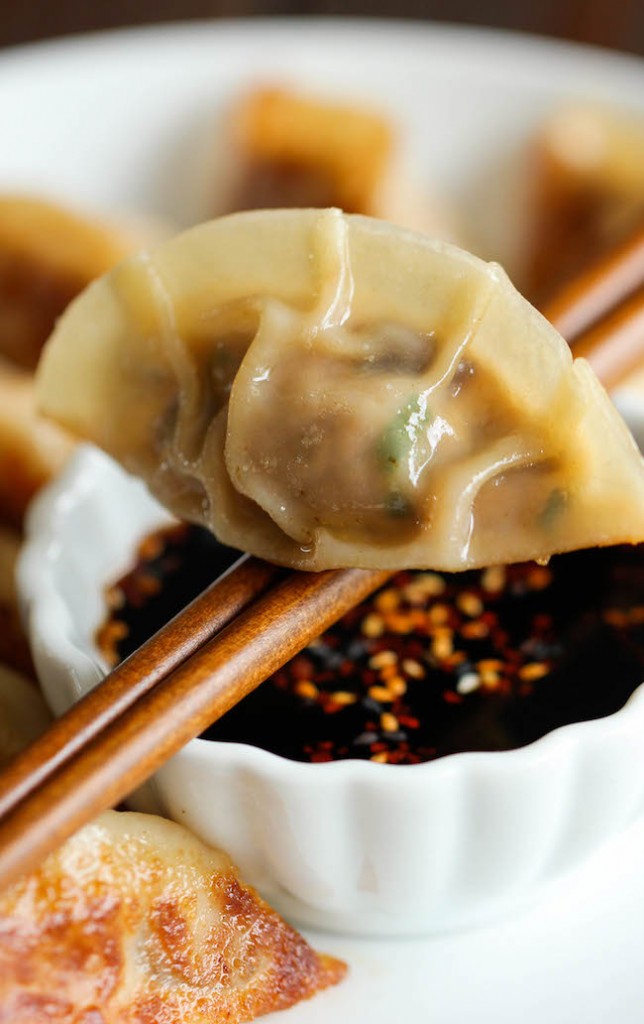
Potstickers 鍋貼

Serves: 6

Click here: http://damndelicious.net/2014/03/01/potstickers/
4. Baked Honey Garlic Chicken 甜甜鸡

Serves: 4

Click here: http://damndelicious.net/2014/03/01/potstickers/

5. Hot and Sour Soup 酸辣汤

Serves: 4

Click here: http://www.closetcooking.com/2015/02/quick-and-easy-chinese-hot-and-sour-soup.html

6. Chinese Chives with Tofu 炒韭菜豆腐

Serves: 4

Click here: http://www.bubblews.com/posts/sauteed-chinese-chive-with-tofu

7. Bok Choy and Shiitake Mushroom Noodles 面条加香菇白菜

Serves: 2

Click here: http://divinehealthyfood.com/bok-choy-shiitake-mushroom-noodles/#comment-145

8. Stir-Fried Pea Shoots 炒豆苗

Serves: 4

Click here: http://www.bonappetit.com/recipes/article/how-to-cook-pea-shoots

9. Shrimp with Snow Peas 豌豆虾仁

Serves: 4

Click here: http://rasamalaysia.com/shrimp-with-snow-peas-recipe/?pid=616#image-337

10. Salt and Pepper Tofu 椒盐豆腐

Serves: 4

Click here: http://www.veggiebelly.com/2010/07/restaurant-style-chinese-salt-pepper-tofu.html

References:

Altman M, Cahill Holland J, Lundeen D, Kolko RP, Stein RI, Saelens BE, Welch
RR, Perri MG, Schechtman KB, Epstein LH, Wilfley DE. Reduction in Food Away from
Home Is Associated with Improved Child Relative Weight and Body Composition
Outcomes and This Relation Is Mediated by Changes in Diet Quality. J Acad Nutr
Diet. 2015 May 8.

Bezerra IN, Curioni C, Sichieri R. Association between eating out of home and body weight. Nutr Rev. 2012 Feb;70(2):65-79.

Djoussé L, Petrone AB, Gaziano JM. Consumption of fried foods and risk of
heart failure in the physicians’ health study. J Am Heart Assoc. 2015 Apr
23;4(4).

Guthrie JF, Lin BH, Frazao E. Role of food prepared away from home in the
American diet, 1977-78 versus 1994-96: changes and consequences. J Nutr Educ
Behav. 2002 May-Jun;34(3):140-50.

won YS, Ju SY. Trends in nutrient intakes and consumption while eating-out
among Korean adults based on Korea National Health and Nutrition Examination
Survey (1998-2012) data. Nutr Res Pract. 2014 Dec;8(6):670-8.

Yeh MC, Heo M, Suchday S, Wong A, Poon E, Liu G, Wylie-Rosett J. Translation
of the Diabetes Prevention Program for diabetes risk reduction in Chinese
immigrants in New York City. Diabet Med. 2015 Jul 14.