Posted in Ageing & Culture, Caregiving, International Policies, Research & Best Practice, The Built Environment

Individuality & Person Centred Care in Asia

Since a fortnight ago this tweet have been shared over 29,000 times and 21,720. Tweeted by Harudajin, he shares an unforgettable experience in his youth in primary school when his teacher shared with his students the meaning of individuality.

The teacher explained that when an instruction is provided to have the class write the word 晴, then everyone in  the class will write the word 晴. However, the result of the word 晴 will differ slightly from each student. However if given an instruction to write the word 晴 and the student wrote the word 雨, that is not viewed as individuality.

Below is the original tweet:

https://twitter.com/harudajin/status/670747731510452224

There is a lot of discussion about a social culture in Asia and the differences between the cultures between the East and the West. Individuality in this discussion is working together as a social being, but at the same time appreciating and accepting the differences that we exhibit as individuals. No two handwriting can be exactly the same and despite our very similar daily routine and habits, it’s the small intricacies and preferences that make us all different. Here the teacher explains that we don’t have to radically stand out to be different, we can all be different and still maintain a sense of cohesion and harmony without our culture.

No two handwriting can be exactly the same. Despite our very similar daily routine and habits, it’s the small intricacies and preferences that make us all different. Here the teacher explains that we don’t have to radically stand out to be different, we can all be different and still maintain a sense of cohesion and harmony without our culture, and that’s what individuality is all about.

love-pen-bed-drinking-large

For Asians, harmony and cohesion are important factors and at times residents, and patients may not voice out our needs as they may not wish to inconvenience their carers and caregivers.

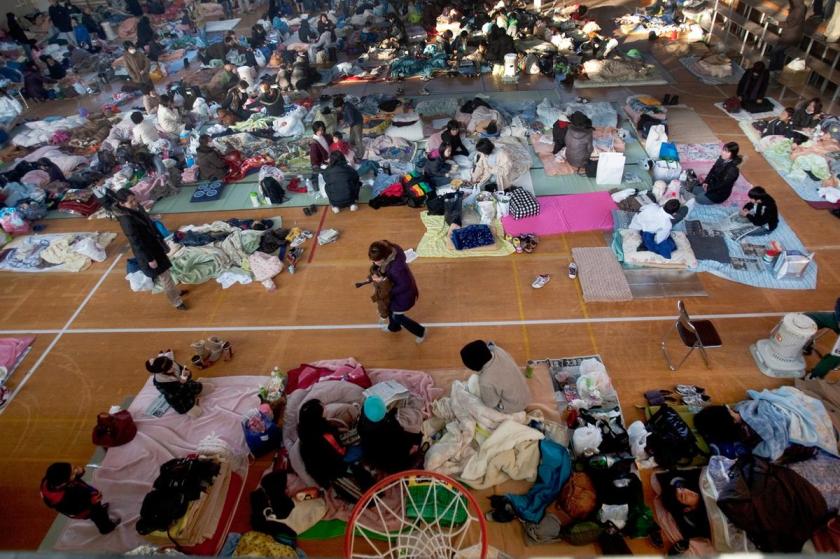
At a talk a few months ago about the Fukushima earthquakes, it was said that older adults that sought shelter in a gymnasium developed incontinence issues and muscle atrophy. Afraid that they were being disruptive and inconsiderate to fellow residents living in the open space temporary shelter, many remained sitting in their allocated space, not going to toilets allocated outside of the gymnasium.
main_1200

Image source: Japan Earthquake: Rescue, Recovery, and Reaction – The Atlantic

This scenario is not unfamiliar to nurses working in acute care, step down facilities, nursing home and other community care facilities where families complain about their love ones developing incontinence and decreased mobility. It’s a common case study where you have a person coming out of the hospital with incontinence and decreased mobility and nurses and loved ones are concerned about falls resulting in the person spending the rest of their life sitting in wheelchairs. Being put on pads due to their incontinence issues, the person may not wish to venture out in the public, and participate in activities reducing their social engagements and decreasing movement. So starts a vicious downward spiral where mobility is lost and depression sets in.

hospital-643961_960_720


All it takes is for us to care; to ask and encourage. To encourage our residents and patients and engage with them socially and to support movement. To ask about their preferences and how we can encourage our residents and patients to retain their independence and to maintain their mobility. This is a community effort, from governments to management to directors of nursing to the nurses and the care staff, we need to make time to care. Our residents and patients make an effort to not inconvenience us isn’t care a priority in healthcare in the first place?Person-centred care in Asia isn’t about being indulgent

Person-centred care in Asia is not about indulging a persons’ need for choices or the ability to be drastically different from everyone. It is about celebrating and supporting individuality and autonomy whilst maintaining harmony and social cohesion in the community. A fine balance, not in the pursuit of happiness but in a pursuit of peace. To be satisfied with the balance in life that brings us peace within.

it’s not 兴高采烈 but a 幸福美满的生活 that we yearn for.

Reference: Handwriting

 

Posted in Ageing & Culture, Caregiving, International Campaigns, International Policies, Research & Best Practice, The Built Environment

Dementia Language Project

Read an awesome ad inspiring news piece about Lingo Flamingo, a social enterprise in Glasgow that provides individualised lessons and workshops that aid cognitive function with the aim of tackling dementia. The founder Robbie Norval founded Lingo Flamingo to help his grandmother who was living with dementia.

There’s been a sea of research recently reminding us that being bilingual or multilingual has it’s benefits, everyone from the Singapore Management University, Georgetown University Medical Centre, Northwestern University, the University of Houston and even the American Heart Association.

The research states that being bilingual or multilingual can

  • improve our ability to process information
  • gain more grey matter than monolinguals
  • better cognitive functions post-stroke than monolinguals
  • be a constant challenge to the brain


A dementia language project such as Lingo Flamingo is an inspiration. It not only aid cognitive function, it helps to support engagement and movement, it gets people into the community and builds an inclusive environment. Most of it, it’s people coming together to learn and to have fun learning.

Hopefully, more of these initiatives will be set up globally, certainly would love to see a programme such as this in Asia as well. Though a large number of Asian are bilingual, it’s always not a bad thing for your brain health to pick up another language.

Reference:

Govan dementia language project launched – BBC News

Bilingualism and the Brain

Bilinguals of Two Spoken Languages Have More Gray Matter Than Monolinguals

Speaking multiple languages linked to better cognitive functions after stroke

Posted in Caregiving, International Campaigns, Research & Best Practice

Dementia Research Institute in Asia

Prime Minister announces funding for UK’s first National Dementia Research Institute – UK’s first Dementia Research Institute receive up to £150m of investment.

in 2006, it was announced that Dementia will be the next epidemic sweeping through Asia. Almost a decade on and numerous publications by academics and global organisations such as the World Health organisation and Alzheimer’s Disease International, little has been done in the areas of preventative measures of the condition. The condition now costing Asia billions of dollars and much suffering among caregivers is still seen to be a distant cousin of health issues such as diabetes, cancer and heart disease. Healthcare publications in Asia can still be seen making claims that dementia is reversible, and numerous clinicians are unaware that dementia is a terminal condition. Resulting in a large focus in the quantitative aspects, such as rehabilitation, life-prolonging procedures instead of focusing on qualitative; such as the maintenance of a person’s independence, dignity and overall quality of life.

More research is required in Asia to help find the balance between challenging cultural issues especially in the areas of prolonging life in dementia and maintaining a person’s quality of life. Perhaps in this technological age, Asia should come together to look into setting up collaborative research centres to work cohesively to find answers to culturally difficult care components for people with dementia and eventually find us a cure.

Reference

Prime Minister announces funding for UK’s first National Dementia Research Institute – Alzheimer’s Society

Dementia in the Asia Pacific Region: The Epidemic is Here

Looming dementia epidemic in Asia

Dementia in the Asia Pacific Region


Posted in Caregiving, International Campaigns, Research & Best Practice, The Built Environment

Stress from negative beliefs about aging is associated with Alzheimer’s disease

Summary: A new study that emerged from Yale school of public health has indicated that stress from negative beliefs about aging is associated with Alzheimers disease.


916a4285-51f4-43c2-83d4-d8f74af31b3e_w739_h415

From source: Alzheimer’s Disease Photo credit: Dreamstime

Negative Beliefs About Aging Predict Alzheimer’s Disease in Yale-led Study | Yale School of Public Health

Read full article here: Negative Beliefs About Aging Predict Alzheimer’s Disease in Yale-led Study | Yale School of Public Health

Posted in Ageing & Culture, Caregiving, International Campaigns, International Policies, The Built Environment

Expert highlights dangers of over-prescribing psychotropic dementia medication – The Japan Times

Saw this article below this morning and I thought it’s a very important article to highlight the dangers of over-prescribing psychotropic medication for people with dementia. Some of the risk factors include:

  • falls
  • bone fractures
  • suffer impaired consciousness

It was recommended in the article that non-pharmaceutical options should be the first intervention before the introduction of drugs. It was also recommended that the low doses of the drugs should be prescribed in the initial stages of treatment for BPSD.


n-dementia-a-20151201-870x643

As a massive wave of Japanese enter their twilight years, an expert is calling for prudent use of psychotropic drugs to treat dementia patients, some of whom have suffered ill health due to over-prescription.

The Health, Labor and Welfare Ministry released guidelines on how to prescribe such drugs for dementia patients in 2013 to avoid casual prescription by doctors. The Japanese Society of Psychiatry and Neurology is also training doctors on the appropriate application of the drugs…

Click here to read the full article: Expert highlights dangers of over-prescribing psychotropic dementia medication | The Japan Times