Posted in Ageing & Culture, Caregiving, International Policies, Research & Best Practice, The Built Environment, Therapeutic Activities

Food Nostalgia Workshops, a deliciously fresh idea to support Dementia

One of my fondest memories working in aged care in Australia was the talking about Christmas recipes with all the residents during this holiday season. For many of us who have slaved over the stovetop during the festive seasons, you know what I am talking about. To get that perfect Christmas fruitcake was a project months in the making. I usually worked the Christmas shifts and we would always get together and you could see all the ladies eyes lit up like the fairy lights on the Christmas tree as we chatted away about our favourite Christmas dishes, the delectable treats and without a doubt, everyone, literally all the ladies had some cooking tips and advice to share. Sometimes, even their families would join in the conversation and I had to pry myself out of the room haha. From Pavlovas, Dundee cakes, Christmas cakes, brandy butter to Medisterkaker. Everyone had something lovely to share. You can tell I love the Christmas season.

dinner-meal-table-wine-medium

Anyway I found out that in the UK, Magna Vitae is working on a new health initiative to support people with dementia and their caregivers. Guess what? It’s all about food! In January 2016, they will be running a string of dementia friendly workshops known as ‘Feeding Memories’ for people with dementia and their caregivers in the UK.

This workshop certainly breathes innovation, food is such an important component in our daily lives. The workshop is a food reminiscence therapy programme, helping to ‘revive the senses’ through utilising food packaging from the past and it seems like there might be some cooking involved as well. It doesn’t stop there, the workshop has an inclusive and community aspect, sharing the importance of nutrition, diet and getting people socially engaged in their common love for food.

I’m really excited about the workshop and I hope that there will be more of these workshops to go around, especially in the Memory Cafes.

Anyway here’s wishing everyone Happy Holidays.

xoxo

Jo

Source: http://www.magnavitae.org/mvitae/about

Posted in Ageing & Culture, Caregiving, International Policies, Research & Best Practice, The Built Environment

Memory Cafes: Working towards inclusion

No one person with dementia and their caregivers should be isolated, and a social program in the United Kingdom, America, some parts of Australia are doing just that. We all know that loneliness affects both the person with dementia and their caregivers. Studies have reported that isolation and loneliness can bring about lowered self-esteem, feeling of abandonment, and increase mortality rates, and these are but just some of the issues associated (Brotons & Marti 2003; Reijo et al. 2011; Goll et al. 2015). Even the UK Department of Health (2012) has recognised that loneliness is a major public issue and needs to be urgently addressed.


Just along the lines of government and major organisations, when one thinks Memory Cafe, we may have a schema of a 24-hour cafe with people running around to man the joint. Administrators and funders, I can imagine pinching themselves, great idea but what’s the cost? The gears will be moving in their heads thinking about all the capital involved and the manpower cost associated with it, not counting the overheads and getting the right people to be able to make coffee and run a cafe, followed by other operational issues of burnout, turnover manpower training and development.

This memory cafe is way ahead of the game. With a number of memory cafes popping up like peonies in full sun, this program only operates a few times a month depending on the cafe. It can be once a month or twice a month and time for an hour or more. It’s free for people living with cognitive impairment/dementia and their significant other, be it their spouse, partner, child or carer.

Just having a peek at the Facebook page of one of the memory cafes in America (Brown County: Click here to visit page), you can see images people sitting in small groups of eight working together and having fun with craft activities and in one post they even mentioned that they were putting together harvest recipes for a cookbook. Another photo has a heartwarming image of people sitting around, really relaxed and laid back enjoying Christmas carols performed by the NWTC choir.

photo-memory-grandma

It’s hard to find programs where both the person with dementia and their significant other can actually enjoy social activities. Most activity centres would boot the caregivers, expecting people to drop off the their loved one with dementia at the centre and leave. If you hang around, you might feel a bit out of place or in the way. Or a caregiver program where caregivers come together and the person with dementia gets allocated to an activities area.

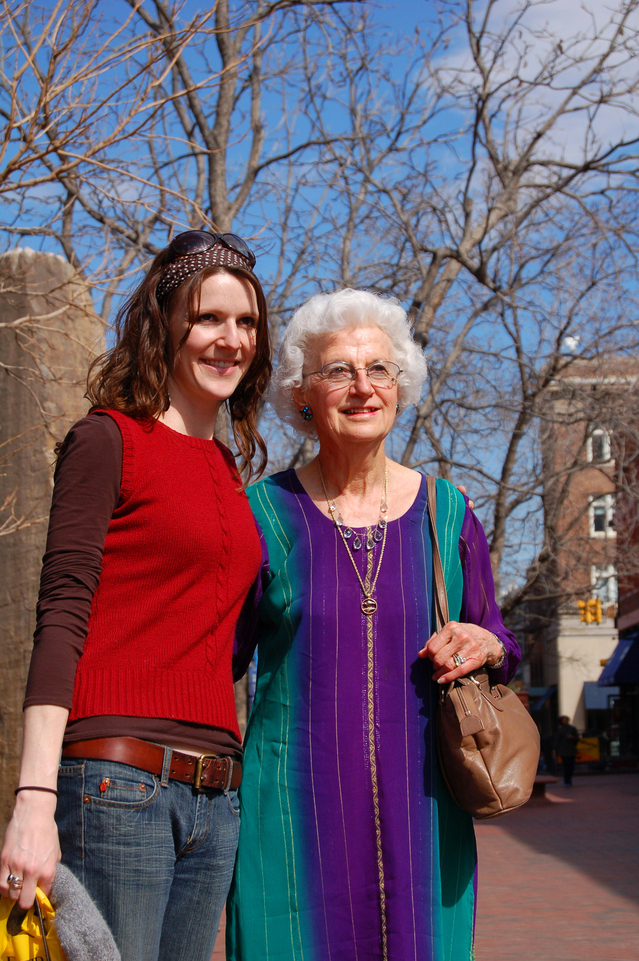
It’s just great to see a program that is so warm and inclusive, where people can just come together and there’s no stigmatism, no funny looks, no barriers. You can share stories, ask questions and there’s no stigma, no judgemental looks, no nonsense. Everyone can just be themselves, enjoy a cuppa and have some fun. A program that provides an environment that supports movement and engagement, optimises helpful stimulation, creates a familiar social space for people to have the opportunity to be part of the community, allows people to be seen and to be part of something meaningful (Fleming et al. 2003).
going-shopping-1-1433513-639x961

Isn’t this what life is about, just being able to kick back, have a cuppa and a laugh with friends.

Anyway hoping to see them catch on in Asia as well in the coffee shops and dim sum cafes.

chinese-restaurant-1-1567156-1279x1923


For more information about starting a memory cafe in your community, please refer to the links below.

UK: Memory Cafe

USA: Brown County Memory Cafe

Aus: Memory Lane Cafe


Reference:

Brotons M. and Marti P., 2003. Music therapy with Alzheimer’s patients and their family caregivers: a pilot project. Journal of Music Therapy, 40(2), pp.138-150.

Department of Health (2012) Caring for our future: reforming care and support. London: The Stationary Office. Retrieved fromhttps://www.gov.uk/government/publications/caring-for-our-future-reforming-care-and-support.

Fleming R, Bowles J. Units for the confused and disturbed elderly: Development, Design, Programmimg and Evaluation. Australian Journal on Ageing. 1987 November;6(4):25-8.

Fleming R, Forbes I, Bennett K. Adapting the ward for people with dementia. Sydney: NSW Department of Health; 2003.

Goll JC, Charlesworth G, Scior K, Stott J (2015) Barriers to Social Participation among Lonely Older Adults: The Influence of Social Fears and Identity. PLoS ONE 10(2): e0116664.

Reijo S. Tilvis, Venla Laitala, Pirkko E. Routasalo, and Kaisu H. Pitkälä, “Suffering from Loneliness Indicates Significant Mortality Risk of Older People,” Journal of Aging Research, vol. 2011, Article ID 534781, 5 pages,



Posted in Ageing & Culture, Caregiving, International Campaigns, International Policies, Research & Best Practice, The Built Environment

Dementia Language Project

Read an awesome ad inspiring news piece about Lingo Flamingo, a social enterprise in Glasgow that provides individualised lessons and workshops that aid cognitive function with the aim of tackling dementia. The founder Robbie Norval founded Lingo Flamingo to help his grandmother who was living with dementia.

There’s been a sea of research recently reminding us that being bilingual or multilingual has it’s benefits, everyone from the Singapore Management University, Georgetown University Medical Centre, Northwestern University, the University of Houston and even the American Heart Association.

The research states that being bilingual or multilingual can

  • improve our ability to process information
  • gain more grey matter than monolinguals
  • better cognitive functions post-stroke than monolinguals
  • be a constant challenge to the brain


A dementia language project such as Lingo Flamingo is an inspiration. It not only aid cognitive function, it helps to support engagement and movement, it gets people into the community and builds an inclusive environment. Most of it, it’s people coming together to learn and to have fun learning.

Hopefully, more of these initiatives will be set up globally, certainly would love to see a programme such as this in Asia as well. Though a large number of Asian are bilingual, it’s always not a bad thing for your brain health to pick up another language.

Reference:

Govan dementia language project launched – BBC News

Bilingualism and the Brain

Bilinguals of Two Spoken Languages Have More Gray Matter Than Monolinguals

Speaking multiple languages linked to better cognitive functions after stroke

Posted in Caregiving, International Campaigns, Research & Best Practice

Dementia Research Institute in Asia

Prime Minister announces funding for UK’s first National Dementia Research Institute – UK’s first Dementia Research Institute receive up to £150m of investment.

in 2006, it was announced that Dementia will be the next epidemic sweeping through Asia. Almost a decade on and numerous publications by academics and global organisations such as the World Health organisation and Alzheimer’s Disease International, little has been done in the areas of preventative measures of the condition. The condition now costing Asia billions of dollars and much suffering among caregivers is still seen to be a distant cousin of health issues such as diabetes, cancer and heart disease. Healthcare publications in Asia can still be seen making claims that dementia is reversible, and numerous clinicians are unaware that dementia is a terminal condition. Resulting in a large focus in the quantitative aspects, such as rehabilitation, life-prolonging procedures instead of focusing on qualitative; such as the maintenance of a person’s independence, dignity and overall quality of life.

More research is required in Asia to help find the balance between challenging cultural issues especially in the areas of prolonging life in dementia and maintaining a person’s quality of life. Perhaps in this technological age, Asia should come together to look into setting up collaborative research centres to work cohesively to find answers to culturally difficult care components for people with dementia and eventually find us a cure.

Reference

Prime Minister announces funding for UK’s first National Dementia Research Institute – Alzheimer’s Society

Dementia in the Asia Pacific Region: The Epidemic is Here

Looming dementia epidemic in Asia

Dementia in the Asia Pacific Region