Posted in Ageing & Culture, Caregiving, Dementia

Frontal lobe paradox: where people have brain damage but don’t know it

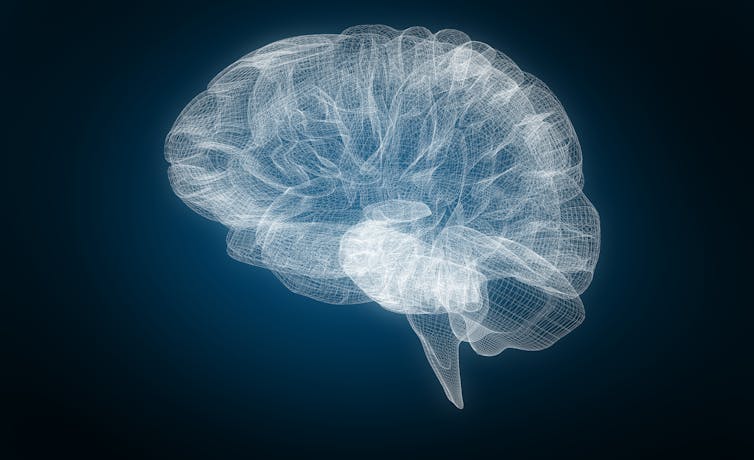
File 20180807 191038 rxccp2.jpg?ixlib=rb 1.1
vectorfusionart/Shutterstock

Sam Gilbert, UCL and Melanie George, Canterbury Christ Church University

Humans have big brains and our frontal lobes, just behind the forehead, are particularly huge. Injuries to this part of the brain often happen after blows to the head or a stroke. Paradoxically, some people with frontal lobe injuries can seem unaffected – until they’ve been carefully evaluated.

The frontal lobes are sometimes described as the executives of the brain, or conductors of the orchestra. Among other things, they control and organise our thinking and decision-making processes. You rely on your frontal lobes when you do things like make plans, switch from one activity to another, or resist temptation.

Some people with frontal lobe injuries seem completely normal in short one-to-one conversations, but they actually have great difficulty with everyday tasks, such as cooking, organising their paperwork or remembering to take medication. This is called the frontal lobe paradox because, even though these people seem unimpaired when assessed, they have significant difficulties in everyday life.

Without specialist expertise in acquired brain injuries, it can be almost impossible to spot frontal lobe paradox because, in many cases, people will still be able to speak normally and seem remarkably unimpaired. They may be unaware of their difficulties and deny that they need any help or support.

Insight issues

People affected by the condition are not lying when they say they don’t need help or support. Instead, they may lack knowledge of their own condition because areas of the frontal lobes that are responsible for self-monitoring and developing insight have been affected by their brain damage.

A second reason for the frontal lobe paradox is that the skills needed for an assessment interview are different from those needed in everyday life. The structure and routine of an environment, such as a rehabilitation ward, can, in effect, play the role of someone’s frontal lobes. This can mask the difficulties people experience in less structured, open-ended environments. For this reason, a person’s level of ability needs to be assessed in a situation that resembles everyday life. A seemingly simple task, such as going shopping, can reveal difficulties in people who appear unimpaired on standard tests of memory and attention, and have normal intelligence.

People with frontal lobe paradox may need help with things like cooking.
Rawpixel.com/Shutterstock.com

Lack of specialist training

Neuroscientists and doctors have known about the frontal lobe paradox for at least 50 years, but it is not always understood by non-specialists. This situation can lead to people not receiving help they desperately need.

For example, in England and Wales, social workers and care managers are usually responsible for deciding whether a person has the capacity (under the Mental Capacity Act 2005) to decline support or care. These are hardworking professionals who are motivated to act in the best interests of those under their care, but many receive little or no specialist training in brain injury.

These professionals tend to base their decision about a person’s mental capacity on a short face-to-face interview. This is exactly the situation that can lead to people with frontal lobe damage being denied the care that they need.

The assessment provides the support needed for a person to sound competent and able, but only for the duration of the assessment. In one example, a woman persuaded a series of professionals that she could safely live alone after a significant brain injury. In reality, she could not make meals for herself or remember to take her lifesaving medication. Sadly, she died at home shortly afterwards.

Support needed

We don’t know exactly how common the condition is, but the frontal lobe paradox is probably found in a much higher number of people than you might first imagine. As well as those who have suffered blows to the head and strokes, it can affect people with certain infections, some forms of dementia and even poorly controlled diabetes.

It is vital that social workers and care managers are trained on brain injury to protect the interests of people with frontal lobe injuries. People with these injuries are in particular need of support, but they are often the least likely to receive it.The Conversation

Sam Gilbert, Associate Professor, Institute of Cognitive Neuroscience, UCL and Melanie George, Consultant Clinical Neuropsychologist, Canterbury Christ Church University

This article was originally published on The Conversation. Read the original article.

Posted in Caregiving, Dementia, Research & Best Practice

Is there really a benefit from getting an early dementia diagnosis?

Image 20160520 10353 1pudmof.jpg?ixlib=rb 1.1

Monkey Business Images/Shutterstock.com
Tim Gomersall, University of Huddersfield

The Alzheimer’s Society recently issued a call for people with symptoms such as memory loss and confusion to seek early medical help. The British charity is worried that people may be putting off getting a dementia diagnosis and not receiving the health care and support they need. As the Alzheimer’s Society’s recent blog post put it: “A lack of diagnosis is denying many people with dementia the chance of getting the best possible treatment, information and support – evidence shows the earlier on you receive these, the better your chance of living well for longer.” But is early diagnosis always a good thing?

Early diagnosis has also been a key policy aim for government. We can see this in the National Dementia Strategy, and David Cameron’s Challenge on Dementia. A few years ago, the NHS even trialled a scheme to pay GPs £55 for each dementia diagnosis made. This move was widely condemned by doctors’ groups and quietly dropped after six months. In any event, the push for earlier diagnosis continues. So what exactly are the benefits of earlier diagnosis? And who are the beneficiaries?

What works?

There are no known treatments to prevent or reverse dementia, although drugs called memantine and acetylcholinesterase inhibitors can help to relieve symptoms .

In the course of my recent fieldwork, however, I met some people with memory loss who invested hope in these treatments beyond what was possible. They believed that getting onto anticholinesterase inhibitors as soon as possible could delay further decline.

Drugs can help with symptoms.
Photographee.eu/Shutterstock.com

One of the most difficult experiences in my recent research was meeting a woman who felt she had been denied treatment by the doctors, and asked me and my colleague if we were able to prescribe them for her. We had to explain that we were not clinically qualified, and in any case, the drugs would not prevent the progression of dementia. But false hope can translate into big profits for drugs companies.

The anticholinesterase inhibitor market had an estimated value of US$4.2 billion globally in 2011, with this figure set to increase over coming years as people live longer. One recent market analysis identified early diagnosis as “a challenge [that] will affect the growth of the market over the 2013-2023 forecast period”.

Thankfully, drug treatment is not the only option for people with dementia. Anyone with suspected dementia can access a memory clinic on the NHS to seek practical support for their needs. Memory clinics typically include a range of health professionals – including occupational therapists, psychologists, specialist nurses and psychiatrists. These multidisciplinary teams can help with emotional and occupational support. They can also offer advice on adapting homes – for instance, by providing memory aids, grab rails for bathing and toileting, and extra lighting.

The National Institute for Health and Care Excellence (NICE) also recommends “group cognitive stimulation programmes”. Cognitive stimulation uses enjoyable activities to engage thinking and memory – for example, musical activities, reminiscence sessions, and games. A recent review suggests this approach could help to maintain cognitive abilities, particularly memory and communication.

However, the current evidence relies on a number of small trials of often quite different activities, going back to 1979. Nevertheless, in the absence of effective drug treatments, cognitive stimulation is important for many people with dementia, and continues to attract research and practice interest.

Finally, we shouldn’t underestimate the psychological importance of receiving a diagnosis. Overall, the evidence shows a mixed picture. On the one hand, people are glad to understand the cause of their symptoms, to be able to plan for the future, and access resources such as dementia support groups. However, people often worry about the stigma of dementia, and some want to avoid the emotional impact of the diagnosis.

Is earlier better?

Over the last couple of years, I’ve been involved in a project looking at people’s experiences of mild cognitive impairment. This syndrome is defined as a “boundary state” between cognitive ageing (a normal process) and dementia.

If the Alzheimer’s Society’s suggestion that dementia is being under-diagnosed holds, then people with mild cognitive impairment are an anomaly. They have sought medical advice for possible dementia symptoms which are not severe enough for a diagnosis. Might it be that more people are already seeking help earlier, as the Alzheimer’s Society hopes? It seems plausible.

After the National Dementia Strategy was launched, there was a 12% increase in dementia diagnosis rates in the UK between 2009 and 2011, and recent studies show a continued upward trend.

So, who benefits from early diagnosis? As suggested above, a number of commercial and charitable organisations stand to gain substantially. There are also some benefits that may accrue to people with dementia from an early diagnosis in terms of symptom control and cognitive stimulation. Though any potential gains are small, these can still be meaningful to the person.

The other side of this, however, is the risk of over-diagnosis and increased public health anxiety associated with such “public awareness” campaigns. For example, our recent review of mild cognitive impairment research suggests people with this diagnosis live with significant uncertainty about the cause of their problems.

These patients often continue to worry about possible dementia, and the infrastructure for supporting them is patchy at best. The ethics of diagnosing people who may have no underlying illness has also been questioned. So yes, we should be helping people with dementia to get the support they need as soon as possible. But this shouldn’t come at the cost of over-diagnosing and over-medicating people.The Conversation

Tim Gomersall, Senior Lecturer in Psychology, University of Huddersfield

This article was originally published on The Conversation. Read the original article.

Posted in Caregiving, Research & Best Practice, The Built Environment

Getting the temperature just right helps people with dementia stay cool

File 20180731 102498 1bk3bqz.jpg?ixlib=rb 1.1
There are currently no rules to ensure that aged-care facilities provide a comfortable indoor environment.
University of Wollongong, CC BY-SA

Federico Tartarini, University of Wollongong; Paul Cooper, University of Wollongong, and Richard Fleming, University of Wollongong

Everyone knows how bad it feels when the temperature is uncomfortably hot or cold. For most of us it doesn’t last long as we can take simple steps to get comfortable, such as putting on clothes, opening a window, or switching on a heater.

But what happens when you can’t control the temperature where you live? This problem is faced by many residents of aged care facilities, and can be particularly difficult for those living with dementia. To find out how these residents cope we recently carried out a three-year research project on the effects of indoor environment in aged care facilities in south-eastern NSW. This was part of a broader program of University of Wollongong research on the impact of indoor environment on elderly people.


Read more:
Australia’s aged care residents are very sick, yet the government doesn’t prioritise medical care


Dementia and agitation

Dementia is a collection of symptoms that affect people’s behaviour, thinking, and their ability to communicate and perform everyday tasks. Sometimes people with dementia can become agitated or distressed, which can be disturbing for other people around them. This often happens for no clear reason.

This is a big issue for the aged care sector since approximately half of all residents in aged care facilities have dementia.

While current rules governing the accreditation of aged care facilities in Australia do make reference to the need to provide ‘comfortable internal temperatures and ventilation’ there is no specific reference to what temperature ranges are considered comfortable. We set out to find whether this should be remedied and whether there is a relationship between agitation among residents living with dementia and the indoor temperatures to which they are exposed.

Dr Federico Tartarini (right) led the study that found that indoor temperatures in aged care centres have a dramatic impact on the wellbeing of residents, particularly those living with dementia. Photo: University of Wollongong.
Author supplied, CC BY

Tracking the temperature

Firstly we set up a network of sensors in six aged care facilities to monitor indoor environmental conditions, such as air temperature, humidity, air velocity and noise.

In collaboration with the care staff of one particular facility we then assessed the frequency and intensity of a range of agitated behaviours exhibited by residents living with dementia over the course of a year.

The most important finding of this study was that the frequency and intensity of agitated behaviours of residents with dementia significantly increased when they were exposed to uncomfortable air temperatures.

A statistically significant correlation was found between rates of agitation of residents and their cumulative exposure to temperatures outside their comfort zone of between 20°C and 26°C.

More generally, the data collected from the hundreds of temperature sensors across all our case study facilities over a one-year period showed that some facilities were often uncomfortably hot or cold (below 19°C in winter and over 30°C in summer) for significant periods.

Poorly designed buildings

This was attributable to many different factors including poor thermal design of the buildings and poor control of the heating and cooling systems. Interestingly, our analysis showed staff were significantly less tolerant of variations in indoor temperature than residents, probably because they were generally more active than the residents (i.e. moving around and working), and therefore had higher metabolic rates. They may have also had higher thermal comfort expectations than the residents.

Regulations can help

The evidence appears to suggest that maintaining a comfortable temperature
will reduce the behavioural and psychological symptoms of dementia.

There is a clear need for new regulations that ensure aged care facilities provide comfortable indoor environmental conditions, particularly for elderly residents, but also for the staff working in these facilities.

The aged care sector needs good indoor environmental rating tools, built on recent research evidence, to guide the design of their facilities and to audit their operations.

This type of approach has already been successfully applied in the commercial building sector, where mandatory disclosure of the real energy consumption of larger offices, for example, is required of owners wishing to sell or lease their property.


Read more:
Why is it so cold in here? Setting the office thermostat right – for both sexes


The ConversationPublicly available ratings of the actual indoor environment provided to aged care residents and staff would alert architects, managers and staff to the importance of thermal comfort and help elderly people, and their families, make a more informed choice as to the best facility in which to live.

Federico Tartarini, Associate research fellow, University of Wollongong; Paul Cooper, Senior Professor and Director of the Sustainable Buildings Research Centre (SBRC), University of Wollongong, and Richard Fleming, Professorial Fellow and Executive Director, Dementia Training Australia, University of Wollongong

This article was originally published on The Conversation. Read the original article.

Posted in Caregiving, Research & Best Practice, Therapeutic Activities

Dementia coaching program offers chance to live well

News Release
August 8, 2018 | Australia, Dementia coaching program offers chance to live well

Support available for Sydney residents diagnosed with dementia
A new University of Sydney trial offers coaching and peer support to help people newly diagnosed with dementia cope with their prognosis and stay active and involved in their lives and community.

“I want to try and help people see they can fight back…you can’t just give into it.”

Bobby Redman, Peer supporter living with dementia

Lead researcher Associate Professor Lee-Fay Low said the pilot study has the potential to fill a vital service gap with the latest research suggesting keeping the mind and body active could slow the progression of dementia.

“Following a dementia diagnosis many people withdraw from their friends and family for fear they will deteriorate quickly and can suffer immense grief or depression,” said Low, Associate Professor in Ageing and Health at the University of Sydney.

“There are over 400 000 Australians currently living with dementia and with a cure still some way off it’s essential that we help people with early dementia to live well.

“We hope that giving people the right support, tools and strategies from the onset could help achieve this.”

The Dementia Lifestyle Coach pilot study is a collaboration between the University’s Faculty of Health Sciences and Brain and Mind Centre.

Participants will receive 14 counselling and coaching sessions from a registered psychologist over a six-month period and will also have a regular phone or skype catch ups with a peer supporter who lives with dementia.


Retired psychologist Bobby Redman is one of the peer supporters involved in the study.

Photo of peer supporter Bobby Redman

Bobby was diagnosed with frontotemporal dementia two and half years ago at age 66 after she noticed problems remembering the names of close friends and an inability to find the right words to express herself.

“My story is a bit different because with my psychology background I knew something was definitely wrong – but a dementia diagnosis is still a shock for anyone,” said Bobby.

“And what’s probably hardest is that, like in my experience, many people with early dementia are just told to come back when things get worse or to get their things in order.

“But I’ve learnt that there are tools and strategies you can put in place to help manage the impact of dementia. Even simple things like using my phone to set daily reminders to drink water and stay hydrated.

“What I’d like to see is more clinicians trained to provide these strategies to people to help them overcome simple issues.

“I want to try and help people see they can fight back. I think that’s the key….you can’t just give into it.”

The pilot study will run over a 12-month period, with researchers aiming to assess the impact the coaching program has on participants’ mood, independence, activity levels and quality of life.

Participant information

The University of Sydney is trialling a counselling and coaching program for people living at home recently diagnosed with early dementia. To be eligible you must have received a diagnosis of early dementia within the past 6 months. Read more information about the Dementia lifestyle coaching study or contact Dr Annica Barcenilla on +61 2 9351 9837 or annica.barcenilla@sydney.edu.au


Posted in Ageing & Culture, Caregiving, Research & Best Practice, Therapeutic Activities

Just ten minutes of social interaction a day improves wellbeing in dementia care

News Release
July 2018 | United Kingdom – Just ten minutes of social interaction a day improves wellbeing in dementia care

An e-learning programme that trains care home staff to engage in meaningful social interaction with people who have dementia improves wellbeing and has sustained benefits.

couple elderly man old
Photo by Pixabay on Pexels.com

The average person with dementia in a care home experiences just two minutes of social interaction each day, researchers found. They also showed that out of 170 available training programmes for nursing home staff, only three are evidence-based – none of which improve quality of life.

The Wellbeing and Health for people with Dementia (WHELD) programme trained care home staff to increase social interaction from two minutes a day to ten, combined with a programme of personalised care. It involves simple measures such as talking to residents about their interests and involving them in decisions around their care.

The Improving Staff Attitudes and Care for People with Dementia e-Learning (tEACH) study, conducted by the University of Exeter Medical School and King’s College London in partnership with the Social Care Institute for Excellence (SCIE), was presented at the Alzheimer’s Association International Conference 2018. The study involved 280 residents and care staff in 24 care homes over nine months.

Carers took part in an e-learning programme based on the WHELD training, with or without Skype supervision. They compared outcomes to usual care. Both treatment arms improved resident wellbeing and staff attitudes to person-centred care. The Skype supported arm continued to deliver improved resident wellbeing four months after the trial was completed.

Joanne McDermid, of King’s College London, who presented the research, said: “Care home staff are under a lot of pressure – it’s a really tough job. It’s a challenging environment for both residents living with dementia and staff. Our programme moved care staff to see dementia through the eyes of those who are living it. We found a simple approach, delivered as e-learning, improves staff attitudes to care and residents’ wellbeing, ultimately improving lives for people with dementia.

“In a traditionally task -focussed work environment, our programme reminds us of the human side; of the full life experience of those living with dementia in care.”

Professor Clive Ballard, of the University of Exeter Medical School, who led the research, said: “Just take a moment to imagine life with just two minutes of social interaction each day. To accept this is discrimination against people with dementia. We urgently need to do better. Most care home training programmes are not evidence-based. We know our programme works over the long term, and we now know it can be delivered remotely. We now need to roll this out to care homes.”

Watch carers talk about their experience of the WHELD training. To find out more about our world-leading dementia research, follow #ExeterDementia and @Clive_Ballard on Twitter, or visit the Exeter Dementia website.

Posted in Caregiving, International Policies, Research & Best Practice

The onset of Alzheimer’s disease: the importance of family history

News Release
February 26, 2018 | QUEBEC – The onset of Alzheimer’s disease: the importance of family history

You’re about to turn 60, and you’re fretting. Your mother has had Alzheimer’s disease since the age of 65. At what age will the disease strike you? A Canadian study published in JAMA Neurology shows that the closer a person gets to the age at which their parent exhibited the first signs of Alzheimer’s, the more likely they are to have amyloid plaques, the cause of the cognitive decline associated with the disease, in their brain.

In this study involving a cohort of 101 individuals, researcher Sylvia Villeneuve (Douglas Mental Health University Institute; CIUSSS de l’Ouest-de-l’Île-de-Montréal) shows that the difference between a person’s age and the age of their parent at the onset of the disease is a more important risk factor than their actual age.

A 60-year-old whose mother developed Alzheimer’s at age 63 would be more likely to have amyloid plaques in their brain than a 70-year-old whose mother developed the disease at age 85,” explains Villeneuve, an assistant professor at McGill University and a core faculty member at The Neuro’s McConnell Brain Imaging Centre.

Her team of scientists also found that the genetic impact of Alzheimer’s disease is much greater than previously thought.

“Upon examining changes in the amyloid biomarker in the cerebrospinal fluid samples from our subjects, we noticed that this link between parental age and amyloid deposits is stronger in women than in men. The link is also stronger in carriers of the ApoE4 gene, the so-called ‘Alzheimer’s gene’,” says Villeneuve.

Towards earlier detection of the disease

The researcher and her team successfully duplicated their results in two independent groups, one, consisting of 128 individuals from a University of Washington-St. Louis cohort, the other consisting of 135 individuals from a University of Wisconsin-Madison cohort. They also reproduced their results using an imaging technique that enables one to see amyloid plaques directly in the brains of living persons.

Their study is paving the way for the development of inexpensive methods for the early identification of people at risk for Alzheimer’s disease. According to the Alzheimer Society of Canada, 564,000 Canadians currently have Alzheimer’s disease or another form of dementia. The figure will be 937,000 within 15 years. Presently, there is no truly effective treatment for this disease.

This research was funded by grants from a Canadian research chair, the Canadian Institutes of Health Research, the Canadian Foundation for Innovation, the Canadian Brain Research Fund, the Alzheimer Society of Canada, and the Fonds de recherche du Québec — Santé.

The article entitled “Proximity to parental symptom onset and amyloid burden in sporadic Alzheimer’s disease” was published in JAMA Neurology on February 26, 2018. DOI:10.1001/jamaneurol.2017.5135

Source: http://www.douglas.qc.ca/?locale=en