Posted in Caregiving

3 caregivers that open the world to dementia through photography

I was talking to a friend about dementia, and I forget that there are people who have not come in contact with people with dementia. They have little awareness about dementia despite the information through the media and multiple health promotions campaigns. They tell me it’s just people being old and forgetful. That doesn’t even come close. We talked about dementia, but I get the feeling that the words were just empty nothingness sailing pass like the boats down the river on a hot summer’s day. I turned to Jake Hearth’s series of photos for help and that hit home hard. Giving the person a realistic glimpse of what dementia can be without the glitz and glamour of the media. After that experience, I thought perhaps it might be useful for others who may require photography as a medium to raise awareness about dementia.

Below are 3 sites that contain photographic life stories of love, courage and strength in the face of dementia.

1. This is what Early Onset Dementia looks like.

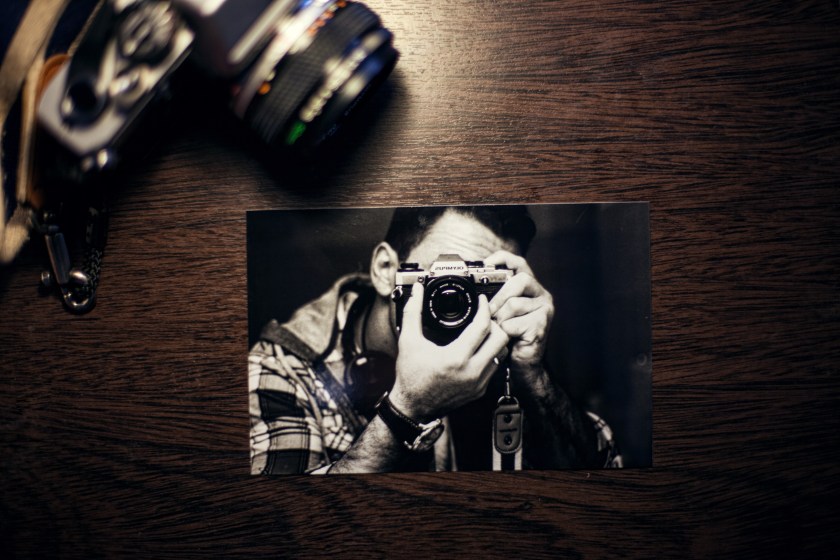
If you haven’t seen Jake’s photos, the link is at the bottom. Jake’s photos took the net by storm and his photos on Reddit went viral and before I knew it, I saw articles about his photos in the Huffington post, the mirror and even in the daily mail. His photos document the progress of his mum and his family in the last decade as they work to care for his mother, Jacquie, 58 who is living with Pick’s Disease. His photos have certainly touched my heart and many other and I am thankful for him to be sharing his photos of his family’s experience to help raise awareness of dementia.

From http://imgur.com/a/Wlyko with the caption: This was taken in 2005 or so. At this point, Jacquie had Pick’s Disease, but it had been misdiagnosed as menopause. She would be about 48 here.

Click here to check out Jake Heath’s photos.

Click here to check out Jake Heath’s video with a slideshow.


2. Mylene & Yu Heng

This beautiful 2014 photo blog by Yeo Kai Wen shares with the world, the story of Mylene, who is a domestic worker from the Philippines and Yu Heng, an elderly lady with dementia. In Singapore, some families may hire foreign domestic workers to help care for their family members with dementia. Mylene has been living with Yu Heng for 7 years now, and provides care for her 24 hours a day.

Click here to check out Yeo Kai Wen’s photos.


3. My Father Has Gifted Hands

from Atlanta

This is a project by a photographer only going by the name of J.R. who created a photo essay to share and document his family’s experience with his father’s living with frontotemporal dementia. It’s a very touching photo essay as J.R. chronicles photos of his father’s progress.

He touches on the beginning of dementia and the signs and symptoms that his father exhibits. He talks about his father’s progress with dementia and details incidents which marks each milestone and the achievements that his dad had done throughout his lifetime. This photo essay shares with people the challenges that family caregivers face and the sacrifices that they make to keep the family together.

Click here to view J.R.’s photos.

I hope these sites would prove useful and a big thank you to the caregivers and photographers who have shared these stories using photography to raise awareness about dementia.

Posted in The Built Environment

She is not the same anymore!

Older-lady-pensive-sad1-300x215

I was very much one of the many individuals in the public that thought it was the deterioration in memory that had robbed people of their identity in the case of dementia. When I read this study, I felt like I was hit on the head by a bolt from the blue.

The study published in June 2015, in the Journal of the Association for Psychological Science on neurodegeneration and identity. In this study, researchers, Nina Strohminger from Yale University and Shaun Nichols from the University of Arizona made a breathtaking discovery.

Nina and Shaun had measured perceived identity changes in 248 patients with Frontotemporal Dementia, Alzheimer’s Disease (AD) and Amyotrophic Lateral Sclerosis (ALS).

They found that moral behavior, not memory loss, causes loved ones to say that the patient wasn’t “the same person” anymore. That people with Frontotemporal Dementia was observed to have the greatest change in perceived change in the identity of the person with dementia by the caregiver. Next in line was AD and lastly ALS.

You can read more about the study here http://www.psychologicalscience.org/index.php/news/releases/how-others-see-our-identity-depends-on-moral-traits-not-memory.html

References:

Strohminger N, Nichols S. Neurodegeneration and Identity. Psychol Sci. 2015
Aug 12.

Posted in The Built Environment

It’s just not my cup of tea!

chinese tea

Tea is serious business for most Chinese, it is part of our culture, lifestyle and history. Just looking at the current market situation of tea in China, it is currently a $90 billion USD industry. For professional or formal carers who are working with residents or clients who are Chinese, it is good to understand the importance and relevance of Chinese tea to provide personalised care. I used to care for a Chinese lady and all we had in the facility was English tea, they had the usual run-of-the-mill Dilmah English Ceylon black tea, I’m possibly getting this wrong too, I only drink Earl Grey. Anyway, whenever she gets a cup of English tea from the staff, she’ll have a giggle, sip it and say “yucks”, and push it away. Thankfully her family brings here a stash of green tea that I can prepare for her that she keeps in her room.

Understanding how and when tea has come about in Chinese history is a good place to start, to appreciate the longevity of the tea culture, tradition and art that has flourished in among the Chinese since its beginnings in 3rd century A.D. Tea continued to gain popularity and by 618-907 A.D., tea had become a national phenomenon complete with ceremonies, traditions, and philosophies, tea plants were cultivated in 42 prefectures and drinking tea had become a daily norm for everyone among the different social classes (Wang, 2000). With tea filtering down for  approximately 2000 years, you can see why it means so much to most of the Chinese population. Even for immigrants to western countries, studies have found that some cultural dietary preferences are just impossible to let go, and tea is but one of the many.

I can’t reiterate that for many Chinese, tea is a way of life, a philosophy, an art and a part of their identity. In art, you may see it reflected in poetry, literature, calligraphy and even in religion. Tea represents for some the connection between human and nature, the appreciation of the simplicity of the gifts of the earth that can soothe, clear and strengthen the human spirit. In that aspect, you may observe that many Chinese may have a deeper emphasis on the purity or the quality of the tea, and to consume it in its simplest and natural form, with no sugar, milk or spice. Unless you are drinking a flower tea, which is a whole different article in itself. Here tea is written in reference to the purest form, of harvested dried leaves.

In a nutshell, there are 6 main groups of Chinese tea.

Green Tea (绿茶) Pronounced: Lǜchá

Image from china.org.cn

This is the most common of all the teas and dominants 80% of the global Asian tea market. Green tea when brewed, produces a light to dark green hue.

When brewing green tea, increasing the temperature of the water will increase the bitterness of the green leave. Bitterness is produced by Catechins found in green tea and it’s reaction to the temperature of the water. To obtain a fresh, leafy and sweet cup of green, tea should be brewed at 75 to 80 Celsius or 167 to 176 Fahrenheit.

Black Tea (红茶) Pronounced: Hóngchá

Image from chinesetimeschool.com

Black tea is technically known as red tea in Chinese. Hong (红) stands for red and Cha (茶) stands for tea. A popular hong cha is known as Gong Fu (工夫) Cha or Gong Fu Hong Cha. Click here for more info on black teas.

Oolong Tea (烏龍) Pronounced: wūlóng

Image from chinesetimeschool.com

Oolong tea is strangely gaining popularity in the west, and it is currently used in everything from fusion dishes to weight loss tips. Thought Oolong is known commonly in the west to mean “black dragon”, which sounds a lot cooler then the dark dragon, “Wu” (烏) actually means dark, not black, and “Long” (龍) means dragon.

A common Oolong tea is the Tie Guan Yin (铁观音), literally translated it means “Iron Goodness of Mercy”. This tea is popular with Chinese from Southern China, Taiwan and parts of Southeast Asia.

Currently, Twinnings do stock Oolong in teabags, or for a more affordable range, you might be able to find this at the local Chinese grocer. I found this (see image below) for $5 AUD and would last me 6 months if I drank a cup daily, however it is only availably in loose leaves.

White Tea (白 毫 銀 針) Pronounced: Baihao Yinzhen

image from Shang Tea

White tea or Bai Hao Yin Zhen, loosely translated as white fine silver needles, some call it white hair silver needles. Very light refreshing tea that usually consist of peony and pekoe. This tea may be harder to find and may be more costly than the other teas, depending on your geographical location.

Yellow tea (黃茶) Pronounced: huángchá

image from fo.ifeng.com/

Yellow tea as the name states, has a beautiful imperial golden hue, some people may be confused with yellow tea and it may fall into a different category at the shops. Some places, it may be grouped up with the white teas. This is due to the fact that yellow tea when brewed, has the aroma of red tea and the flavour that taste like a mild green tea with a hint of white tea.  A popular yellow tea is the Junshan Yinzhen (君山银针).

Pu-er tea (普洱茶)Prounced:P-Erh

– image from blisstree.com

Pu-er is an exclusive tea and can be rare and expensive, as it is tightl regulated for quality. Like champagne, the aged tea leaves only comes from one province in China and that is Yunnan, from wild trees that range from a few hundred years old to a thousand years old. Given that Black tea is, in fact, “red tea” according to the Chinese, Pu-Er is the one true “Black Tea”.

To learn more about Chinese tea, here are 2 websites that I have found useful.

  1. http://www.china.org.cn/learning_chinese/Chinese_tea/2011-08/02/content_23122957.htm
  2. http://www.lcsd.gov.hk/ce/Museum/Arts/7thingsabouttea/en/ch3_1_0.htm

References:

Aitken, A 2008, ‘Third culture kids and mad migrant mothers, or how to outgrow Amy Tan’, Journal of Australian Studies, vol. 32, no. 4, pp. 445-454.

Hung, K, Xiao, H, & Yang, X 2013, ‘Why immigrants travel to their home places: Social capital and acculturation perspective’, Tourism Management, vol. 36, pp. 304-313.

Kim, S 2015, ‘Unfolding Chinese American History’, Public Historian, vol. 37, no. 2, p. 130.

Ni, W 2011, ‘A Comparison of Chinese and British Tea Culture’, Asian Culture and History, no. 2.

Serafica, R 2014, ‘Dietary Acculturation in Asian Americans’, Journal of Cultural Diversity, vol. 21, no. 4, pp. 145-151.

Wang, L 2000, Chinese Tea Culture, n.p.: Beijing : Foreign Languages Press, 2000.

Posted in Caregiving, Therapeutic Activities

Quick, easy and healthy asian meals: Part 1

Quickandeasymeals

For most of us caring for our parents or a loved one at home, putting together a home cooked meal can feel like a tough feat. After a busy day at work, it’s so much easier for us to just pick up a takeaway meal at the food centre or just grab some fast food for the whole family.

For care staff that may have residents or clients who are caring for older Asian living in residential or community aged care facilities, fellow nurses have shared that sometimes, trying to figure out a healthy, delicious and easy Asian meal may be challenging. Most of the time, it is easier to just dish up what’s available, or get meals on wheels, and for clients, it may be a lamb roast, fish and chips, casserole, not something that residents or clients may be familiar with. It’s not difficult to understand why residents/clients may start losing weight or their appetite.

Finding good quality Asian food can be tough and studies have indicated that eating out may not be the best for our health. Food prepared commercially usually contains a high amount of saturated fat, carbohydrates and sodium. For many older adults, this may not be ideal, taking into consideration the multiple co-morbidities that they already have. For caregivers, after a long day at work, a high fat, high carbohydrate and high sodium meal, though tasty, may not be ideal for the body in the long term. This may also make us feel sluggish and tired, instead of rejuvenated after a good nutritious meal. Below are some quick and easy Asian recipes that are clean and healthy.

recipes

1. Bak Chor Mee Soup Recipe 肉脞面 (Chinese Mince Meat Noodle Soup)

Serves:

Click here: http://www.noobcook.com/bak-chor-mee-soup/2/

2. Congee 粥(Rice porridge)

Serves: 1 

Click here: http://www.mijorecipes.com/chinese-congee-jook-chicken/

3. Chicken Noodle 鸡丝面

Serves: 2

Click here: http://rasamalaysia.com/chicken-noodles-recipe/2

Potstickers 鍋貼

Serves: 6

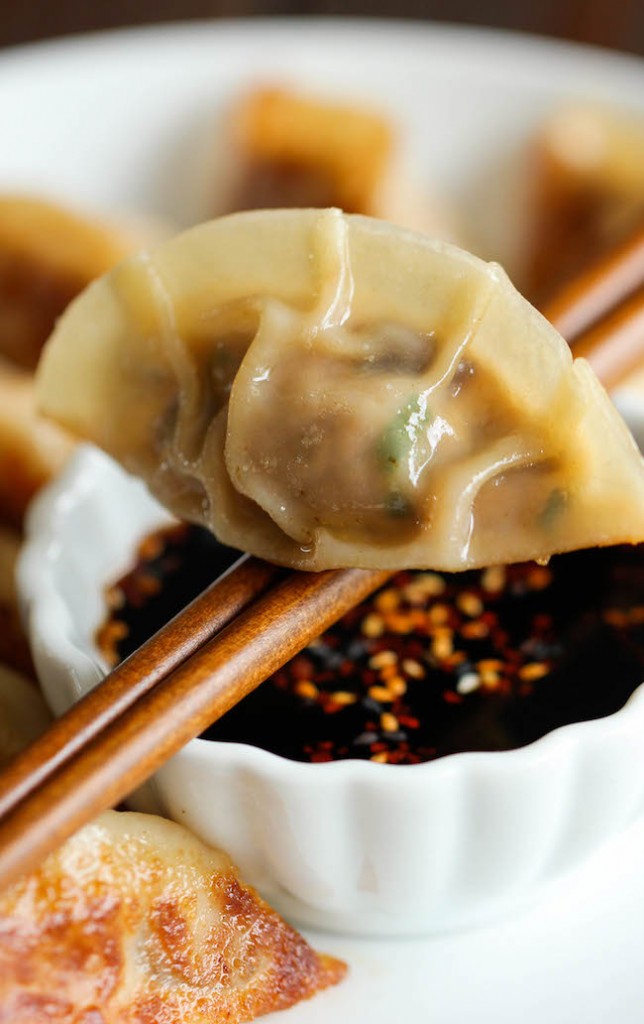
Click here: http://damndelicious.net/2014/03/01/potstickers/

4. Baked Honey Garlic Chicken 甜甜鸡

Serves: 4

Click here: http://damndelicious.net/2014/03/01/potstickers/

5. Hot and Sour Soup 酸辣汤

Serves: 4

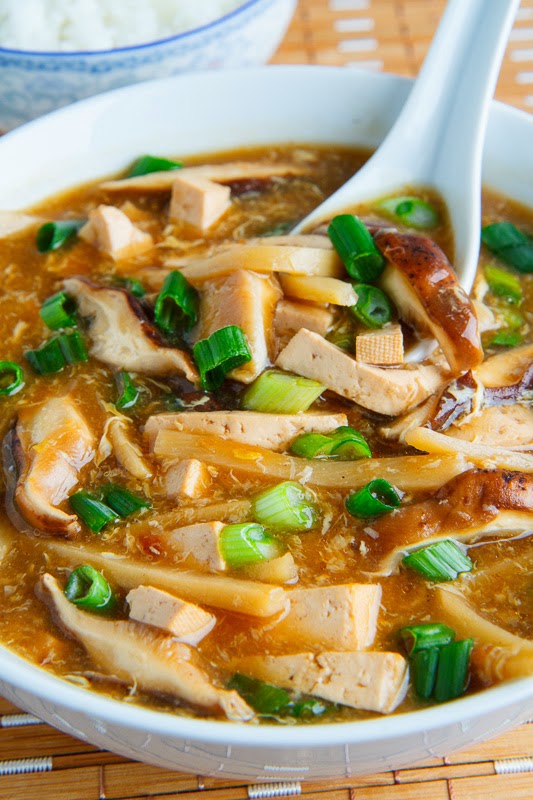
Click here: http://www.closetcooking.com/2015/02/quick-and-easy-chinese-hot-and-sour-soup.html

6. Chinese Chives with Tofu 炒韭菜豆腐

Serves: 4

Click here: http://www.bubblews.com/posts/sauteed-chinese-chive-with-tofu

7. Bok Choy and Shiitake Mushroom Noodles 面条加香菇白菜

Serves: 2

Click here: http://divinehealthyfood.com/bok-choy-shiitake-mushroom-noodles/#comment-145

8. Stir-Fried Pea Shoots 炒豆苗

Serves: 4

Click here: http://www.bonappetit.com/recipes/article/how-to-cook-pea-shoots

9. Shrimp with Snow Peas 豌豆虾仁

Serves: 4

Click here: http://rasamalaysia.com/shrimp-with-snow-peas-recipe/?pid=616#image-337

10. Salt and Pepper Tofu 椒盐豆腐

Serves: 4

Click here: http://www.veggiebelly.com/2010/07/restaurant-style-chinese-salt-pepper-tofu.html

References:

Altman M, Cahill Holland J, Lundeen D, Kolko RP, Stein RI, Saelens BE, Welch
RR, Perri MG, Schechtman KB, Epstein LH, Wilfley DE. Reduction in Food Away from
Home Is Associated with Improved Child Relative Weight and Body Composition
Outcomes and This Relation Is Mediated by Changes in Diet Quality. J Acad Nutr
Diet. 2015 May 8.

Bezerra IN, Curioni C, Sichieri R. Association between eating out of home and body weight. Nutr Rev. 2012 Feb;70(2):65-79.

Djoussé L, Petrone AB, Gaziano JM. Consumption of fried foods and risk of
heart failure in the physicians’ health study. J Am Heart Assoc. 2015 Apr
23;4(4).

Guthrie JF, Lin BH, Frazao E. Role of food prepared away from home in the
American diet, 1977-78 versus 1994-96: changes and consequences. J Nutr Educ
Behav. 2002 May-Jun;34(3):140-50.

won YS, Ju SY. Trends in nutrient intakes and consumption while eating-out
among Korean adults based on Korea National Health and Nutrition Examination
Survey (1998-2012) data. Nutr Res Pract. 2014 Dec;8(6):670-8.

Yeh MC, Heo M, Suchday S, Wong A, Poon E, Liu G, Wylie-Rosett J. Translation
of the Diabetes Prevention Program for diabetes risk reduction in Chinese
immigrants in New York City. Diabet Med. 2015 Jul 14.

Posted in Ageing & Culture, Caregiving, International Campaigns, International Policies

Where do Asian immigrants go when we have dementia?

My husband and I have been talking about kids for a long time now, and I’m certainly not getting any younger. As the days tick by and my facebook is filled with walls of baby photos in my activity feed, I wonder about having my own. On top of that I wonder what the future will hold for my children? I am Singaporean, my husband is Australian, our racial and cultural differences are vast. We look like chalk and cheese and our cultures are chalk and cheese. I am born and raised in Singapore and proud of it.

Looking back at my youth when I was growing up, the house was filled with an orchestra of languages. Instead of the wind, brass, drums and percussions, we had English songs from Abba, Michael Jackson, Kenny Rogers, playing on the radio. I remembered my mum even attended a Debbie Gibson concert. That was really cool! I remembered the souvenir she brought back, it was a fan in the shape of a blue hand, sounds odd now but when I was a kid, that was possibly super cool.

There would be English in the background, my great grandmother speaking in the Teochew dialect, my mum in Mandarin and my dad would speak in either English or Teochew. Sometimes I hear him speaking Malay to the man who comes to collect the payments for our daily newspaper. Singapore was an amazing melting pot of cultures and languages, and I embraced every crumb of the colourful heritage that I can call my own. There was never a dull moment growing up in Singapore, my childhood was certainly a happy one.

Image from abusymom.wordpress.com

My child will have an Asian migrant parent depending on where we will reside when we retire, and I often wonder what will happen to my children when I have dementia. Will they be able to speak my language if I regress to Mandarin or Teochew? Will I lose the ability to communicate because there will be no one who can understand me? I remember caring for a lady who spoke Russian and I would carry a notebook with me with some basic words like “dobroye utro” or good morning, “Da” for yes and “Net” for no, and about 20 other phrases for different times of the day and meals.  I wondered if her children could speak the language?

Sometimes I watch the western videos on nursing homes or visit residential aged care homes and I think, I’m never going to be comfortable in a place like this. It’s beautiful, no doubt about it, but there’s nothing familiar in the four walls. Even the people look foreign, no one speaks my language, the food is all wrong and if I were to live in a residential aged care facility, it would be like living in a foreign television show. I would think I was on the Truman show or something. I have only seen one Asian nursing home in Australia, the home is lovely, with Asian staff and sumptuous simple Chinese meals, with menus beautifully printed in Mandarin, but the environment itself looks like community hospital on the inside with nursing reception counters and a very modern western feel.

There are 10.6 million Asian immigrants in the United States of America in 2009, in the United Kingdom almost 10% of immigrants are from South Asia and in Australia a million immigrants were from Asia according to the statistics in 2011.

I wonder if I am the only person with these worries and thoughts? I wonder what happens to Asian immigrants who work long and hard to bring their children to the west, only to live out the end of their lives in confusing and disorientating environments? What can we do for them, and how can we make their lives better? Will there be more places that can cater for Asian migrants? Where can we go to feel at home when we have dementia?

I have no answers and only questions, hopefully, time will tell.

References:

Australian Bureau of Statistics 2004, ‘Where do the Overseas-born population live?’ in Australian Social Trends, cat. no. 4102.0, viewed: 18 May 2012, <http://www.abs.gov.au/AUSSTATS/abs@.nsf/mf/4102.0>.

Department of Immigration and Citizenship, Booklet 6, General Skilled Migration, viewed: 24 April 2012, <www.immi.gov.au>.

Australian Bureau of Statistics 2010, Migration, Australia, 2009-10, cat. no. 3412.0, viewed: 18 May 2012, <http://www.abs.gov.au/AUSSTATS/abs@.nsf/Lookup/3412.0Main+Features12009-10>.

Salt, J. “International Migration and the United Kingdom, 2010.” Report of the United Kingdom SOPEMI correspondent to the OECD, Migration Research Unit, University College London, 2011.

U.S. Department of Homeland Security, Office of Immigration Statistics. 2010 Yearbook of Immigration Statistics.

I’ve attached a video that I found very moving about the trials and tribulations experienced by migrant parents to help people understand the difficulties of resettling and raising children in a foreign land. I also found a funny video about the same group of kids and parents imitating each other and that’s actually really funny.


Children Of Asian Immigrants Reveal Sacrifices Their Parents Made

Asian Moms And Their Kids Imitate Each Other

https://youtu.be/DIPL1ZMdu0g