Posted in Ageing & Culture, Caregiving, Research & Best Practice

Older Adults Are Still Likely Underestimating Cognitive Impairment in Their Families

grandma-515530_960_720

News release

 Study Finds Racial Differences in Reporting and Overall Trend of Underreporting Cognitive Impairment

An increasing number of older adults are reporting cognitive impairment in their families over the past two decades, according to a new study led by researchers at NYU Rory Meyers College of Nursing and East Carolina University’s Brody School of Medicine.

The study, which also finds ethnic and racial differences in reporting cognitive impairment, is published in Preventing Chronic Disease, a journal of the Centers for Disease Control and Prevention.

The aging population in the U.S. is growing rapidly, with the number of people age 65 and over in 2010 (40.2 million) projected to more than double by 2050. With the rapid increase in the aging population, the size of the population with cognitive impairment and dementia will continue to accelerate, highlighting the importance of identifying cognitive changes.

“Cognitive impairment may serve as a precursor to future dementia. Early detection of cognitive impairment can facilitate timely medical treatments, appropriate care planning, and prevention efforts,” said Bei Wu, PhD, Dean’s Professor in Global Health and director of Global Health & Aging Research at NYU Meyers, co-director of NYU Aging Incubator, and the study’s senior author.

The study sought to examine the trends of self-reported cognitive impairment among five major racial/ethnic groups from 1997 to 2015 in the United States. The researchers used data from the National Health Interview Survey, including 155,682 individuals age 60 and above in their sample. The large sample included people of a variety of races and ethnicities, including Asian Americans,  Blacks, Hispanics, Native Americans, non-Hispanic Blacks, and non-Hispanic Whites.

Rather than using a screening test or clinical examination to evaluate cognitive impairment, respondents were asked to report if any family member was “limited in anyway because of difficulty remembering or because of experiencing periods of confusion.”

The researchers found an increasing trend in self-reported cognitive impairment: the overall rate increased from 5.7 percent in 1997 to 6.7 percent in 2015 among older adults in the U.S. This finding may suggest that awareness of cognitive impairment, perhaps from heightened public attention to and interest in Alzheimer’s disease, has improved to some extent.
grandma-748254_960_720

When looking at each racial/ethnic group, however, the increasing trend was significant only among White respondents. In Whites, the rate of self-reported cognitive impairment increased from 5.2 percent in 1997 to 6.1 percent in 2015. Asian American, Black, Hispanic, and Native American respondents had higher rates of self-reported cognitive impairment than Whites, but these rates did not significantly increase from 1997 to 2015.

Regardless of the overall increasing trend, the rates of self-reported cognitive impairment were still low, which may suggest underreporting. The researchers note that the rates of self-reported cognitive impairment are much lower than the estimated prevalence of cognitive impairment. For adults 65 years and older, the rate of self-reported cognitive impairment was 6.3 percent in 2000 and 7.5 percent in 2012, while the estimated prevalence of cognitive impairment in the same age group was 21.2 percent in 2000 and 18.8 percent in 2012.

These findings underscore the need to further promote awareness of cognitive impairment, especially in minority populations. Different cultures hold different beliefs and perceptions of disease and aging. For instance, research has found that compared to Whites, minorities are less likely to seek treatment for psychiatric symptoms because of lack of access to care or due to stigma.

“Culturally specific health education is needed in individuals, family members, and healthcare providers to improve awareness and knowledge of signs and early symptoms of Alzheimer’s and other dementia,” said Huabin Luo, PhD, of East Carolina University.

In addition to Wu and Luo, Gary Yu of NYU Meyers coauthored the study.
Posted in Ageing & Culture, Caregiving

‘Hundreds’ of Young Adults in Older Adults Care Homes

A recent article by BBC Scotland health correspondent touches on the plights of younger adults placed in care homes for the elderly due to the lack of services in the community.

Romana (seen below) is one of the many in Scotland who was placed in a care home for the elderly when she suffered a brain haemorrhage at the age of 23, whilst pregnant.

Given the non-purpose built environment, the community in the care home and the level of services of care, it was no appropriate for a person such a Romana. She felt she had lost her family. It took 2 years before she was offered a place in a neurological centre in Aberdeen according to the article.

Pamela Mackenzie (Sue Ryder’s assistant director Scotland) was quoted as saying that “Romana was quite a different lady when she first came. She was withdrawn and depressed and she really had been written off.”

This is certainly an important issue to address the inequalities in care and ensure that younger adults attain the right services that need for rehabilitation to enable them to return to their families.

Image from the original article, for more information read: ‘Hundreds’ of young in old people’s homes

Posted in The Built Environment

Japan modern-age retirement homes 

I saw this awesome article titled “Sign me up! These modern-age retirement homes in Japan resemble five-star hotels!” It’s written by  on Rocketnews24. Thought I’d share this with everyone.

One of Japan’s many senior citizens’ homes was recently featured in a TV special for having the atmosphere and amenities of a top-notch hotel. We’re talking a concierge service, on-site restaurant with an extended menu, and an exclusive beauty parlor, in addition to all of the nursing and medical services that one would expect from any reliable retirement home. Traditionally, people in Japan would rely on their children and grandchildren to care for them when they get old, but for those that have the ability to afford it, living out their last few years in luxury probably sounds like a suitable substitute.

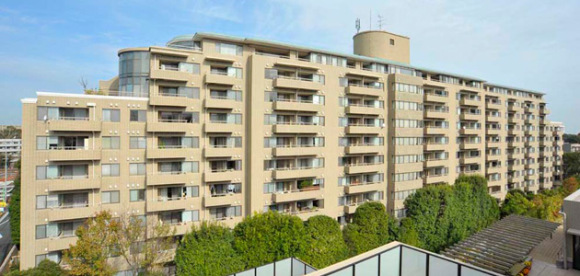
Sacravia Seijou is a beautiful senior citizens’ home in the high-class neighborhood of Seijou in Tokyo’s Chiyoda Ward. Standing tall in a gorgeous grove of ginkgo trees and cherry blossoms, you’d think it was a fancy hotel, even upon walking into the lobby. It’d take looking at a brochure to realize that you’re actually standing in a retirement home.

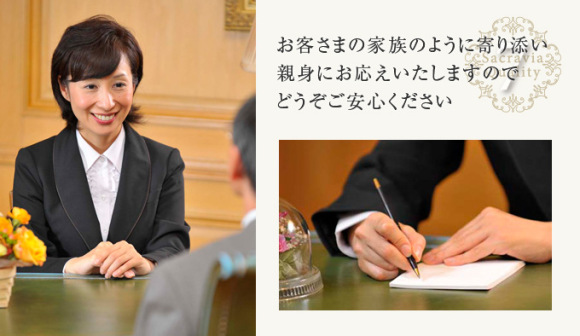
In the building’s lobby area there is a concierge desk, set up exactly the same way as a hotel reception desk. Residents can leave their room keys at the desk whenever they go outdoors or request a wake-up call in the morning. Staff there will handle any mail or package deliveries, take phone calls on behalf of the residents, inform them of when they have visitors, and assist them in setting up reservations. It’s a one-stop center for information and customer service.

Also visible from the retirement home’s lobby is a classy little restaurant. Unlike most senior citizens’ homes, which offer about as much variety in dining as a high school cafeteria, Sacravia’s restaurant has 30 different lunch items, with food options ranging from Japanese style meals to Western and Chinese. In the evening, the menu expands to 40 standard items. There is an ever-changing seasonal menu and special food items tailored to the needs of those with special dietary preferences or restrictions based on current health treatments or physical conditions. For those unwilling or unable to visit the restaurant in person, room service is also available. And, as a special treat, every Tuesday a chef from the popular sushi chain Midori comes and makes sushi for the seniors.

In regards to daily necessities, there is also a small supermarket and a beauty parlor on the premises. The store sells common, everyday goods and also offers a cleaning service, while the beauty parlor is open every weekday for those who need a nice trim.

Of course, no senior citizens’ home would be complete, or relevant for that matter, without a clinic. Doctors are stationed at Sakravia 24 hours a day every day of the week. They can handle any sort of problem from internal medicine and digestion to ophthalmology, cardiology, dermatology, psychosomatic medicine, and orthopedics.  Twice a year, the office runs comprehensive check-ups, but if a problem arises, even in the middle of the night, nurses are always on call for home visits.

So what does it cost to live in a place like this? The lowest possible price, just to move in is 128,000,000 yen (US$1,314,300) for one person or 144,000,000 yen (US$1,478,600) for married couples! On top of that are monthly fees averaging 240 to 340 thousand yen (US$2,465 to $3,490) for singles, though that includes upkeep, restaurant management, and basic rates for water, gas, etc.

That down payment alone is more money than I could make in 35 years! Obviously, these services are reserved for the elite.

▼ This is a picture of one of Sakravia’s most spacious (and expensive) rooms on the top floor of the building.

retirement homes05

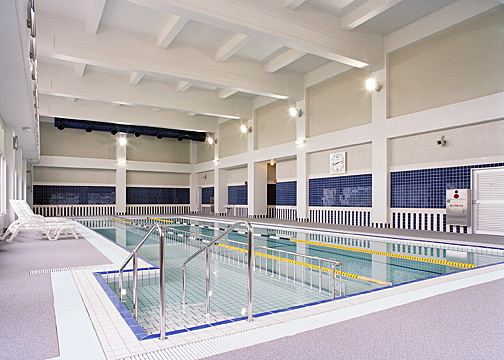
But you know, Sakravia isn’t the only high-end retirement home out there. For example, Silver Residence Kourinkaku in the mountains of Fukushima Prefecture is large and lavish enough to contain its own gym, heated pool, and hot springs.

retirement homes10

Apparently, moving around within a pool is the recommended exercise for old people, since the body’s natural buoyancy relieves pressure on their joints and doesn’t strain the knees or back.

retirement homes07

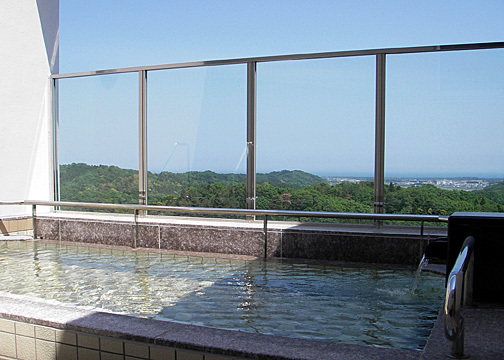
Those more interested in lounging than moving about can take advantage of the large baths on the top floor of the building, open 24 hours. Then, when it’s time to eat, residents have a choice of cooking in the kitchen located in their rooms or visiting the building’s recommended restaurant, Sankaikan, for a well-balanced meal with a perfect calorie count.

retirement homes06

The Silver Residence has both Western-style and more traditional Japanese-style rooms for prospective residents to choose from. And the ever-important price? Two people can move in for between 10,300,000 and 16,700,000 yen (US$105,760 to $171,475), plus an additional 249,200 yen a month ($2,553).

retirement homes11

Better, but still just a bit out of my price range…

Source: Sign me up! These modern-age retirement homes in Japan resemble five-star hotels! | RocketNews24

Jo does not work or receive any funding from the company or organization in this article.

Posted in Ageing & Culture, Caregiving, International Campaigns, International Policies

Where do Asian immigrants go when we have dementia?

My husband and I have been talking about kids for a long time now, and I’m certainly not getting any younger. As the days tick by and my facebook is filled with walls of baby photos in my activity feed, I wonder about having my own. On top of that I wonder what the future will hold for my children? I am Singaporean, my husband is Australian, our racial and cultural differences are vast. We look like chalk and cheese and our cultures are chalk and cheese. I am born and raised in Singapore and proud of it.

Looking back at my youth when I was growing up, the house was filled with an orchestra of languages. Instead of the wind, brass, drums and percussions, we had English songs from Abba, Michael Jackson, Kenny Rogers, playing on the radio. I remembered my mum even attended a Debbie Gibson concert. That was really cool! I remembered the souvenir she brought back, it was a fan in the shape of a blue hand, sounds odd now but when I was a kid, that was possibly super cool.

There would be English in the background, my great grandmother speaking in the Teochew dialect, my mum in Mandarin and my dad would speak in either English or Teochew. Sometimes I hear him speaking Malay to the man who comes to collect the payments for our daily newspaper. Singapore was an amazing melting pot of cultures and languages, and I embraced every crumb of the colourful heritage that I can call my own. There was never a dull moment growing up in Singapore, my childhood was certainly a happy one.

Image from abusymom.wordpress.com

My child will have an Asian migrant parent depending on where we will reside when we retire, and I often wonder what will happen to my children when I have dementia. Will they be able to speak my language if I regress to Mandarin or Teochew? Will I lose the ability to communicate because there will be no one who can understand me? I remember caring for a lady who spoke Russian and I would carry a notebook with me with some basic words like “dobroye utro” or good morning, “Da” for yes and “Net” for no, and about 20 other phrases for different times of the day and meals.  I wondered if her children could speak the language?

Sometimes I watch the western videos on nursing homes or visit residential aged care homes and I think, I’m never going to be comfortable in a place like this. It’s beautiful, no doubt about it, but there’s nothing familiar in the four walls. Even the people look foreign, no one speaks my language, the food is all wrong and if I were to live in a residential aged care facility, it would be like living in a foreign television show. I would think I was on the Truman show or something. I have only seen one Asian nursing home in Australia, the home is lovely, with Asian staff and sumptuous simple Chinese meals, with menus beautifully printed in Mandarin, but the environment itself looks like community hospital on the inside with nursing reception counters and a very modern western feel.

There are 10.6 million Asian immigrants in the United States of America in 2009, in the United Kingdom almost 10% of immigrants are from South Asia and in Australia a million immigrants were from Asia according to the statistics in 2011.

I wonder if I am the only person with these worries and thoughts? I wonder what happens to Asian immigrants who work long and hard to bring their children to the west, only to live out the end of their lives in confusing and disorientating environments? What can we do for them, and how can we make their lives better? Will there be more places that can cater for Asian migrants? Where can we go to feel at home when we have dementia?

I have no answers and only questions, hopefully, time will tell.

References:

Australian Bureau of Statistics 2004, ‘Where do the Overseas-born population live?’ in Australian Social Trends, cat. no. 4102.0, viewed: 18 May 2012, <http://www.abs.gov.au/AUSSTATS/abs@.nsf/mf/4102.0>.

Department of Immigration and Citizenship, Booklet 6, General Skilled Migration, viewed: 24 April 2012, <www.immi.gov.au>.

Australian Bureau of Statistics 2010, Migration, Australia, 2009-10, cat. no. 3412.0, viewed: 18 May 2012, <http://www.abs.gov.au/AUSSTATS/abs@.nsf/Lookup/3412.0Main+Features12009-10>.

Salt, J. “International Migration and the United Kingdom, 2010.” Report of the United Kingdom SOPEMI correspondent to the OECD, Migration Research Unit, University College London, 2011.

U.S. Department of Homeland Security, Office of Immigration Statistics. 2010 Yearbook of Immigration Statistics.

I’ve attached a video that I found very moving about the trials and tribulations experienced by migrant parents to help people understand the difficulties of resettling and raising children in a foreign land. I also found a funny video about the same group of kids and parents imitating each other and that’s actually really funny.


Children Of Asian Immigrants Reveal Sacrifices Their Parents Made

Asian Moms And Their Kids Imitate Each Other