Posted in Ageing & Culture, Caregiving

Stressed and exhausted caregivers need better support

File 20180404 189824 7qt3rl.jpg?ixlib=rb 1.1

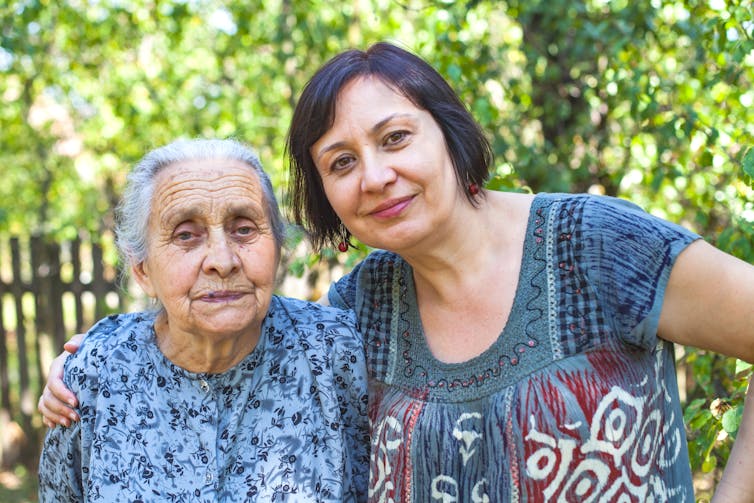
Up to 80 per cent of community care for older adults is provided by unpaid informal caregivers. In the absence of government supports, many of them struggle with exhaustion, stress and depression.
(Shutterstock)

Jenny Ploeg, McMaster University and Maureen Markle-Reid, McMaster University

When Brenda retired from paid work, it was like a care-giving tsunami.

Her dad and stepmom moved in with her, her husband had a heart attack and she became a grandma — all within six months.

Brenda is one of 8.1 million Canadians who have taken on challenging unpaid roles — as informal caregivers for people living with physical or cognitive conditions or chronic life-limiting illnesses.

Her stress increased as her parents started to deteriorate physically and mentally. She tried to stay ahead of the ever-changing situation, but became exhausted after her dad started waking in the middle of the night and getting dressed to go out.

She looked on the internet for support in her care-giving role.

As co-scientific directors of the Aging, Community and Health Research Unit at McMaster University, we are working together with older adults with multiple conditions and caregivers like Brenda to promote optimal aging at home.

Our research shows that current health and social services do not address the complex needs of older adults or their family caregivers.

It also suggests that web-based interventions may help reduce depressive symptoms, anxiety and stress or distress for these caregivers.

Who cares for the caregivers?

Older adults with chronic conditions rely heavily on their family caregivers to coordinate their care, monitor medication and accompany them to appointments.

In fact, 70 to 80 per cent of community care for older adults is provided by informal caregivers as opposed to formal care providers.

Increasingly, these older adults have multiple chronic conditions (MCC), such as dementia and stroke, not just one. And as this prevalence of multiple conditions increases worldwide, it’s associated with poor health and higher health-care use and costs.

Women represent a slight majority of Canadian caregivers at 54 per cent and spend more time per week on caregiving than males.

Caregivers report that they do not receive adequate home care or respite services to support them in their roles. There are, for instance, long wait lists for long-term care beds.

Research shows that caregivers spent $12.6 million in one year on expenses related to their roles.
(Shutterstock)

While caregiving is rewarding, many informal caregivers experience stress and anxiety leading to their own poor mental and physical health.

Informal caregivers feel overwhelmed with multiple requests for their time and frustrated when they can’t plan too far in advance.

“I felt like I was spending a lot of time waiting. Waiting for people to get ready. Waiting for people to get back to me. Waiting at appointments,” said Brenda.

Some reach a crisis point and leave their loved ones in the hospital emergency room because they are unable to continue in their caregiving role. This contributes to an already overburdened acute-care system.

Web-based supports can help

We conducted a systematic review and meta-analysis that examined the impact of different types of internet-based interventions on caregiver mental health outcomes.

One example of such a web-based support is My Tools 4 Care, developed by our colleague Dr. Wendy Duggleby at the University of Alberta and her team.

We found evidence that internet-based interventions had a positive effect on reducing depressive symptoms, stress, distress and anxiety in caregivers of adults with a chronic condition.

Internet-based interventions reduce caregiver depression and anxiety.
(Shutterstock)

The most effective category of online support was information and/or education with or without professional psychological support. Information provided together with combined peer and professional psychological support was also effective, to a lesser extent.

However, although many websites for caregivers provide valuable information, we found that they need to be easier to navigate and use.

Caregivers in our study made recommendations to improve the content and format of online resources. Suggestions included: Providing personalized information about local resources; sharing practical caregiving tips and strategies; creating opportunities to connect online with other caregivers; and having user-friendly features that are easy to navigate.

Nova Scotia leads the way

Caregiving comes with costs to the caregivers — to their health and to their finances.

Half of caregivers are between 45-65 years of age, in the peak of their earning years. They often take time off work to take their loved ones to appointments, and some must leave work early when the health of their loved one worsens. Out-of-pocket expenses for equipment, medications and parking can also be expensive.

Research shows that caregivers spent $12.6 million in one year on expenses related to their roles.

Nova Scotia is the only province in Canada that has a monthly income or allowance for caregivers, known as the Caregiver Benefit Program. Financial assistance from the government for caregivers in other parts of Canada mainly take the form of federal tax credits and insurance benefits.

And yet caregivers make vitally important but often unrecognized contributions to our society. It is estimated that they contribute $25 billion in unpaid labour.

Change is urgently needed to better support our caregivers.The Conversation

Jenny Ploeg, Professor, School of Nursing, McMaster University and Maureen Markle-Reid, Associate Professor and Canada Research Chair in Person Centred Interventions for Older Adults with Multimorbidity and their Caregivers, School of Nursing, McMaster University

This article was originally published on The Conversation. Read the original article.

Posted in Caregiving, Dementia, International Policies, Research & Best Practice, The Built Environment

Australia’s residential aged care facilities are getting bigger and less home-like

File 20180921 129847 1di589.jpg?ixlib=rb 1.1

Residential aged care facilities should be more like a home and less like a hospital.
from shutterstock.com

Ralph Hampson, University of Melbourne

Most older people want to stay at home as long as they can. When this is no longer possible, they move into residential aged care facilities, which become their home. But Australia’s care facilities for the aged are growing in size and becoming less home-like.

In 2010–11, 54% of residential aged care facilities in major Australian cities had more than 60 places, and the size of the average facility is growing.

Today, more than 200,000 Australians live or stay in residential aged care on any given day. There are around 2,672 such facilities in Australia. This equates to an average of around 75 beds per facility.

Large institutions for people with disability and mental illness, as well as orphaned children, were once commonplace. But now – influenced by the 1960s deinstitutionalisation movement – these have been closed down and replaced with smaller community-based services. In the case of aged care, Australia has gone the opposite way.


Read more:
How our residential aged-care system doesn’t care about older people’s emotional needs


Why is smaller better?

Evidence shows that aged care residents have better well-being when given opportunities for self-determination and independence. Internationally, there has been a move towards smaller living units where the design encourages this. These facilities feel more like a home than a hospital.

The World Health Organisation has indicated that such models of care, where residents are also involved in running the facility, have advantages for older people, families, volunteers and care workers, and improve the quality of care.

In the US, the Green House Project has built more than 185 homes with around 10-12 residents in each. Studies show Green House residents’ enhanced quality of life doesn’t compromise clinical care or running costs.

Older people have a better quality of life if they can be involved in outdoor activities.
from shutterstock.com

Around 50% of residents living in aged care facilities have dementia. And research has shown that a higher quality of life for those with dementia is associated with buildings that help them engage with a variety of activities both inside and outside, are familiar, provide a variety of private and community spaces and the amenities and opportunities to take part in domestic activities.

In June 2018, an Australian study found residents with dementia in aged-care facilities that provided a home-like model of care had far better quality of life and fewer hospitalisations than those in more standard facilities. The home-like facilities had up to 15 residents.

The study also found the cost of caring for older people in the smaller facilities was no higher, and in some cases lower, than in institutionalised facilities.


Read more:
Caring for elderly Australians in a home-like setting can reduce hospital visits


There are some moves in Australia towards smaller aged care services. For example, aged care provider Wintringham has developed services with smaller facilities for older people who are homeless. Wintringham received the Building and Social Housing Foundation World Habitat Award 1997 for Wintringham Port Melbourne Hostel. Its innovative design actively worked against the institutional model.

Bigger and less home-like

Historically, nursing homes in Australia were small facilities, with around 30 beds each, often run as family businesses or provided by not-for-profit organisations. Between 2002 and 2013 the proportion of facilities with more than 60 beds doubled to 48.6%. Financial viability rather than quality of care drove the increase in size.

Today, around 45% of facilities are operated by the private for-profit sector, 40% by religious and charitable organisations, 13% by community-based organisations, 3% by state and territory governments, and less than 1% by local governments.


Read more:
It’s hard to make money in aged care, and that’s part of the problem


In 2016, the Australian Institute of Health and Welfare (AIHW) reported that residential care services run by government organisations were more likely to be in small facilities. One-fifth (22%) of places in these facilities are in services with 20 or fewer places. Almost half (49%) of privately-run residential places are found in services with more than 100 places.

All of this means that more older Australians are living out their last days in an institutional environment.

Once larger facilities become the norm, it will be difficult to undo. Capital infrastructure is built to have an average 40-year life, which will lock in the institutional model of aged care.

The built environment matters. The royal commission provides an opportunity to fundamentally critique the institutional model.The Conversation

Ralph Hampson, Senior Lecturer, Health and Ageing, University of Melbourne

This article is republished from The Conversation under a Creative Commons license. Read the original article.

Posted in Caregiving, Dementia, International Policies, Research & Best Practice, The Built Environment, Therapeutic Activities

How our residential aged-care system doesn’t care about older people’s emotional needs

File 20180919 158222 1ykjw04.jpg?ixlib=rb 1.1
Most aged-care residents don’t feel like they are loved or belong in their facility.
from shutterstock.com

Lee-Fay Low, University of Sydney

All humans have fundamental needs. These are physiological (food, drink, clothing, sleep), safety (emotional security, physical safety, health), love and belonging (friendships, community), esteem (respect, dignity) and self-actualisation (accomplishment, personal development).

For people living in Australia’s residential aged-care facilities, these needs are often not met.

Most residents do not feel they are loved or belong in the facility. Like aged-care resident Neda Borenstein, whose secret camera footage broadcast on ABC’s Four Corners showed her singing the Australian national anthem in bed while she waited more than three hours to be changed. “I’m just a number,” Neda told her carer when she finally returned to help her up.

Less than one-third of residents we interviewed said they were friends with another resident. This means most don’t have the social support associated with friendships. Most residents said they felt socially isolated, which is associated with poor well-being.

A 2016 study of residents’ lived experiences in an aged-care facility found many felt they had little dignity, autonomy or control. Outside of meal and structured activity times, people with dementia spend most of their time stationary, alone and doing very little or nothing.

One study looking at interactions between residents and their carers showed residents were alone 40% of the time they were observed. When staff were present, they mostly did not engage verbally, emotionally or physically with the resident.

Aged-care facilities can also feel psychologically unsafe to residents.
Residents with dementia may be locked in secure units or physically restrained, using mechanisms such as bedrails or restraining belts.

Residents sometimes don’t get along. They might argue yell, swear, pinch, hit or push each other. We don’t have good data about how often resident-to-resident verbal and physical aggression happens, but it can result in injury and even death.


Read more:
Violence between residents in nursing homes can lead to death and demands our attention


The consequences of unmet needs?

Residents can react negatively when their needs are not met. They become bored, sad, stressed, cranky, anxious, depressed, agitated, angry and violent.

In people with dementia, we used to call these reactions “behavioural and psychological symptoms of dementia” (BPSD). But people with dementia have been pointing out these are normal human responses to neglect, not symptoms of dementia. Almost all (90%) aged-care residents display one or more of these negative reactions.

In many facilities, staff “manage” such reactions with the use of sedating antipsychotic medications. But clinical guidelines recommend looking at the reasons people may be reacting that way and addressing those before medication.


Read more:
Needless treatments: antipsychotic drugs are rarely effective in ‘calming’ dementia patients


Half of nursing home residents have symptoms of depression, and a third have symptoms of anxiety. More than half of residents have been found in studies to behave in ways that might suggest they no longer wish to live. This includes refusing food or medication, one-third of residents having suicidal thoughts and a small number of nursing home residents actually taking their own lives.


Read more:
Too many Australians living in nursing homes take their own lives


Why does Australian aged care fail to meet fundamental human needs?

We might not be spending enough on aged care to enable providers to meet fundamental human needs. Australia spends about 1% of its GDP on long-term care – less than the OECD average of 1.5%.

Private investment in aged care is growing, as have residential aged care profits, but it’s a difficult industry in which to make money. Insufficient funding translates to insufficient staff and less skilled staff. Our funding system rewards dependency, and there are no funding incentives for providers to improve the psychological well-being of residents, or go beyond that to help them flourish.

Friendships are an important part of healthy ageing.
from shutterstock.com

People looking for a nursing home don’t have any independently provided information by which to compare quality or performance.

The National Quality Indicator Program – a program for measuring care in residential aged-care facilities that began in 2016 – was meant to provide information for people trying to compare facilities on clinical indicators of care quality.

But participation in the program is voluntary for providers. Neither quality of life nor emotional well-being indicators are included in the suite of quality indicators (even though one has been trialled and found to be suitable). We also don’t know if or when the data might be published.

What is needed?

We need a fundamental shift in community, government, service provider, staff and regulatory expectations of what residential aged care does. Our model of aged care is mainly about clinical care, while neglecting emotional care.

For instance, friendships are a unique social interaction that facilitate healthy ageing, but many residents told us that the social opportunities in their nursing home did not align with their expectations of friendship.


Read more:
Loneliness is a health issue, and needs targeted solutions


We need our model of care to be a model of a home. In a home everyone contributes, has a say in what happens in the home (such as the menu, interior design, routine and functions), is able to invite their friends to their home for a meal, and can leave during the day and come back at night. A home is a safe place, where people are loved and nurtured, and where they can be active and fulfilled.The Conversation

Lee-Fay Low, Associate Professor in Ageing and Health, University of Sydney

This article is republished from The Conversation under a Creative Commons license. Read the original article.

Posted in Caregiving, Dementia, Research & Best Practice, The Built Environment

Designing for dementia

elderly-1461424_640How can design improve the lives of people with Alzheimer’s and other types of dementia?

You are stuck in a busy, noisy, unfamiliar building. You are unsure of where you are or even what time of year it is. All the corridors look the same. You find it hard to judge how far away the floor is. You can’t remember where the toilets are. You can’t remember why you’re here. You feel a rising sense of panic as you search for clues to where you are, and even who you are.

As the world’s population expands and the proportion of older people grows, the needs of elderly patients are increasingly relevant to healthcare design. It is estimated that one in four people in UK hospital beds have dementia, and the number of people with dementia is expected to double over the next 30 years.

The King’s Fund, an independent charity working to improve health and healthcare in England, was funded by the Department of Health to carry out a special project looking at how the design of hospitals, outpatient services and care homes could be improved to make life better for people with dementia. This Enhancing the Healing Environment programme was the first systematic look at this topic in the UK, and has resulted in materials and resources which are now being used globally. As well as guidelines for what makes a service dementia-friendly, there is a tool for assessing how dementia-friendly a service is.

The guidelines outline five key principles: meaningful activity, familiarity, legibility, orientation and wayfaring.

What do places that use these principles look like in real life? Age-related changes to vision mean that older people often find it harder to see contrasts and to perceive depth. If flooring changes colour between rooms this can seem like a step and be confusing. If carpets have bold, swirling patterns these can seem like obstacles or holes, which makes moving slow and difficult and can lead to falls. Dementia-friendly wards have matt, even-coloured flooring and clear sightlines through corridors.

The most helpful designs use clear contrasts in colour to mark spaces that have different uses, particularly to flag where toilets are. The toilets themselves have contrasting toilet seats and rails so the person can see where to sit.

Sarah Waller of the King’s Fund notes how innovations that might make some people’s lives easier can actually make things more confusing for people with dementia: “Odd-looking taps are difficult to understand. Sensor taps are almost impossible.”

Features similar to those seen in evidence-based hospital design are also important, including increased light, less noise and use of natural scenes. Increased opportunities for social space, and memorabilia and artworks that prompt memory, can also help. Increased access to staff, for example by using a cluster model of nursing rather than enclosed nursing stations, helps to reassure patients.

The results have shown how crucial good design can be. Changes like these have led to “fewer falls, less violence and aggressive behaviour, and less staff sickness,” says Waller. “Actually we’re making the environment friendly for everybody,” she adds. “Good dementia design is good for everybody.”


Find out more about the Enhancing the Healing Environment project.


You are stuck in a busy, noisy, unfamiliar building. You are unsure of where you are or even what time of year it is. All the corridors look the same. You find it hard to judge how far away the floor is. You can’t remember where the toilets are. You can’t remember why you’re here. You feel a rising sense of panic as you search for clues to where you are, and even who you are.

As the world’s population expands and the proportion of older people grows, the needs of elderly patients are increasingly relevant to healthcare design. It is estimated that one in four people in UK hospital beds have dementia, and the number of people with dementia is expected to double over the next 30 years.

The King’s Fund, an independent charity working to improve health and healthcare in England, was funded by the Department of Health to carry out a special project looking at how the design of hospitals, outpatient services and care homes could be improved to make life better for people with dementia. This Enhancing the Healing Environment programme was the first systematic look at this topic in the UK, and has resulted in materials and resources which are now being used globally. As well as guidelines for what makes a service dementia-friendly, there is a tool for assessing how dementia-friendly a service is.

The guidelines outline five key principles: meaningful activity, familiarity, legibility, orientation and wayfaring.

What do places that use these principles look like in real life? Age-related changes to vision mean that older people often find it harder to see contrasts and to perceive depth. If flooring changes colour between rooms this can seem like a step and be confusing. If carpets have bold, swirling patterns these can seem like obstacles or holes, which makes moving slow and difficult and can lead to falls. Dementia-friendly wards have matt, even-coloured flooring and clear sightlines through corridors.

The most helpful designs use clear contrasts in colour to mark spaces that have different uses, particularly to flag where toilets are. The toilets themselves have contrasting toilet seats and rails so the person can see where to sit.

Sarah Waller of the King’s Fund notes how innovations that might make some people’s lives easier can actually make things more confusing for people with dementia: “Odd-looking taps are difficult to understand. Sensor taps are almost impossible.”

Features similar to those seen in evidence-based hospital design are also important, including increased light, less noise and use of natural scenes. Increased opportunities for social space, and memorabilia and artworks that prompt memory, can also help. Increased access to staff, for example by using a cluster model of nursing rather than enclosed nursing stations, helps to reassure patients.

The results have shown how crucial good design can be. Changes like these have led to “fewer falls, less violence and aggressive behaviour, and less staff sickness,” says Waller. “Actually we’re making the environment friendly for everybody,” she adds. “Good dementia design is good for everybody.”


Find out more about the Enhancing the Healing Environment project.


This article first appeared on Mosaic and is republished here under a Creative Commons licence.