Posted in Caregiving, International Campaigns

Can Dementia-Friendly Communities help to lower the risk of dementia

An article in Scientific American report clear evidence provided by the Cognitive Function and Aging Study (CFAS), spearheaded by Professor Carol Brayne (University of Cambridge); evidently showing that rates of dementia in older adults have fallen by 24 percent in parts of the UK (Matthews et al. 2013).

Singapore has recently launched the Forget Us Not campaign aimed at building dementia friendly communities in the country (http://www.forgetusnot.sg/).

Forgot me not appears to be an informative website providing people with basic information on dementia and how they can help people with dementia. Hopefully, with this campaign, more people will also be inspired to learn more about dementia and prevention. Making changes in their lifestyle and increasing physical activity. Perhaps with more initiatives like these the country can help to reduce the prevalence of dementia which stems from risk factors brought about by life choices.

Don’t forget to check out the resources for updated information on dementia specific resources for Chinese caregivers.

Source: Is Dementia Risk Falling? – Scientific American

Posted in Caregiving, The Built Environment

Broken bones & osteoporosis might be a thing of the past!

How many times have we heard Falls and broken bones are one of the scariest things in aged care, the pain and impacted quality of life and not to mention the mortality rate that goes with it.

I saw this cool video on Youtube on Bone-foam, an Injectable bone-filling glue that sets pretty quickly and revolutionising the painful and cumbersome healing process of broken bones for everyone. I hope this will help make the long painful process of broken bones and osteoporosis history!

Posted in Caregiving, International Campaigns, Research & Best Practice, The Built Environment

A useful, simple to understand video about depression. 

TED-Ed seriously has some pretty epic stuff, this video by Helen Farrell really sums up the difference between feeling depressed and depression. Her video touches on the symptoms, treatments and even tips to help your friend in this simple to understand video.

The video also talks about how open conversations about mental health can erode stigma, and increase the ability of people to ask for help. The video also states that there is research indicating that asking a  person about their suicidal thoughts, in fact, reduces their suicide risk.

A must see especially for us who are in the helping profession.

Source: What is depression? – Helen M. Farrell | TED-Ed

Posted in Ageing & Culture, Caregiving, International Campaigns, International Policies, Research & Best Practice, The Built Environment

More seniors in Singapore taking own lives – Are we going to take a back seat after reading the news?

The Straits times reported that there’s a 60% increase in seniors in Singapore taking their own lives. I hope Singaporeans are not going to take a back seat after reading the article, instead, I’m hopeful that fellow Singaporeans will be saying how can we all do our part to help?

We as a community need to work on social inclusion, work on de-stigmatising the negative stereotypes of ageing, mental health and chronic illness.
@DEMENTIACASIA4

We know what we need to do, we know it takes a community effort, a top down and bottom up approach. From policy to public education to infrastructure, it takes a community, it takes a kampong, it takes heart.

We saw Singaporeans come together for events like SG50, stand strong during the SARS, we have sailed through one economic crisis after another, standing strong together as a nation, and yet we have let our elders down.

@DEMENTIACASIA2

We’ve taken on NIMBY attitudes, mental illness is still feared and jeered, and we continue to expect others to manage these issues and not prevent them. We all can play a part as Singaporeans to provide support and care, in fact there’s research that indicates that caring can contribute to our own positive well-being (Jagger, Carol et al. 2015).

We need to stop managing issues and work to prevent them, to help fellow older Singaporeans to live well, to live comfortably, with dignity and respect. To feel accepted, included, and be part of the greater community. It’s painful to think that a fellow Singaporean in our day and age feel that they cannot reach out for help, to feel like a burden, to feel like they should not have existed to unburden themselves or others from suffering.

We know healthy ageing is possible (Raposa et al. 2015). We need to open our hearts to love more, to learn more, achieve happiness as one people, one nation, and to pass on positive values to our children.


Helplines in Singapore

Samaritans of Singapore (SOS): 1800- 221-4444 (24-hour)

IMH Mobile Crisis Service: 6389-2222 (24-hour)

Care Corner Counselling Centre (Mandarin): 1800-353-5800

Singapore Association for Mental Health: 1800-283-7019

Seniors Helpline: 1800-555-5555


Singapore News -The golden years are losing their lustre for a rising number of the elderly here, with more taking their lives in the later phase of life. There is a nearly 60 per cent jump from figure in 2000; social isolation and physical and mental ill health may be contributing factors. Read more at straitstimes.com.

Source: More seniors in Singapore taking own lives, Singapore News & Top Stories – The Straits Times

Reference:

Jagger, Carol et al. (2015). A comparison of health expectancies over two decades in England: results of the Cognitive Function and Ageing Study I and II. The Lancet, Published online.

Raposa E.B Laws H.B Ansell E.B (2015). Prosocial Behavior Mitigates the Negative Effects of Stress in Everyday Life. Clinical Psychological Science. Published before print. 


Posted in Ageing & Culture, Caregiving, International Policies, Research & Best Practice, The Built Environment

Individuality & Person Centred Care in Asia

Since a fortnight ago this tweet have been shared over 29,000 times and 21,720. Tweeted by Harudajin, he shares an unforgettable experience in his youth in primary school when his teacher shared with his students the meaning of individuality.

The teacher explained that when an instruction is provided to have the class write the word 晴, then everyone in  the class will write the word 晴. However, the result of the word 晴 will differ slightly from each student. However if given an instruction to write the word 晴 and the student wrote the word 雨, that is not viewed as individuality.

Below is the original tweet:

https://twitter.com/harudajin/status/670747731510452224

There is a lot of discussion about a social culture in Asia and the differences between the cultures between the East and the West. Individuality in this discussion is working together as a social being, but at the same time appreciating and accepting the differences that we exhibit as individuals. No two handwriting can be exactly the same and despite our very similar daily routine and habits, it’s the small intricacies and preferences that make us all different. Here the teacher explains that we don’t have to radically stand out to be different, we can all be different and still maintain a sense of cohesion and harmony without our culture.

No two handwriting can be exactly the same. Despite our very similar daily routine and habits, it’s the small intricacies and preferences that make us all different. Here the teacher explains that we don’t have to radically stand out to be different, we can all be different and still maintain a sense of cohesion and harmony without our culture, and that’s what individuality is all about.

love-pen-bed-drinking-large

For Asians, harmony and cohesion are important factors and at times residents, and patients may not voice out our needs as they may not wish to inconvenience their carers and caregivers.

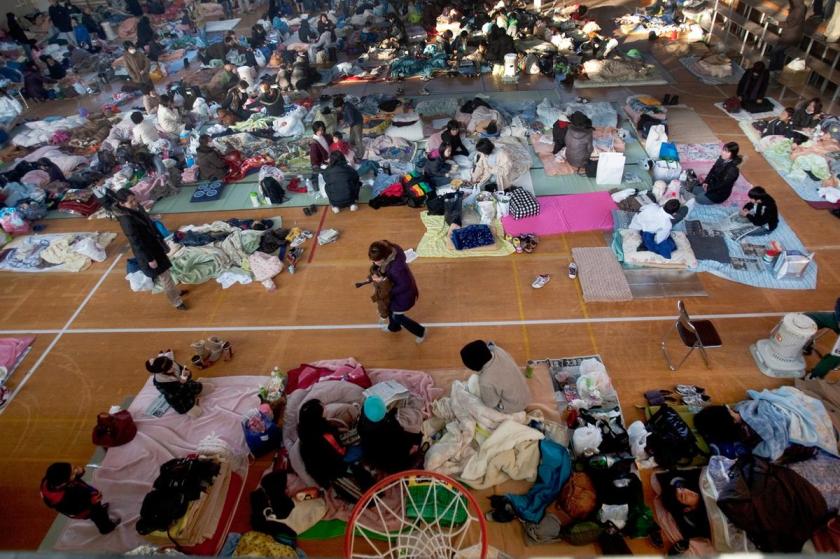
At a talk a few months ago about the Fukushima earthquakes, it was said that older adults that sought shelter in a gymnasium developed incontinence issues and muscle atrophy. Afraid that they were being disruptive and inconsiderate to fellow residents living in the open space temporary shelter, many remained sitting in their allocated space, not going to toilets allocated outside of the gymnasium.

main_1200

Image source: Japan Earthquake: Rescue, Recovery, and Reaction – The Atlantic

This scenario is not unfamiliar to nurses working in acute care, step down facilities, nursing home and other community care facilities where families complain about their love ones developing incontinence and decreased mobility. It’s a common case study where you have a person coming out of the hospital with incontinence and decreased mobility and nurses and loved ones are concerned about falls resulting in the person spending the rest of their life sitting in wheelchairs. Being put on pads due to their incontinence issues, the person may not wish to venture out in the public, and participate in activities reducing their social engagements and decreasing movement. So starts a vicious downward spiral where mobility is lost and depression sets in.

hospital-643961_960_720


All it takes is for us to care; to ask and encourage. To encourage our residents and patients and engage with them socially and to support movement. To ask about their preferences and how we can encourage our residents and patients to retain their independence and to maintain their mobility. This is a community effort, from governments to management to directors of nursing to the nurses and the care staff, we need to make time to care. Our residents and patients make an effort to not inconvenience us isn’t care a priority in healthcare in the first place?Person-centred care in Asia isn’t about being indulgent

Person-centred care in Asia is not about indulging a persons’ need for choices or the ability to be drastically different from everyone. It is about celebrating and supporting individuality and autonomy whilst maintaining harmony and social cohesion in the community. A fine balance, not in the pursuit of happiness but in a pursuit of peace. To be satisfied with the balance in life that brings us peace within.

it’s not 兴高采烈 but a 幸福美满的生活 that we yearn for.

Reference: Handwriting


Posted in Ageing & Culture, Caregiving, Research & Best Practice, The Built Environment

Walking with my mother

Director Katsumi Sakaguchi’s newest film “Walking with My Mother”
Official selection of Tokyo International Film Festival 2014

Director Katsumi Sakaguchi captures the life of his mother, Suchi, 78 through film, as she lives with dementia and depression, coping with the loss of her daughter and then her beloved husband. In the film Katsumi documents a life of distress, frustration and grief as his mother tries to remain resilient against all the trials and tribulations that life has hurl against her. He captures his own feelings and emotions as he tries to understand the needs of his mother and his own, and to cope with the changes that life has brought for both of them. The film also showcases their travel back to Suchi’s hometown and the positive improvements that such a change brings.