Jockey Club Centre for Positive Ageing Hong Kong has created an app in Mandarin to help people understand dementia at the click of a button. iTunes Website: Click here to go to page this is also available on Google play Click here to go to page. Check out the video below to find out more.
A great video by the BBC providing a historical perspective on dementia and Alzheimer’s Disease. The video touches on the world’s first Alzheimer’s patient. A good resource for students or anyone who wishes to understand the historical background and origins of this disease.
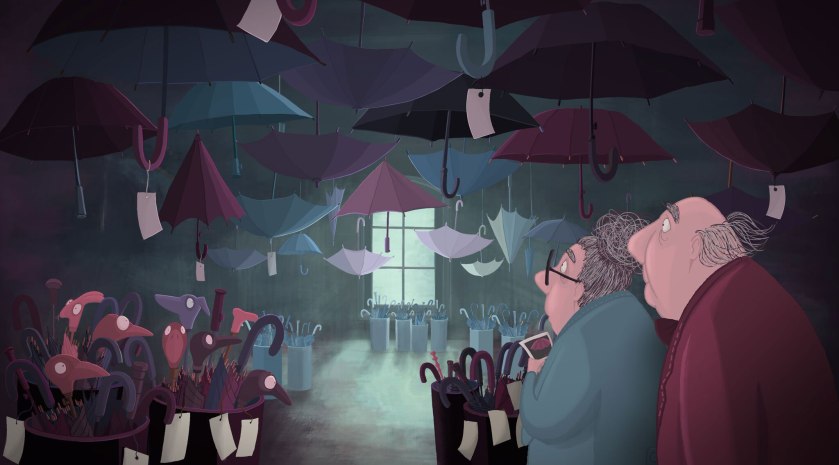
For those who have been involved in remembering together activities such as memory books, photo books or a life story work in dementia care. This short film will move you to tears. It’s enchanting, beautiful and it can’t help but tug at your heart strings. This short film has transformed the lived experience of the everyday memory book activity into a work of art that transcends the screen.
“I think I really wanted to set out to make a film that would touch people, both visually and emotionally. To explore a subject that is tragic but give it hope and tell the story in as beautiful way as possible. I hope I have achieved that, that would be my dream.” – Åsa Lucander
How can we create meaningful and sustainable rooftop gardens. For all the city dwellers reading this, it’s probably no surprise when you see a roottop garden looking tired and dried out after a while, people tend to potter around abit when the garden is first developed but it gets left lonely after a while. People start complaining about the heat in the garden, there is not much to do but wander around in the head. Staff finds that it’s too much of a pain and it get left unattended and left in the wayside. Before you know you the rooftop garden is an empty space with a few giant empty plant pots like hollowed sad eye staring at the sky.
Modern rooftop gardens look great in million dollar condominiums, hospitals and shopping malls. Very flashy and fresh with a multitude of plants, but for a nursing home or an agedcare facility, these are not temporary living spaces, there are people’s homes, where they spend a good number of years in their life. The space is needs to be much more then just therapeutic eye candy. It has to give meaning and purpose, to provide social activities, engagement and movement.
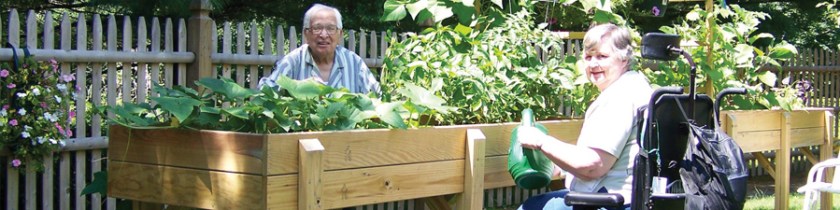
If you lived in an aged care facility don’t you want to be part of a garden that you feel that you can give life to, to contribute to growth, where the people who care for you can benefit from your work despite living with a chronic health condition and requiring much care. You don’t want to stare at people tending to the garden remaining you of restrictions, your loss of function and dignity. You want to be part of the action, to feel life in your hands, and to support growth in another.
Creating the right environment, a rooftop greenhouse or farm in an aged care facility can bring together staff and residents in a healthy and meaningful social activity. To grow sustainable, fresh and delicious produce for their own facility for everyone instead of eating produce that travelled 500kms from an unidentified farm using unknown chemicals and farming methods that you wouldn’t want to know about. Where families can join in and even students from community programmes.
I found this cool local website easigardens that promotes vegetable kits in Singapore and provide a range of vegetables like spinach, kang kong, xiao bai cai etc.
Rooftop greenhouses are a great sustainable idea for everyone. Anyway before I sign off, here are some videos that provide you the who, where, what, why and how regarding the concept, design and application of a rooftop greenhouse in urban residential living.
Let’s create an Inclusive not reclusive environment!
Alzheimer’s Australia Victoria launched an online dementia support website (http://www.helpwithdementia.org.au/) that brings together health services such as counselling, public health education and social programmes for people living with dementia, their families and carers through the web.
Given that 85% of general internet users in Australia utilise the net for communication activities, research and networking, it is only logical that health services for people with dementia and their significant others should extend to the web (Australian Communications and Media Authority 2015).
The great thing about online technology is that everything is literally at your fingertips. Especially for the tech saver person with dementia or caregiver. I know some of the readers are thinking; people who are older adults are not tech savvy. That is not true. 46 percent of older adults in Australia are already internet users (Australian Bureau of Statistics 2014). This platform (http://www.helpwithdementia.org.au/) is a life saver. Face to face services are no doubt great for people who can make the time and effort to travel for a session.
The ease of having services in the comfort of your own home is great. Going for services is really stressful and sometimes people or service providers forget that. There’s the stress of making time to travel, arranging transport, the stress of leaving your loved one alone, the anxiety experienced during the process of travelling, worrying about the cost of travel, taking time off from work or from an important social responsibility (Looking after your grandkids), the list goes on.
There are 50 million and one things to worry about. With an online site, I could be reading or watching about information on dementia sitting on the couch with my loved one or even just in my pyjamas in bed. There’s apparently 16 expert videos available on the site to help people understand about dementia.
There’s counselling that can be done through e-mail or there’s the option of a video conference. Or if you like to keep it casual there’s always the forum where you can hook up with a social network and exchange thoughts and read about people’s experiences on specific topics.
An online support platform is a great idea, and I hope to see more platforms that can cater to the needs of the online community. Youths and children these days are much more connected than I am and perhaps this medium might also be a way to connect to the younger generation to spread the news about having a healthier happier brain. Health prevention campaigns really need to take their heads out of the sand in tech-savvy countries, save the trees and really understand the people. Traditional means of health promotion is important but we also have to embrace the new wave of social media and technology and extend our care into the digital realm.






 Designing for Aged Care