Posted in Ageing & Culture, Dementia, International Campaigns, International Policies, Research & Best Practice, The Built Environment

Living Tiny & the Psychological Issues that go with it

In Asia, it is not uncommon for us to be living in tiny living space. From Tokyo, Singapore, China and even Thailand, we’ve all heard, know or even are living in very tiny homes in a very overcrowded city. Cost of living is high, we pay a mint for our homes and we end up living in little shoeboxes in the sky. In a recent article by the Atlantic. The issues of micro apartments were discussed and the question is “how small can our living spaces get before it starts to impact on our physical and psychological health?”

The article talks about how these apartments serve their purpose for young, childless couples who had just started out in the world and wish to live close to the city or work or play. However, for people with children or living in a multigenerational family unit, how do people cope?

city-building-fire-escape-fire-ladder-medium

Looking back in Asia, for many in the sandwich generation, working long 10 to 14-hour shifts, caring for children and our parents. The home is suppose to be a safe haven, but when overcrowding occurs some people may feel a sense of dread befalling on them when it is time to go home. Trapped between the tortures of work and the stress of  claustrophobic home.

city-streets-skyline-buildings-large

The article talks about how living in small apartments can affect the concentration of children and in turn, impact on their studies. The article also talks about the lack of privacy and how it may cause children to become withdrawn. If these housing conditions can have such fundamental impacts on children the implications for older adults living in such apartments with cognitive impairment and dementia must be very challenging.

office-table-home-room-medium

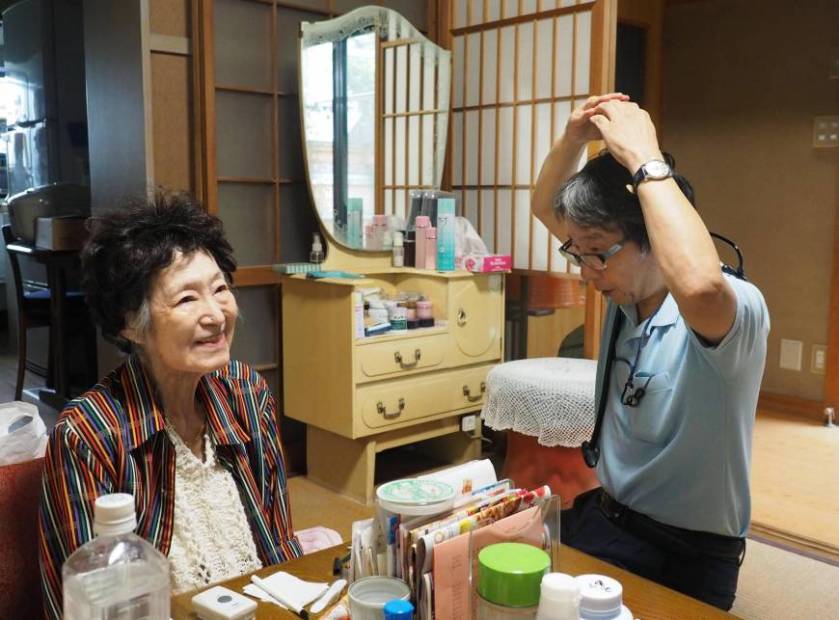
However, in Japan, despite the overcrowding and challenging living conditions, strong community initiatives have risen to help support the physical and mental well-being of older adults living in these housing conditions. The Dementia Support Caravan (DSC), founded a decade ago help apartment managers to work with older tenants who may be living with dementia and require support from the community. As the number of people with dementia

The Dementia Support Caravan (DSC), founded a decade ago help apartment managers to work with older tenants who may be living with dementia and require support from the community. As the number of people with dementia continue to grow in Asia and housing conditions continue to remain unchanged; initiatives such as the DSC can help older adults with dementia age in place in their units within the community. It is in hope that more urban regions in Asia may develop similar programmes to support the people with dementia and their family living in the high-rise communities.


Source: The Health Risks of Small Apartments – The Atlantic

Source: Hand for dementia – Japan Times

 

Posted in International Campaigns, Research & Best Practice, The Built Environment

Exercise may enhance plasticity of the adult brain

The Cell Press journal reported that a small study from the University of Pisa and the Neuroscience Institute, National Research Council (CNR) have found that exercise may improve the plasticity of the adult brain, which was thought to decline with age.

pexels-photo-large

Read more: http://www.sciencedirect.com/science/article/pii/S0960982215012889


Physical activity may leave the brain more open to change | EurekAlert! Science News

Learning, memory, and brain repair depend on the ability of our neurons to change with experience. Now, researchers reporting in the Cell Press journal Current Biology on December 7 have evidence from a small study in people that exercise may enhance this essential plasticity of the adult brain.The findings focused on the visual cortex come as hopeful news for people with conditions including amblyopia (sometimes called lazy eye), traumatic brain injury, and more, the researchers say.”We provide the first demonstration that moderate levels of physical activity enhance neuroplasticity in the visual cortex of adult humans,” says Claudia Lunghi of the University of Pisa in Italy.”By showing that moderate levels of physical activity can boost the plastic potential of the adult visual cortex, our results pave the way to the development of non-invasive therapeutic strategies exploiting the intrinsic brain plasticity in adult subjects,” she adds.The plastic potential of the cerebral cortex is greatest early in life, when the developing brain is molded by experience. …

###This research has received funding from the European Research Council.Current Biology, Lunghi and Sale: “A cycling lane for brain rewiring” http://dx.doi.org/10.1016/j.cub.2015.10.026Current Biology (@CurrentBiology), published by Cell Press, is a bimonthly journal that features papers across all areas of biology. Current Biology strives to foster communication across fields of biology, both by publishing important findings of general interest and through highly accessible front matter for non-specialists. For more information please visit http://www.cell.com/current-biology. To receive media alerts for Cell Press journals, contact press@cell.com.

Source: Physical activity may leave the brain more open to change | EurekAlert! Science News

Posted in Caregiving, International Campaigns, Research & Best Practice, The Built Environment

Stress from negative beliefs about aging is associated with Alzheimer’s disease

Summary: A new study that emerged from Yale school of public health has indicated that stress from negative beliefs about aging is associated with Alzheimers disease.


916a4285-51f4-43c2-83d4-d8f74af31b3e_w739_h415

From source: Alzheimer’s Disease Photo credit: Dreamstime

Negative Beliefs About Aging Predict Alzheimer’s Disease in Yale-led Study | Yale School of Public Health

Read full article here: Negative Beliefs About Aging Predict Alzheimer’s Disease in Yale-led Study | Yale School of Public Health

Posted in Ageing & Culture, Caregiving, International Campaigns, International Policies, The Built Environment

Expert highlights dangers of over-prescribing psychotropic dementia medication – The Japan Times

Saw this article below this morning and I thought it’s a very important article to highlight the dangers of over-prescribing psychotropic medication for people with dementia. Some of the risk factors include:

  • falls
  • bone fractures
  • suffer impaired consciousness

It was recommended in the article that non-pharmaceutical options should be the first intervention before the introduction of drugs. It was also recommended that the low doses of the drugs should be prescribed in the initial stages of treatment for BPSD.


n-dementia-a-20151201-870x643

As a massive wave of Japanese enter their twilight years, an expert is calling for prudent use of psychotropic drugs to treat dementia patients, some of whom have suffered ill health due to over-prescription.

The Health, Labor and Welfare Ministry released guidelines on how to prescribe such drugs for dementia patients in 2013 to avoid casual prescription by doctors. The Japanese Society of Psychiatry and Neurology is also training doctors on the appropriate application of the drugs…

Click here to read the full article: Expert highlights dangers of over-prescribing psychotropic dementia medication | The Japan Times