Posted in The Built Environment

The world’s first Alzheimer’s patient

A great video by the BBC providing a historical perspective on dementia and Alzheimer’s Disease. The video touches on the world’s first Alzheimer’s patient. A good resource for students or anyone who wishes to understand the historical background and origins of this disease.

Click on the link to read the full article: The world’s forgotten first Alzheimer’s patient – BBC News

Posted in The Built Environment

Japan modern-age retirement homes 

I saw this awesome article titled “Sign me up! These modern-age retirement homes in Japan resemble five-star hotels!” It’s written by  on Rocketnews24. Thought I’d share this with everyone.
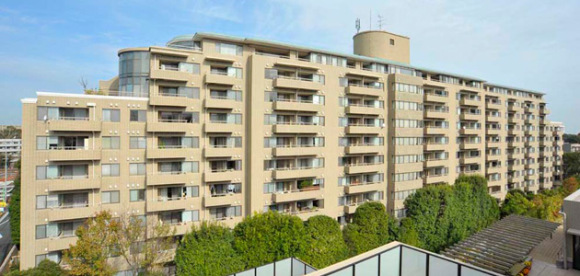
One of Japan’s many senior citizens’ homes was recently featured in a TV special for having the atmosphere and amenities of a top-notch hotel. We’re talking a concierge service, on-site restaurant with an extended menu, and an exclusive beauty parlor, in addition to all of the nursing and medical services that one would expect from any reliable retirement home. Traditionally, people in Japan would rely on their children and grandchildren to care for them when they get old, but for those that have the ability to afford it, living out their last few years in luxury probably sounds like a suitable substitute.

Sacravia Seijou is a beautiful senior citizens’ home in the high-class neighborhood of Seijou in Tokyo’s Chiyoda Ward. Standing tall in a gorgeous grove of ginkgo trees and cherry blossoms, you’d think it was a fancy hotel, even upon walking into the lobby. It’d take looking at a brochure to realize that you’re actually standing in a retirement home.

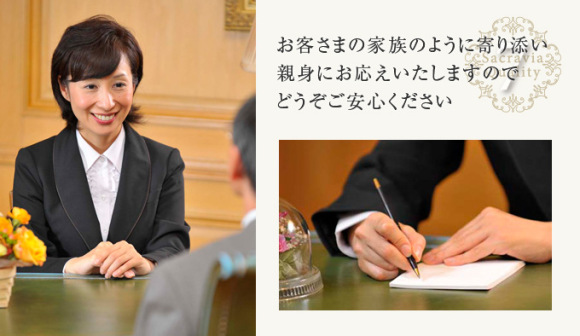
In the building’s lobby area there is a concierge desk, set up exactly the same way as a hotel reception desk. Residents can leave their room keys at the desk whenever they go outdoors or request a wake-up call in the morning. Staff there will handle any mail or package deliveries, take phone calls on behalf of the residents, inform them of when they have visitors, and assist them in setting up reservations. It’s a one-stop center for information and customer service.
Also visible from the retirement home’s lobby is a classy little restaurant. Unlike most senior citizens’ homes, which offer about as much variety in dining as a high school cafeteria, Sacravia’s restaurant has 30 different lunch items, with food options ranging from Japanese style meals to Western and Chinese. In the evening, the menu expands to 40 standard items. There is an ever-changing seasonal menu and special food items tailored to the needs of those with special dietary preferences or restrictions based on current health treatments or physical conditions. For those unwilling or unable to visit the restaurant in person, room service is also available. And, as a special treat, every Tuesday a chef from the popular sushi chain Midori comes and makes sushi for the seniors.

In regards to daily necessities, there is also a small supermarket and a beauty parlor on the premises. The store sells common, everyday goods and also offers a cleaning service, while the beauty parlor is open every weekday for those who need a nice trim.

Of course, no senior citizens’ home would be complete, or relevant for that matter, without a clinic. Doctors are stationed at Sakravia 24 hours a day every day of the week. They can handle any sort of problem from internal medicine and digestion to ophthalmology, cardiology, dermatology, psychosomatic medicine, and orthopedics.  Twice a year, the office runs comprehensive check-ups, but if a problem arises, even in the middle of the night, nurses are always on call for home visits.

So what does it cost to live in a place like this? The lowest possible price, just to move in is 128,000,000 yen (US$1,314,300) for one person or 144,000,000 yen (US$1,478,600) for married couples! On top of that are monthly fees averaging 240 to 340 thousand yen (US$2,465 to $3,490) for singles, though that includes upkeep, restaurant management, and basic rates for water, gas, etc.

That down payment alone is more money than I could make in 35 years! Obviously, these services are reserved for the elite.

▼ This is a picture of one of Sakravia’s most spacious (and expensive) rooms on the top floor of the building.

retirement homes05

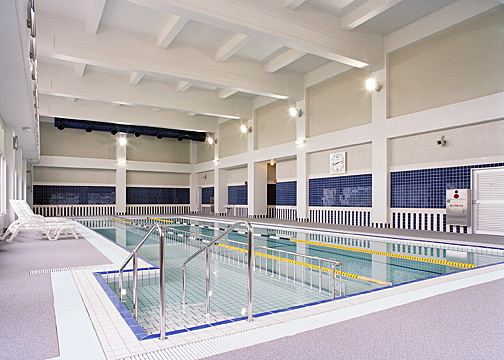
But you know, Sakravia isn’t the only high-end retirement home out there. For example, Silver Residence Kourinkaku in the mountains of Fukushima Prefecture is large and lavish enough to contain its own gym, heated pool, and hot springs.

retirement homes10

Apparently, moving around within a pool is the recommended exercise for old people, since the body’s natural buoyancy relieves pressure on their joints and doesn’t strain the knees or back.
retirement homes07

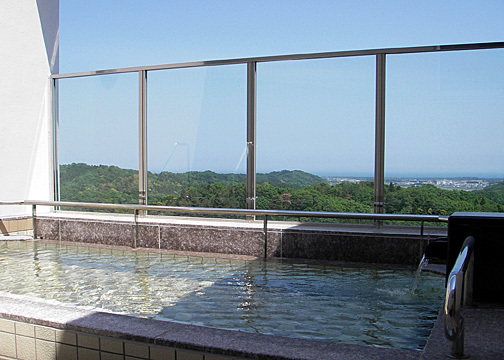
Those more interested in lounging than moving about can take advantage of the large baths on the top floor of the building, open 24 hours. Then, when it’s time to eat, residents have a choice of cooking in the kitchen located in their rooms or visiting the building’s recommended restaurant, Sankaikan, for a well-balanced meal with a perfect calorie count.
retirement homes06

The Silver Residence has both Western-style and more traditional Japanese-style rooms for prospective residents to choose from. And the ever-important price? Two people can move in for between 10,300,000 and 16,700,000 yen (US$105,760 to $171,475), plus an additional 249,200 yen a month ($2,553).

retirement homes11

Better, but still just a bit out of my price range…

Source: Sign me up! These modern-age retirement homes in Japan resemble five-star hotels! | RocketNews24

Jo does not work or receive any funding from the company or organization in this article.

Posted in The Built Environment

The remarkable story behind David Bowie’s most iconic feature

photo credit: Bowie: the eyes of an icon. Stephen Luff/flickr, CC BY

I saw this amazing article this morning and just had to reblog this to share with everyone. I read this on The Conversation. You can click here to read the original article.This article is written by Kevin Hunt, a Senior Lecturer in Design and Visual Culture, Nottingham Trent University


“At the centre of it all, your eyes, your eyes …”

Many aspects of the life and incredible achievements of David Bowie will be considered in the weeks and months ahead following the news of his death. Yet the cryptic lyric above from the lead single on David Bowie’s new album is a reminder that the unusual appearance of his eyes was a key part of the singer’s star persona.

Indeed their iconic presence features in the advertising campaign for ★[Blackstar]. For many people it is that look – that the eyes formed a core part of – that will be an abiding memory of Bowie.

So, why were they apparently two different colours?

Complete heterochromia is a fairly rare condition (in humans) whereby each iris is a distinctly different colour, such as having one blue iris and the other brown.

But this isn’t why Bowie’s eyes looked different.

Instead, the unusual appearance of Bowie’s eyes were due to a condition called anisocoria.Anisocoria is a condition characterised by an unequal size in a person’s pupils. In Bowie’s case, his left pupil was permanently dilated.

This can create the illusion of having different coloured eyes because the fixed pupil does not respond to changes in light, while the right pupil does. So Bowie’s left eye often appeared to be quite dark, due to the blackness of his dilated pupil, when compared to the blue of his right iris.

https://vimeo.com/61199700

The dilated pupil of his left eye was also potentially more prone to the effect of “red eye”. This sometimes adds to the appearance of a different colour when contrasted to his right eye.

Red eye occurs when light reflects off of the fundus (the back of the eye), through an open pupil, and captures a red coloration by picking up tonality from the blood in the choroid lining of the eyeball.

This can clearly be seen in the Aladdin Sane – Eyes Open photograph by Brian Duffy (shot in 1973 but unpublished until 2011) that was used as the lead image on the posters for the V&A David Bowie is (2013) exhibition.

So what happened?

Anecdotally, the cause of Bowie’s anisocoria was attributed to the fallout from a lusty scrapin the spring of 1962. Bowie had come to blows with a friend, George Underwood, over a girl they were both hoping to date.

Both were just 15 at the time and their friendship seemingly remained intact. The two performed together in various bands before Underwood turned from music to painting and graphics. But Bowie’s left eye remained seriously damaged.

An impulsive punch had accidentally scratched the eyeball, resulting in paralysis of the muscles that contract the iris. From that day, Bowie’s left pupil remained in a fixed open position.

Over time, Bowie apparently thanked his friend for his notorious eye injury, telling Underwood that it gave him “a kind of mystique”. This mystique helped fuel some of Bowie’s greatest creations and enhance iconic images, such as the album cover for Heroes(1977).

His eyes could appear eerie and mismatched, producing a captivating or mesmeric gaze from on stage or through the lens of a camera. And the uncanny appearance of Bowie’s eyes was ideal for a performer who embraced ideas of the alien, the outsider, the otherworldly and the occult.

In an increasingly visual world seemingly preoccupied by perfection, Bowie’s damaged left pupil became an intrinsic and arresting part of his enigmatic identity.

Source: The remarkable story behind David Bowie’s most iconic feature

Posted in The Built Environment

Lost Property by Åsa Lucander

For those who have been involved in remembering together activities such as memory books, photo books or a life story work in dementia care. This short film will move you to tears. It’s enchanting, beautiful and it can’t help but tug at your heart strings. This short film has transformed the lived experience of the everyday memory book activity into a work of art that transcends the screen.

“I think I really wanted to set out to make a film that would touch people, both visually and emotionally. To explore a subject that is tragic but give it hope and tell the story in as beautiful way as possible. I hope I have achieved that, that would be my dream.” – Åsa Lucander

A truly heartwarming short film.


Source: Lost Property by Åsa Lucander | Short Film

Posted in Caregiving, Research & Best Practice, The Built Environment

Lumosity misled customers

This is a critical piece of news and everyone should know about. There are good resources for brain training and we have misleading resources out there that tarnish the names of good legit programmes.

Lumos Labs, developer of Lumosity “brain training” games, will pay $2 million to settle accusations it misled customers about the cognitive benefits of its apps.

Read more about it from NY Times: Lumosity Game Developer Agrees to $2 Million Settlement – The New York Times


Lumos Labs, the developer of Lumosity “brain training” games, will pay $2 million to settle accusations it misled customers about the cognitive benefits of its online apps and programs. The Federal Trade Commission said on Tuesday that ads deceptively suggested that playing the games a few times a week could increase work and school performance, and even delay conditions like dementia. Lumos Labs must contact customers and offer them an easy way to cancel their subscriptions, which range from $15 to $300. The $2 million will be refunded to customers. Jessica L. Rich, director of the F.T.C.’s Consumer Protection Bureau, said the company “simply did not have the science to back up its ads.” Only products that have been reviewed by the Food and Drug Administration can claim to treat or prevent serious diseases or conditions.

Posted in Ageing & Culture, Caregiving, The Built Environment

Sustainable Rooftop Greenhouses in Urban Agedcare Facilities

How can we create meaningful and sustainable rooftop gardens. For all the city dwellers reading this, it’s probably no surprise when you see a roottop garden looking tired and dried out after a while, people tend to potter around abit when the garden is first developed but it gets left lonely after a while. People start complaining about the heat in the garden, there is not much to do but wander around in the head. Staff finds that it’s too much of a pain and it get left unattended and left in the wayside. Before you know you the rooftop garden is an empty space with a few giant empty plant pots like hollowed sad eye staring at the sky.

Modern rooftop gardens look great in million dollar condominiums, hospitals and shopping malls. Very flashy and fresh with a multitude of plants, but for a nursing home or an agedcare facility, these are not temporary living spaces, there are people’s homes, where they spend a good number of years in their life. The space is needs to be much more then just therapeutic eye candy. It has to give meaning and purpose, to provide social activities, engagement and movement.

food-vegetables-beans-green-medium.jpeg

If you lived in an aged care facility don’t you want to be part of a garden that you feel that you can give life to, to contribute to growth, where the people who care for you can benefit from your work despite living with a chronic health condition and requiring much care. You don’t want to stare at people tending to the garden remaining you of restrictions, your loss of function and dignity. You want to be part of the action, to feel life in your hands, and to support growth in another.

planters_inuse

A wheelchair accessible raised vegetable bed. Image from http://www.accessiblegardens.com


Creating the right environment, a rooftop greenhouse or farm in an aged care facility can bring together staff and residents in a healthy and meaningful social activity. To grow sustainable, fresh and delicious produce for their own facility for everyone instead of eating produce that travelled 500kms from an unidentified farm using unknown chemicals and farming methods that you wouldn’t want to know about. Where families can join in and even students from community programmes.

easi-1.jpg

I found this cool local website easigardens that promotes vegetable kits in Singapore and provide a range of vegetables like spinach, kang kong, xiao bai cai etc.

http://easigarden.com/easi-vegetable-growing-kit

Rooftop greenhouses are a great sustainable idea for everyone. Anyway before I sign off, here are some videos that provide you the who, where, what, why and how regarding the concept, design and application of a rooftop greenhouse in urban residential living.

Let’s create an Inclusive not reclusive environment!

Growing a Rooftop Revolution

How a Rooftop Garden feeds a City