Posted in Ageing & Culture, Caregiving, Inspirational quotes & videos

Love, life and a 76 year marriage, an insight into the lives of rural Koreans

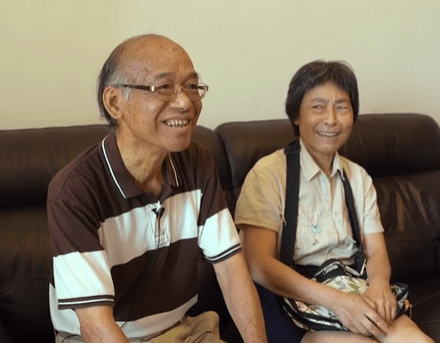
Mr. Byong-man Jo is 98 years old and Mrs. Gye-Yeul Kang is 89 years old, they reside in a  200-year-old house by the river and have lived together for 76 years. Young at heart, they go for classes at a college twice a week, walk to the market and even collect firewood. The documentary follows them through 15 months of their lives documenting their love and touching on issues of family, happiness, and time. A beautiful documentary that not only captures the traditional everyday life in a Korean mountain village but the challenges life brings for the oldest old.


From an environmental perspective, this documentary also provides an insight on the living conditions, traditions, and culture of Koreans living in rural regions and the contrasting environments when one moves into a residential aged care facility. Keep a look out for sleeping conditions, daily activities and even furniture and fixtures.


Posted in Caregiving, International Policies, Research & Best Practice, The Built Environment

Why we need Geriatric ERs in Asia

hospital-1338585_960_720.jpg

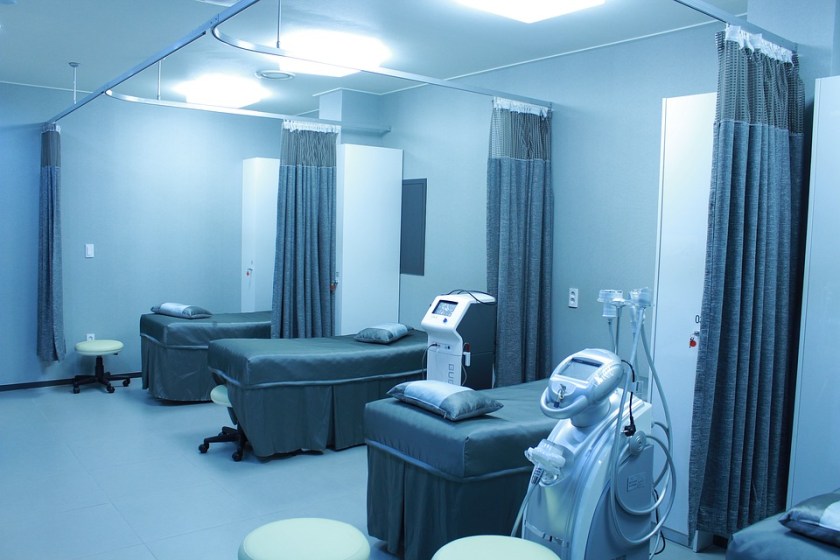
CNN (Source: Geriatric ERs reduce stress, risks for older patients – CNN.com) recently touched on the need for Geriatric emergency rooms (ER) that can provide seniors with better care. According to the world bank, in 2010 there were 211 million older adults 65 years and above in East Asia and even in a little island in Singapore, by 2020, 1 in 5 Singaporean will be an older Adult. We have hospitals for children across Asia, isn’t it about time we started having at least an ER for older adults? Wouldn’t this not only be beneficial to the patient and their family but beneficial to the outputs in terms of care and the cost to the system as well. We all know that hospitals are detrimental environments for older adults and especially so for people with dementia.

  • unfamiliar alien environment
  • difficulty in orientation
  • high levels of negative stimulation from noise, smell, temperature…
  • constant interruptions to sleep well into the night
  • lack of autonomy
  • lack of natural light

We also know the benefits for the patient if we improve the acute environment and the care provided, but there are also wider benefits for society and especially for the family. With dependency ratios increasing in Asia and higher life expectancy rates, think China, with 1.3 billion people and a 4,2,1 family structure. With 4 grandparents, a couple, and their child, and now with the removal of the one-child policy, you may have 2 children in the family. If an older adult has been admitted into the emergency room the stressors on the family, especially the working adult will be incredible. Anyone who is a parent and are caring for parents will know this. This is not inclusive of the 30 million bachelors in China who will be the sole caregiver of their parents. How can we have an effective workforce if there is a constant worry that our parents are not getting adequate medical care in hospitals, on top of juggling work, kids and worrying about the health of 3 other older adults in the family? As a child you can’t not worry about your parents especially when it involves the ER, it’s only natural. A parent going to the ER is possibly one of the scariest thing a child can experience. On top of that, there are the worries about the out of pocket cost for care. The least we could get really is a decent healthcare system that can help care for older adults, and a geriatric ER will be a good start. In a Geriatric ER at least we know our parents are getting the right care from the start and in the right environment, that in itself will be a great relief from the get go.

income1

We’ve all heard of the Chinese proverb:

“The superior doctor prevents sickness; The mediocre doctor attends to impending sickness; The inferior doctor treats actual sickness”.

A cultural change in care requires collaboration and evidence, and the success of early intervention will reduce the operational and financial strain on the health and social care system. Isn’t it time, for the hospitals in Asia that can make a change start doing something about it and adopt a salutogenic approach to care? Isn’t it time we start taking our own advice?

doctor.jpg

.


Posted in Caregiving

Innovation that helps maintain independence

People that I have cared for have repeatedly mention how they are really not keen about people assisting them with meals and if they need to be assisted with meals, they rather have meals alone in their room. At the same time for people experiencing tremors, cutlery at home just doesn’t help make things any easier. Wearing an adult bib every time you want to have a meal or just having food spilt on your clothes is just a constant unsupportive reminder of the condition.This innovation appears provide a good solution to a salutogenic or enablement model of care, providing support to help people stay independent and social in the face of adversity.

Anyway, I caught this video on facebook the other day and I thought it would be a good to share with everyone about this innovative set of cutlery that can help to counteract tremors. Checked out their website https://www.liftware.com/ after watching the videos and found their product video which explains how it works.

To be honest checking out their store, $300 is pretty full on for a starter kit and I hope that perhaps they will become cheaper over time or more new inventions can be produced to provide people with affordable alternatives.


Disclosure statement

I do not work for, consult, own shares in or receive funding from this company or from organisations that would benefit from this article, and has disclosed no relevant affiliations.

Posted in Caregiving, Research & Best Practice

Sleep, Dementia & Circadian Rhythms 


A simple and easy to understand video about circadian rhythms from the Oxford University. Over the years I have heard numerous discussions about the need for artificial lights and the needs for better lighting to aid the sleep process for people with dementia. However, do we actually know how, why and what light does to impacts our sleep patterns? This video provides an engaging and interactive way for us to all understand how it all comes together.

My key takeaway from the video is that natural light helps to keep us awake and maintain our sleep-wake cycle and natural light sources is by far the brightest light source around. 🙂

The transcript can be found below.

Published on 9 Nov 2015

How do you know when it’s time to wake up or go to sleep? More powerful than any alarm are your circadian rhythms. In this animation we take a look at how these rhythms work and what controls them, inspired by the TeenSleep project being carried out at the University to look at how later start times at school might affect achievement.

How does our body know when it’s time to sleep?
Humans detect light through the eye. Light enters the eye and is focused onto the retina at the back of eye. The retina contains photoreceptive cells that detect light and send this information to the brain, via the optic nerve. The most obvious outcome of this process is the ability to form images; to see. Image-forming vision depends upon rod and cone photoreceptors, which are critical for low light vision and bright light colour vision, respectively. However, it was discovered in 1999 that the circadian system of animals lacking rods and cones could still respond to light. This led to the discovery of a new class of photoreceptive cells: the photo-sensitive retinal ganglion cells (pRGCs), which express the light sensitive pigment melanopsin. These pigments undergo a chemical reaction when they absorb light, which causes the ganglion nerve cells to fire signals to the brain.

These signals from the melanopsin pRGCs feed directly into the Suprachiasmatic Nuclei (SCN). These are cells in the hypothalamus, near the base of the brain, which contains the master circadian clock (or pacemaker). The SCN orchestrates our circadian processes, to make sure that systems throughout our bodies are working together, in time. This system is also involved in controlling our sleep-wake cycle. As the level of light gradually decreases at the start of the night we produce increasing levels of a hormone called melatonin. Melatonin plays a vital role in our day-night cycles, acting as an internal signal of night time.

Why is being exposed to light at the wrong time so bad?
If we are exposed to light at the wrong time, say because we work night shifts, this confuses our system. Light supresses the production of melatonin, and promotes wakefulness. We delay our sleep and other circadian and sleep-dependent processes. We can work nightshifts for years and our circadian system will not adapt to our new sleep-wake cycle – primarily because we are exposed to natural light during the day, which is far brighter than artificial light sources. This leads to a whole host of problems. Working through the night means we are working when our bodies are craving sleep.

Is it different for teenagers?
The reason we are so interested in sleep during adolescence is because our circadian rhythms change during this period. From the age of 10 until around 21 our circadian rhythms delay. This means that as we go through adolescence and into early adulthood we are naturally more inclined to go to bed later and also to get up later. This is a biological process, and will happen to teenagers regardless of their environment.

Asking an adolescent to get up at 07:00 to start school at 09:00 is akin to asking a 55-year-old to get up at 05:00: this leads adolescence to accumulate a significant amount of sleep deprivation. The circadian drive isn’t optimised for wakefulness and engagement until around10:00.This means that adolescents are typically starting school at a time when they are feeling the effects of sleep deprivation and when their natural rhythms are not optimised for alertness, and therefore learning. There have been a whole host of studies, mostly from the US showing that a delay in the school start time improves sleep, mood, well-being, alertness and academic outcomes with one study suggesting that a delay in the school start time is more effective than improving the quality of the teaching.

Whilst timing of sleep (and activity) is important, so too is understanding what other factors might affect the quality of your sleep. Not only do adolescents have a natural biological predisposition to staying up later, but the devices they use to communicate and for entertainment may also impact sleep. TV screens, tablets and phones emit light at a level which may interfere with sleep onset, compounding the effects of the naturally occurring circadian delay. A recent study has suggested that teenagers may be particularly susceptible to the effects of light emitting deceives. Students are also dealing with the stress of exams and the pressure to perform well. The TEENSLEEP study aims to address some of these issues by looking at the effect of sleep education and delaying the start time of teaching on sleep quality and academic outcomes.

Posted in Caregiving

9年前,50幾歲嘅梁太,突然確診俗稱老人癡呆嘅老人認知障礙症,自此梁生就拋低工作,甚至自己嘅人生,全力去照顧每日情況都有可能變差嘅太太。而梁生並冇因此而放棄,仲每日都花好多心機同時間,去訓練太太,等佢重新學習!即使太太有時已經唔記得自己,但梁生話,佢好有信心,知道老婆就算咩都唔記得,都唔會將佢呢個老伴忘記⋯⋯