To be honest, I would not want to stay in a care home like this. I wouldn’t have a robot care for my child, why would I have a robot care for the elderly. Especially when we know that the human elements of social engagement and familiarity are an essential for cognitive function. How confusing would it be for a person living with dementia to be residing in a home fully run by artificial intelligence? Wouldn’t it be like being trapped in a Dr Who episode where the world is run by Cybermen?
Creating a ‘digital story’ of their memories using photos, music, text and video, can hep dementia patients open up to their fear and move into optimism. (Shutterstock)
I was sitting on the sofa across from Christine in her home. She offered me a cup of coffee. Each time I visited, she sat in the same spot — the place where she felt most comfortable and safe. She had shared stories from the past and decided to talk about the birth of her daughters, grandchildren and great grandchildren.
As we worked together in Edmonton, creating a multimedia story from her memory, Christina started to remember new things. She became emotional when she talked about her daughters becoming mothers themselves. She pointed out that the project was so much more powerful than looking through a photo album. Like many participants, she said she recalled stories she hadn’t thought about for years.
As a post-doctoral fellow in occupational therapy under the supervision of Dr. Lili Liu, at the University of Alberta I worked with several participants in this study. Funded by the Canadian Consortium on Neurodegeneration in Aging, one of our goals was to investigate quality of life and how technology affects the lived experiences of persons with dementia.
Technology and quality of life
In this research project we defined digital storytelling as using media technology — including photos, sound, music and videos — to create and present a story.
Most previous research on digital storytelling and dementia has focused on the use of digital media for reminiscence therapy, creating memory books, or enhancing conversation. Collaboratively creating personal digital stories with persons with dementia is an innovative approach, with only one similar study found in the United Kingdom.
During this project, I met with seven participants over eight weeks. Our weekly sessions included a preliminary interview to discuss demographics and past experiences with technology. Then we worked on sharing different meaningful stories, selecting one to focus on and building and shaping the story. This included writing a script, selecting music, images and photographs and editing the draft story.
“I was blessed with wonderful parents, and I was a mistake,” begins Myrna Caroline Jacques, 77, a grandmother of five.
Participants worked on a variety of topics. Some told stories about family and relationships, while others talked about a particular activity or event that was important to them. After all participants completed their digital stories, we had a viewing night and presented the stories to family members.
Happiness in the moment
It was an intense process. Eight sessions working one-on-one with persons with dementia required a significant amount of thinking, remembering and communicating for the participants. There were challenges, such as when participants found themselves unable to express their thoughts or remember details.
In this digital story, Christine Nelson talks of her love for her children and her fear of forgetting special moments.
Although many participants were tired after a session, they all felt that it was a beneficial and meaningful activity. Working in their homes on a personally gratifying activity with a tangible outcome seemed to keep them motivated and eager to continue. The process was also enjoyable and gave the participants something to look forward to each week.
There was a sense of happiness in the moment. And the way that participants responded to me, along with their ability to remember who I was and the purpose of our sessions, all indicated a deeper positive connection. The participants all felt a sense of accomplishment and family members were proud to see the end product at the viewing night.
Into the future
I have met with one of the research participants again recently, and she still remembers me. I would like to follow up with the others to get a sense of the long term impact of this digital storytelling project. I am also eager to see how the findings in Edmonton line up with those from the studies in Vancouver and Toronto.
For the participants, talking about memories helped them open up about having dementia. Getting past the fear and looking ahead with optimism was the message I heard, and one that I hope to keep hearing.
Japan is famous for the longevity of its citizens. A quarter of its population is older than 65. That is a proportion that Australia is likely to reach only by 2056. Japan’s experience makes it an interesting example to learn from in the area of aged care.
In 2000, following a decade of stagnant growth, mounting public debt and skyrocketing hospitalisation, Japan introduced the Long-Term Care Insurance Scheme (LTCIS). This universal and compulsory scheme provides support to assess and deliver care through institutional or community-based services for all people over 65. It provides sufficient funds to allow everyone to age in place – even those in public housing and with late-onset dementia.
The scheme represents one of the boldest social democratic experiments in aged care policy in the last 30 years. Yet with bold experiments come surprises.
To the chagrin of the scheme’s designers the LTCIS has been too successful. Cheaper to implement than the policy it replaced, it is still oversubscribed and contributing to Japan’s public debt (230% of GDP).
Happy Active Town in Kobe is a public housing estate where more than 50% of residents are older than 65. Photo: Martyn Jones
The universal acceptance of the scheme contributes to a paradox: while Japan has the largest ageing population in the world, it is difficult to make a business of providing aged care, as the collapse of Watami, the food chain-cum-nursing home provider, demonstrates. So what can this experience teach Australia’s aged care sector?
Care happens within the community
The first set of lessons concerns community-based integrated care. Here, the LTCIS, following 2012 reforms, mobilises support through community general support centres.
Australia is seeking to improve integration of multi-level care. The support centre in “Happy Active Town”, Kobe, provides an example. This public housing estate houses many refugees from the 1995 Great Hanshin Awaji earthquake. Its proportion of residents over 65 is more than 50%.
The LTCIS, with the local government, provides a care hub for volunteers, social workers and health professionals to provide services and respite care free to all residents on and off the estate. Community hubs such as these are designed to support a range of needs from intense support to community and family engagement in care across the life course.
Happy Active Town in Kobe houses many aged survivors of the devastating 1995 earthquake.
Harnessing technological innovation
The second lesson comes from watching and observing the Japanese experience of integrating technology in care provision. Dense, multistorey buildings of small units are typical in Japan. New, so-called “Platinum” housing integrates universal design and new technologies to ensure safe independent living for the elderly.
Retrofitting large areas of public housing to this standard is complex and expensive. A limited number of exemplary regeneration projects where the local municipality, private providers and the LTCIS work together guide the way. One example is Toyoshikidai, a public estate built for young families in the 1950s in Kashiwa to the north of Tokyo.
Alongside these urban changes a generational change is afoot. As the digitally literate generation reaches old age, smart home devices and new security and communication technology assume increasing importance. The business opportunities alone could amount to US$1 trillion by 2035.
The Japanese government supports this shift with its “Silver ICT” agenda. This includes a raft of e-strategies to bridge the digital divide between “active and inactive” elderly populations.
Yet in the nation where the development of robotic assistive technologies enjoys vast sums of research and development support, there is little sign of this in daily life. In Japan, applying technology in aged care is fraught with ethical, personal and logistical challenges. The solution, for now, centres on the involvement of humans.
The Japanese experience of ageing is unique and varied, but presents a foretaste of the future for many post-industrial societies. The “Happy Active Town” of Kobe, 20 years after a major natural disaster, is one example of a place where public policy, housing and technology converge to create solutions for an ageing society. Its mechanisms to support the passion and commitment of the people working and living there can teach Australia how to age with dignity.
A beautiful intergenerational activity to celebrate the love of cycling, a spot of reminiscence, and the great outdoors.
How lovely is this? As a child, my mother and I use to jump on a trishaw after our trip to the wet market. I use to watch the spokes go round and round and I still can hear the “Tak tak tak” sound the wheels make as we head home. It’s always a magical experience no matter how short the trip was. Took less than 5 minutes to reach our home from the market on a trishaw and I’ve sat in it for years and years with my mum, but it never grows old. With the wind in my face, the clicky round of the rickshaw, and just cuddled beside my mum with all our groceries at my feet, the world was our oyster.
When Cycling Without Age it just brought back all these lovely memories of my childhood. I wondered how wonderful would this be for it to be reintroduced into the community. There would be so many older adults in Asia whose main form of transport was the bicycle or the trishaw at a point of their time in their youth. As we aged and our physical abilities deteriorate, we lose our abilities to cycle and with it, our memories of freedom, that wind in your hair, the road just beneath your feet, to go wherever you wanted to go and be wherever you wanted to be.
Such an intervention can only bring generations together, a real intergenerational project of adventure and bonds. To bring people closer through the love of freedom and the outdoors.
I’m so glad to see this in Singapore and I hope that more Singaporeans will jump on board to support this movement!
If you have time, have a read of these 21 inspirational stories from Cycling without Age http://cyclingwithoutage.org/book/
Read about a community that has come together to age together at the Wakabadai public housing estate.
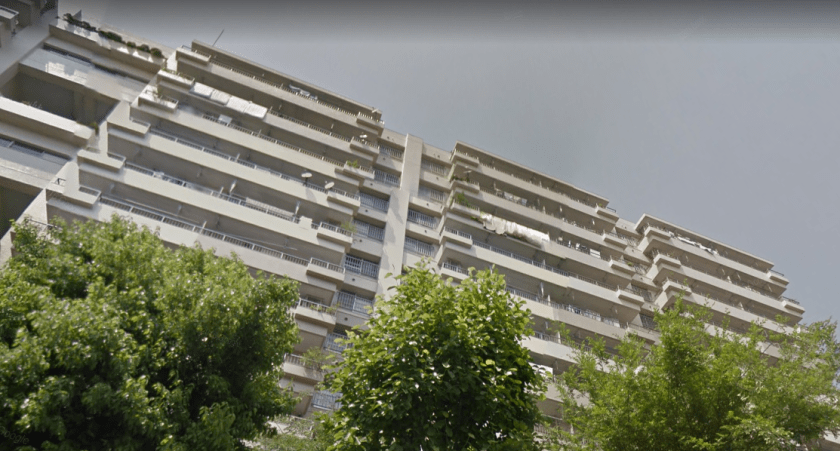
Recently Channelnewsasia did a piece on the Wakabadai housing estate in Yokohama, Japan. It’s a really interesting estate and the means in which the estate has been configured bears many similarities to the high rise housing estates found in the big cities where we all live a wall away from our neighbours. However, despite living in the same building for 30 to 40 years a lot of us may just be acquaintances, saying the passing “hi” and “hellos” as we greet each other at the elevator or when we pass each other along the corridors.
A few years ago, I visited a couple who lived alone in a little apartment with two bedrooms, their children had moved out and the husband was caring for his wife with dementia. She is very quiet and apathetic. His greatest worry was that he may suffer a stroke or a heart attack and is unable to get help in time and both of them may pass away in their apartment despite being surrounded by hundreds or thousands of people living in the building. He cited a neighbour living a few floors below them, who had passed away without anyone noticing until a number of days later. He talked about the need for services for families like them, and many services assume that because they have children, there would be someone watching out for them. However, with the busy lives that his children lead, looking after their families and juggling work, they could only call in on the weekends and rightly so with the changing landscape of the economy.
His son offered to have them stay with him but leaving their much familiar neighbourhood might be too much for his wife. Even now she would get agitated if they left the vicinity. For them this is home, this is where they had built their lives, house their memories, thrived in their love, and they wouldn’t want to live anywhere else.
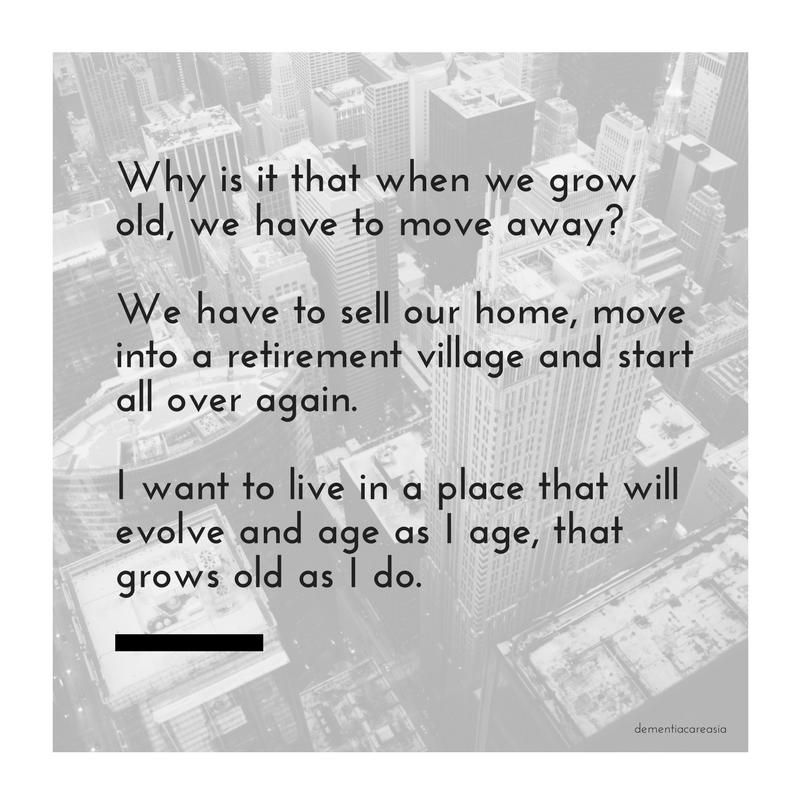
Why is it that when we grow old, we have to move away? We have to sell our home, move into a retirement village and start all over again. I want to live in a place that will evolve and age as I age, that grows old as I do.
Back to Yokohama, the Wakabadai public housing estate is just that, with slightly less than half of the residents 65 years and older, the people living in the estate are ageing in place together. To date, there is a total of 14,658 residents living in the estate in 6,304 units. To ensure that they needs are met, they have come together with organisations and council to organise a range of services.
Map of Wakabadai
Social Engagement for Older Adults:
The Wakabadai Non-Profit Organisation enables social activities such as health, music, cultural and sporting events to be held in the vicinity. Himawari provides a space for volunteers to interact with older adults over a cuppa. Residents are also keenly aware of “kodokushi”, which refers to people who are living alone and have passed away and their deaths have gone unnoticed by the community. In Wakabadai, residents band together and keep a keen eye out for the sudden build up of mail or newspaper in the mailboxes of older residents and the mail continues to be left unattended with no notice that the resident might be away.
A paid service is also available at the Himawari Community Centre where they can have a staff to ring their phones to ensure they are alright. They can also have a spare key stored at Himawari for approximately 500 yen.
In addition, celebrations during festive periods are arranged by the organisation to encourage engagement among the residents. Sports events are also organised regularly to encourage and promote a healthy lifestyle among residents.
Wakadabai Estate
Creating an Intergenerational Community:
To encourage engagement from children and younger adults, a facilty for mothers group known as Wakaba Family Plaza Soramame can be found in Wakadabai. A safe space for mother’s of infants and toddlers to interact, support and exchange vital parenting information with each other and older adults. Older adults with early childhood qualifications can find work as advisors, helping to support young mothers, sharing with them their years of wisdom. Coming into Wakaba Family Plaza Soramame, you may find three generations interacting and hanging out together.
Meaning Occupation:
The Wakabadai Non-Profit Organisation also helps to find jobs for older adults.
Older adults can also showcase their culinary skills at Haru Dining, a restaurant staffed by older women living in the area serving up old school, heartwarming home cooked meals.
Assistance with Activities of Daily Living:
Residents can also tap on a home help service at the cost of 490 JPY per hour which covers everything from house chores to transport to get their food or groceries delivered. Transport is highly efficient with buses running every 3 mins to the major train station, currently, residents are campaigning for a train station to be built close to their vicinity.
Other accessible facilities in the area include a post office, supermarkets, salons, restaurants, shops, gyms and parks.
Healthcare:
When it comes to healthcare, the Community Centre run by the Yokohama City Council also provides exercise classes for older adults, a care facility for older adults during the day, and medical staff such as nurses are available to provide older adults health and medical advice.
In addition, Asagao, a district nursing service consisting of nursing and medical staff from an acute hospital in the area man an emergency hotline that is accessible for residents in the estate at all times of the day or night. On top of the hotline, staff also provide and provide home care to the residents in the community.
When it comes to high care needs, residential aged care facilities are also located in the estate for residents who are too frail to reside in their own home.
With all the facilities to encourage a positive ageing in place, it is no wonder that the rates of older adults requiring nursing care much lower than the average rates found in other estates in Yokohama. In Wakabadai, the rates of nursing care currently stand at 12 percent whereas, on average 17.5 percent of older adults in each estate is found to require nursing care at home.
Wakadabai has shown that ageing in place is possible and it is achievable in the big cities with high-density living. With key elements in place, council and community support, we all can grow old gracefully in the luxury of our homes.



 For the participants, talking about memories helped them open up about having dementia. Getting past the fear and looking ahead with optimism was the message I heard, and one that I hope to keep hearing.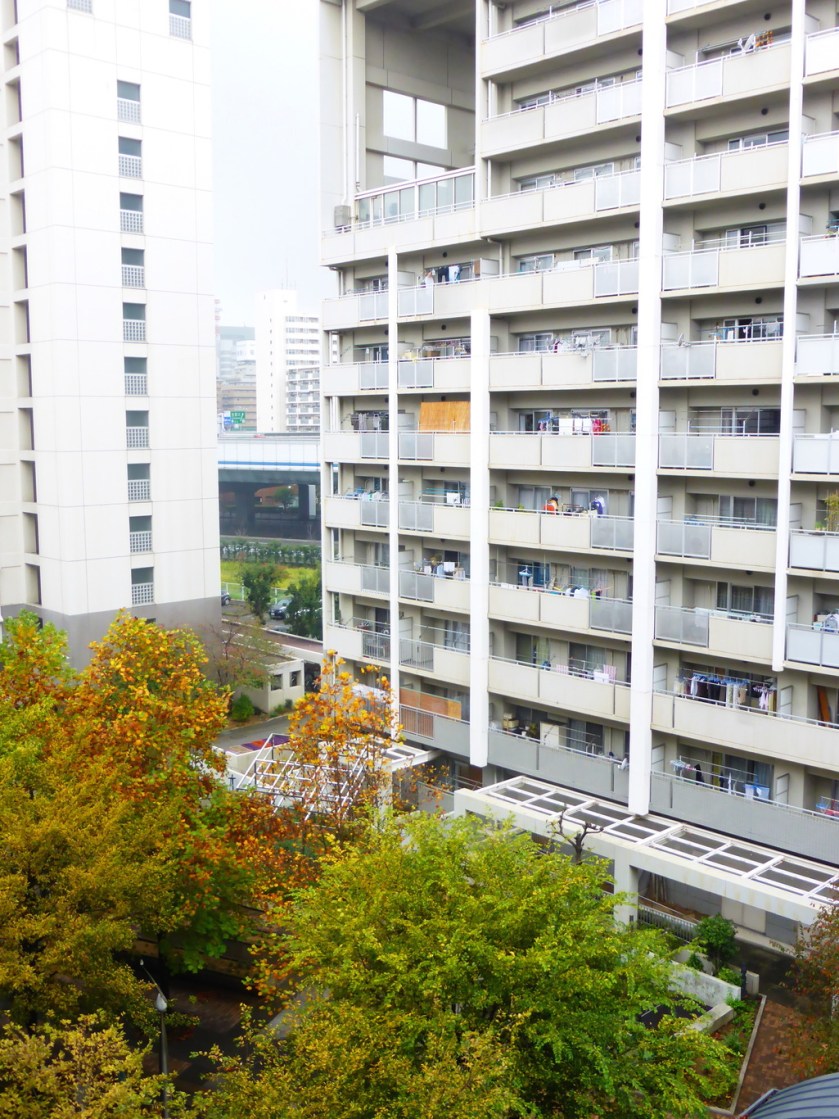


 The Japanese experience of ageing is unique and varied, but presents a foretaste of the future for many post-industrial societies. The “Happy Active Town” of Kobe, 20 years after a major natural disaster, is one example of a place where public policy, housing and technology converge to create solutions for an ageing society. Its mechanisms to support the passion and commitment of the people working and living there can teach Australia how to age with dignity.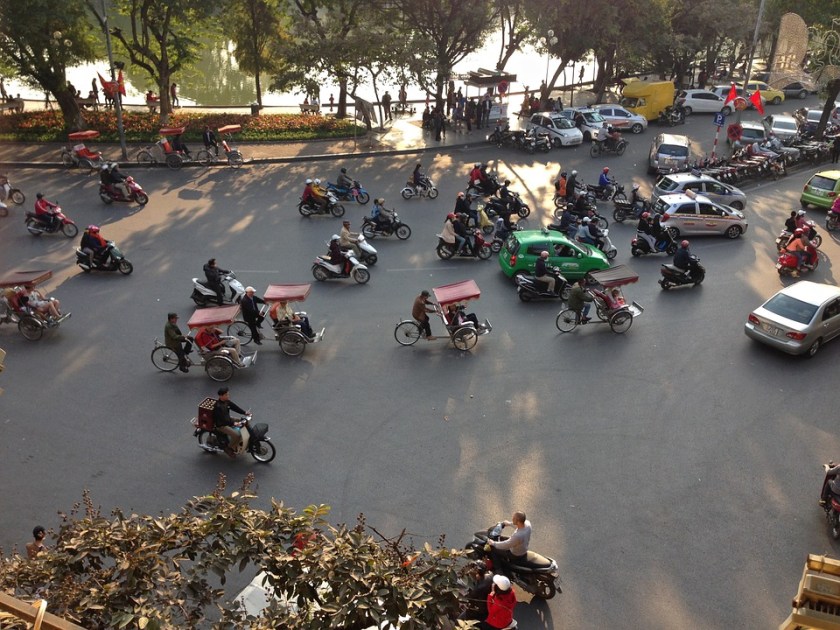


 Designing for Aged Care