Posted in Caregiving, Research & Best Practice, The Built Environment, Therapeutic Activities

Alarming amounts of noise demand ways to silence noisy hospital environments

hospital-840135_960_720

Spending a night in the hospital is not only stressful, but also loud. The constant beeps, whirrs and alarms ascend to a cacophony that produces anything but a relaxing, restful environment. Researchers will summarize the limited number of studies available on hospital noise and discuss the different approaches health care facilities are taking to bring restful repose to patients across the country during the 174th ASA Meeting, Dec. 4-8, 2017, in New Orleans, La.

Source: Alarming amounts of noise demand ways to silence noisy hospital environments

Hospital noise is a growing concern for patients, family and staff, but many facilities are looking for new approaches to reduce the din and bring peace back to their environment.

Public Release: ACOUSTICAL SOCIETY OF AMERICA

WASHINGTON, D.C. December 6, 2017– Spending a night in the hospital is not only stressful, but also loud. The constant beeps, whirrs and alarms ascend to a cacophony that produces anything but a relaxing, restful environment. Ilene Busch-Vishniac, of BeoGrin Consulting in Baltimore, Maryland, will summarize the limited number of studies available on hospital noise and discuss the different approaches health care facilities are taking to bring restful repose to patients across the country.

According to the Hospital Consumer Assessment of Healthcare Providers and Systems (HCAHPS) survey, noise is the top complaint of patients, staff and visitors. “Nearly everyone has a stay in a hospital at some point,” Busch-Vishniac said. “Noise is a universal problem in hospitals around the world.”

Busch-Vishniac will explore these concepts during the 174th Meeting of the Acoustical Society of America, being held Dec. 4-8, 2017, in New Orleans, Louisiana. Noises emanate from a variety of sources at the bedside. Airflow and the noisy machines controlling it are kept on high to prevent pathogens from lingering near patients, and overhead pages alert staff of needs or announcements. Equipment alarms are the most egregious source, and although they are designed to alert staff of changes in the patient’s medical condition, many also sound when medication needs to be changed or when battery conditions are low.

“Alarms in hospitals are being horribly abused,” Busch-Vishniac said. “Most of the time, they don’t in fact indicate urgent situations.”

Previous studies showed that alarms at a patient’s bedside sound an average 133 times per day. With so many alarms, staff often face alarm fatigue as well.

“Most alarms are being responded to eventually, but not all in a timely fashion,” said Busch-Vishniac. “Staff also may not respond quickly because they recognize that the sound is not critical and the situation will right itself.”

Besides the obvious barrier to rest, high noise levels have been associated with changes in the patient’s heart rate, respiration and blood pressure. These changes increase stress levels and may impair healing. The noise can also impair communication between patients and staff.

With noise levels on the rise, the Centers for Medicare and Medicaid Services (CMS) initiated the HCAHPS survey in 2008 to assess consumer perception of health care providers and systems. Today, more than 5,500 hospitals contribute to the report, which consists of patients’ responses on seven composite measures, including questions focused on room cleanliness and quietness.

The survey has teeth. Hospital value-based purchasing links up to 30 percent of CMS payments to hospitals across the country to the results of the survey.

“Faced with a loss of money, many hospitals are looking for ways to address noise levels in a way that patients can see as an improvement,” said Busch-Vishniac.

Hospitals have been developing and implementing noise control programs that can be broken into two categories: engineering and administrative interventions.

Engineering interventions aim to find ways to quiet the room. The solutions can be as simple as closing the door to a patient’s room or as complex as installing acoustical absorption materials along the walls and ceiling to dampen the noise level. Administrative interventions focus on changing behaviors. Many hospitals have instituted quiet hours when doors are closed and voices are kept low.

One of the big changes during the past 10 years has shifted alarms from solely sounding at the patient’s bedside to also alerting a central monitor at the nursing station. This approach improves the ability of staff to identify and respond to alarms set at a reduced volume.

According to Busch-Vishniac, it may be possible in the future to remove alarms from the bedside. A quiet hospital may not be a pipedream for much longer.

###

Presentation 3pIDa: “Hospital noise: how bad is it?” by Ilene Busch-Vishniac is at 1:45-2:05 p.m. CST, Wednesday, Dec. 6, 2017, in Salon E in the New Orleans Marriott. https://asa2017fall.abstractcentral.com/s/u/M8hKSrQu66E

Posted in Caregiving

From ‘demented’ to ‘person with dementia’: how and why the language of disability changed

File 20171101 19867 1pqxw8c.jpg?ixlib=rb 1.1
The initial aim of political correctness, to establish non-hateful language was, and still is, admirable.
Nathan Anderson/Unsplash

Roland Sussex, The University of Queensland

In the second half of the 20th century, we came to accept that in certain cases we should avoid deliberately hurtful language. While many deride political correctness for going too far, its initial aim to establish non-hateful language was, and still is, admirable.

In the early 20th century, “moron” was a medical term for someone with a mental age of between eight and 12. “Mongol” was a person with Down syndrome, and also was indirectly a slur on people from Mongolia, some of whose features were supposed to resemble those with Down syndrome. “Retarded” described someone mentally, socially or physically less advanced than their chronological age.

We know these terms now primarily as pejoratives. “Mongol”, following the Australian tendency to form diminutives, has even given us “mong”, meaning someone who is stupid or behaves as such. Yet there is also a consensus such language is unacceptable. How did we get here?

The path to dignified language

In December 1948, the United Nations passed the Universal Declaration of Human Rights. Affirming the dignity of all humans, Article 1 of this landmark document states:

All human beings are born free and equal in dignity and rights. They are endowed with reason and conscience and should act towards one another in a spirit of brotherhood.

Article 2 goes on to specify this should apply

without distinction of any kind, such as race, colour, sex, language, religion, political or other opinion, national or social origin, property, birth or other status.

The declaration, prompted by the dehumanising events of the second world war, soon led to concerted initiatives to avoid hurtful and denigrating language.

Race and ethnicity was the first area to be addressed in Australia, where the philosophy of respect was enshrined in the Racial Discrimination Act of 1975. This included the currently controversial section 18C, which made it an offence to offend, insult, humiliate or intimidate someone else on the basis of race or nationality.


Read more – What is Section 18C and why do some politicians want it changed?


In the 1980s the scope was expanded in Australia to include gender and sexuality, with the legitimisation of terms like “queer”, and an increasing range of different kinds of sexuality now evident in the LGBTQI designations.

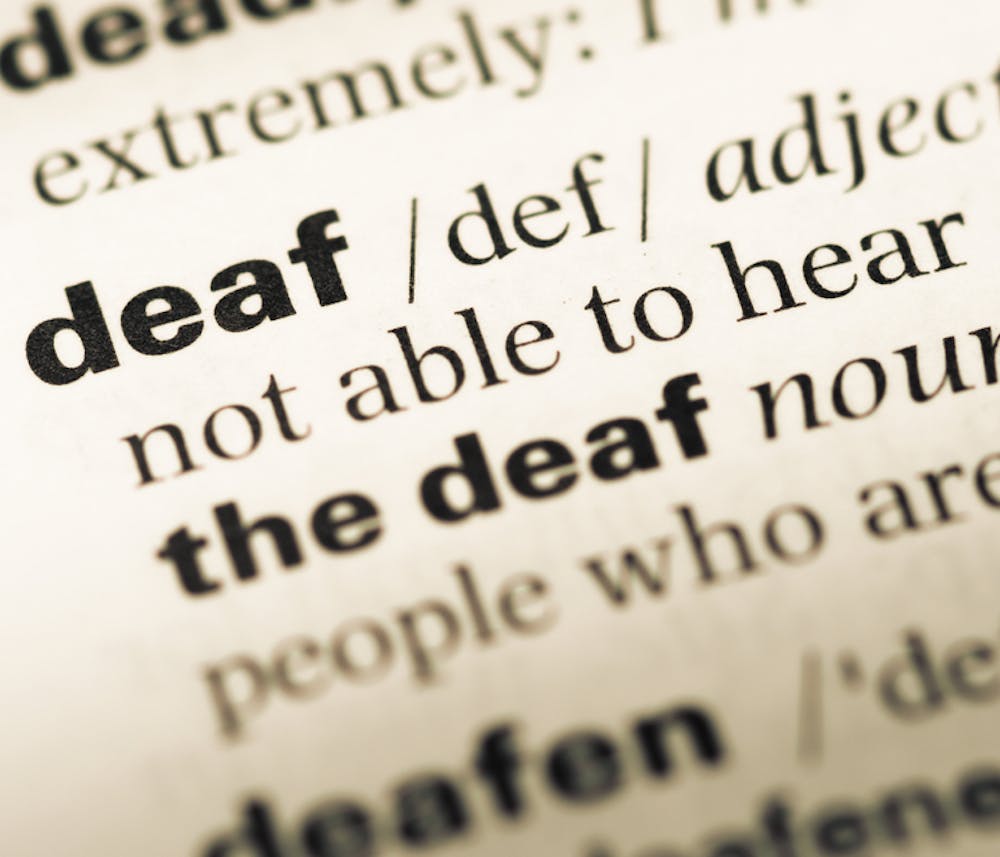
Words like ‘deaf’ and ‘blind’ are commonly used in negative ways.
from shutterstock.com

The third big change involved the language for people with disabilities, whether cognitive or physical. Here the English vocabulary was full of terms that mixed description with pejorative overtones.

People first

Words like “deaf”, “blind”, “dumb” and “lame” are not only descriptions of physical ability and disability, but are commonly used in negative ways. For instance, “deaf as a post”, “blind Freddie”.

We have now moved away from such language. Especially unacceptable are nouns like “retard” or adjectives like “demented”. In their place we have the principle of people first. The person and the disability are separated.

Instead of a phrase like “demented person” we have “person with dementia” or “person living with dementia”. The New South Wales Department of Ageing, Disability and Home Care has a list of such terms.

We should avoid terms that suggest deficit in a negative way, such as “disabled”, “invalid”, “retarded”, “handicap”, “spastic” and “cripple”. We should also avoid terms that explicitly specify limitation like “confined” (say, to a wheelchair). “Suffering from” is to be eschewed for the same reason, since it suggests the person is passive and incapable.


Read more – Redefining the (able) body: disabled performers make their presence felt at the Fringe


A number of paraphrases allow us to avoid sensitive terms. Instead of “blind” we have “visually impaired”. People are not “disabled” but “differently abled”.

Some of these terms can go too far and are effectively euphemisms because they sound overdone and excessively delicate, like “intellectually challenged”.

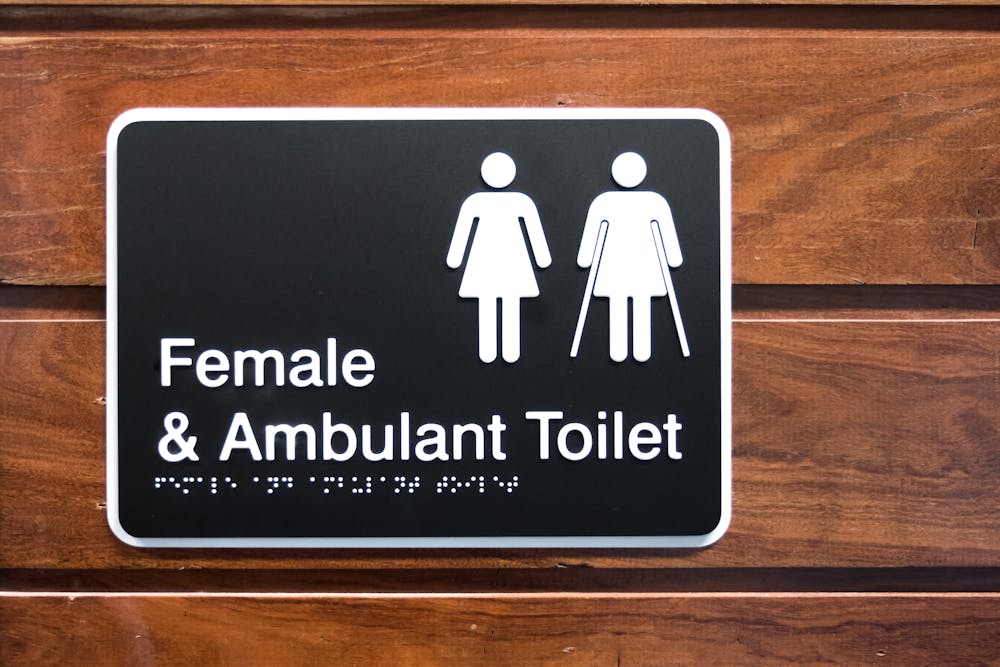
It is preferable to use language that doesn’t exclude people with these conditions from society. A good example of such inclusive language is “ambulant toilet”, often found in airports and public places, which simply indicates the toilet is suitable for anyone able to walk.

The Disability Discrimination Act 1992 consolidated these issues in Australian legislation, which now forms part of an expanding suite of anti-discrimination legislation both here and overseas.

Ambulant toilet is a good use of inclusive language.
shutterstock.com

Talking to someone with a disability

A general guideline for talking to someone with a certain condition is to ask that person how they wish to be described. In some cases, words like “deaf” have been reclaimed by bodies like the National Association of the Deaf in the US. The presence of the capital letter legitimises the term’s use, so long as it is done respectfully. In a similar way, various gender groups have reclaimed the word “queer”, and the fact they use it licenses others to do so too.

The requirement for respectful and considerate speech is not just a matter of good manners; it has teeth. Governments, education systems, companies, societies and other bodies often have guidelines for language use for people with disabilities.


Read more – Political correctness: its origins and the backlash against it


The US National Institutes of Health recommends “intellectually and developmentally disabled” or “IDD” for people with Down syndrome. Bodies like Dementia Australia have language recommendations.

Institutions and governments can apply a variety of sanctions to people who violate this principle in a persistent and hurtful way. These principles are now common in the English-speaking world and countries of the European Union, especially as enshrined in its Charter of Fundamental Rights.

The ConversationIn little more than a generation and half, we have become a more caring and inclusive society, and one much more aware of the importance of avoiding hurtful language. We don’t always get the expression right. But we are getting better at seeing the effect of what we say and write from the point of view of others.


Roland Sussex, Professor Emeritus, The University of Queensland

This article was originally published on The Conversation. Read the original article.


Posted in Caregiving, The Built Environment

Green for wellbeing – science tells us how to design urban spaces that heal us


File 20170820 20193 119sgr9.jpg?ixlib=rb 1.1
Generic plotting of ‘green space’ on an urban plan does not target mental wellbeing unless it is designed to engage us with the sights, sounds and smells of nature.
Zoe Myers, Author provided

Zoe Myers, University of Western Australia

One in five Australians will suffer from a mental health issue this year and living in a city makes it far more likely. Research shows that city dwellers have a 20% higher chance of suffering anxiety and an almost 40% greater likelihood of developing depression.

Promisingly, however, research has also found that people in urban areas who live closest to the greatest “green space” are significantly less likely to suffer poor mental health.

Urban designers thus have a significant role to play in lowering these rates of mental illness, and the data on how nature affects our brains are central to changing the ways we design. As depression is the world’s biggest cause of disability, we cannot afford to ignore the impact of public environments on mental health.

Multiple stressors associated with city living have been shown to increase activity in the parts of the brain corresponding to the “flight or fight” response.


Further reading: Vanishing Australian backyards leave us vulnerable to the stresses of city life


How does exposure to nature reduce these stresses? There are two enduring theories on how nature affects the brain. Both are based on nature having a restorative effect on cognitive and emotional function.

Hyde Park, Perth, allows for an immersive ‘escape’ from the urban world.
Zoe Myers, Author provided

It is not emptiness or quiet, however, that has the effect. Nature in its messy, wild, loud, diverse, animal-inhabited glory has the most impact on restoring a stressed mind to a calm and alert state. This provides a more complete sense of “escape” from the urban world, however brief.

This idea is not new, nor is it surprising. Many people seek out nature to restore wellbeing, and multiple disciplines have sought to measure these restorative effects.

The result is more than 40 years of research quantifying specific neurological, cognitive, emotional and physiological effects of “nature” elements. These effects include increased calm and rumination, decreased agitation and aggression, and increased cognitive functioning – such as concentration, memory and creative thought.


Further reading: Biophilic urbanism: how rooftop gardening soothes souls


A neglected resource for urban design

This wealth of data has been largely overlooked in driving good urban design.

Much of this can be attributed to the data being siloed into scientific disciplines separate from design. All use different languages and are often hidden behind academic journal paywalls.

Also significant is the complexity of mental health issues. This makes it difficult to draw conclusions on environmental effects. To use this data required first a meta-analysis of these methodologies and outcomes, and my own interpretation of how the data applied specifically to urban design.

There are some notable conclusions.

This pedestrian and bike path in Perth is unlikely to maximise the benefits of green space.
Zoe Myers, Author provided
  1. Different natural elements can induce different benefits. This means generic design plotting of “green space” on an urban plan, however aesthetically pleasing, does not specifically target mental wellbeing.
  2. Time plays a significant role. There is no point having great green spaces if these do not provide good reason or opportunity to linger long enough to experience the restorative benefits.
  3. How you engage with your environment matters. Results differ depending on whether the user is observing, listening, or exercising in the space. Taking these variables into account can produce a vast combination of design scenarios.

For example, despite the many studies on the restorative effects of forests, these are not the most accessible option for most city-dwellers. Urban parks are an alternative, but creative, natural interventions in urban spaces that encourage incidental interaction with green space can also produce much benefit.

Much has been written about how walking or exercising in green spaces seems to amplify the effects on the brain of viewing nature. Indeed, as little as five minutes of “green exercise” can produce these benefits.


Further reading: Higher-density cities need greening to stay healthy and liveable


What’s wrong with existing green spaces?

Many urban parks and green spaces – particularly in residential areas – are unimaginative, repetitive and lack basic elements to evoke these references to nature. Nor do they encourage walking or enjoying the natural elements for any length of time.

A typical reserve in Perth, Australia.
Zoe Myers, Author provided
A residential footpath and verge in Perth, Australia.
Zoe Myers, Author provided

For example, paths without shade or protection do not encourage walks long enough to achieve benefits. A lack of landscape diversity does little to activate fascination or interest, and fails to offer incentive to visit them, especially given the ways in which parks can be separated from their surroundings.

In an attempt to create spaces to serve function, such as ensuring enough turf for a game of football, much biodiversity has been removed, thus also removing the sights, sounds and smells needed for an immersive, multi-sensory experience. This applies equally to many suburban footpaths and residential streets.

A suburban residential street in Perth, Australia.
Zoe Myers, Author provided

When urban design gets it right

Septuagesimo Uno Pocket Park, Manhattan.
‘Jim Henderson, Atlas Obscura’

Compare this to urban areas that employ creative uses of incidental nature to capture attention and offer genuine interaction.

Successful parks and urban green spaces encourage us to linger, to rest, to walk for longer. That, in turn, provides the time to maximise restorative mental benefits.

Urban design’s role in shaping our cities is becoming less about the design of physical spaces and more about extracting principles that can be applied to urban spaces in ways specifically tailored to context, site, region and climate.

This means urban design can have a real impact on mental wellbeing, but we need to look outside our discipline for data to make it effective.

A Tokyo road reserve.
from Tokyo DIY Gardening

The ConversationFurther reading: Greening cities makes for safer neighbourhoods

Zoe Myers, Research Associate, Australian Urban Design Research Centre, University of Western Australia

This article was originally published on The Conversation. Read the original article.

Posted in Caregiving

Chemical restraint in aged-care homes linked to early death

Xcjbgxwv 1345186561.jpg?ixlib=rb 1.1
Up to 60% of nursing home residents are on psychiatric drugs and around 30% are on powerful anti-psychotics.
Ulrich Joho

Juanita Westbury, University of Tasmania

Last night ABC’s Lateline discussed the case of 63-year-old John Burns, who died within 12 days of going into residential aged care. Burns was put into care after he started to display disinhibited sexual behaviour, and was prescribed anti-psychotics soon after.

The show reported that up to 60% of nursing home residents are on psychiatric drugs with as many as 30% on powerful anti-psychotics. It yet again draws attention to a problem that’s been recognised for over 20 years: the overuse of sedative medication in nursing homes.

And despite strong evidence that many of these drugs are not only often ineffective but may also cause substantial harm (in the worst case, strokes, pneumonia and death), their use appears to be increasing in Australia.

A case study

Lilian moved into the aged care home several weeks ago. She is 84 years old, recently widowed and, two years ago, she was diagnosed with Alzheimer’s disease. Lilian displays certain behaviours that are annoying other residents and some of the nursing staff. The main issue is that she goes into neighbouring rooms and sorts through cupboards, taking out other resident’s toiletries and underwear.

This is a real case that was described to me by nurses who were interviewed for a study looking at sedative medication use in aged care. To address Lilian’s behaviour, a nurse contacted her doctor to discuss the issue and they decided to give her a small dose of diazepam to see if it would help.

Diazepam, better known by its trade name of Valium®, is a long-acting benzodiazepine prescribed mainly for anxiety. There’s limited evidence that it’s effective for managing behaviours associated with dementia. So was it appropriate to prescribe this medication to manage Lilian’s behaviour, or is she being chemically restrained?

Chemical restraint

Medications such as anti-psychotics are often inappropriately prescribed to manage behavioural symptoms of dementia.
Ashley Rose

A variety of medications are prescribed in aged-care homes for their sedative properties. Some are used to manage the behavioural symptoms of dementia, and include anti-psychotics and benzodiazepines. And the use of these agents appears to be increasing. A recent study conducted in 44 Sydney aged-care homes found that over 28% of residents were taking anti-psychotic medications. The researchers noted that six years earlier, drug use in the same group was 24%.

So what exactly does the term “chemical restraint” mean? The definition used by the Federal Government is the “intentional use of medication to control a resident’s behaviour when no medically identified condition is being treated, where the treatment is not necessary for the condition or amounts to over-treatment of the condition.”

It may seem obvious to readers that, according to this definition, Lilian is being chemically restrained but many health practitioners working at aged-care homes wouldn’t agree. One director of nursing I interviewed said, “We don’t chemically restrain our residents….anyone that is prescribed a sedative medication has a medical condition; be it dementia, anxiety or a problem getting to sleep.”

Others feel that someone is only chemically restrained when the sedative dose is too high. This broad interpretation of what chemical restraint constitutes, or rather, does not constitute, validates the use of sedative medications for a substantial proportion of aged-care residents.

A growing problem

The prevalence of mental health conditions in the residential aged-care is increasing as the population ages and long-term psychiatric beds remain closed.

According to the latest Australian Institute of Health and Welfare (AIHW) report on aged care, over half of aged-care home residents have dementia. The majority of these residents will have symptoms such as aggressive behaviour, calling out and wandering. Over a third will have anxiety disorders and over half will have disturbed sleep. These statistics indicate that the majority of residents are likely to display mental health symptoms.

Among residents with serious mental illness, such as schizophrenia, major depression and severe aggression, the benefits of using sedatives outweigh harms. But for less serious mental health conditions, using such medication is not ideal.

Giving sedatives to older residents can result in significant harm, including confusion, falls, increased rates of pneumonia and even death, especially in the case of antipsychotics.

For less serious mental health conditions, using sedatives is not ideal.
Pedro Ribeiro Simoes/Flickr

Many of these medications only have modest effectiveness in treating difficult behaviours, anxiety and sleep disturbance. And there’s a mounting body of evidence that non-drug strategies can be effective for treating these symptoms. At the very least, non-drug measures should be trialled before sedative medication is prescribed.

Better alternatives

Behavioural symptoms of dementia, anxiety and sleep problems are not always caused by the dementia itself, but can be caused by other underlying medical conditions, such as infections or pain. So it’s important to rule out such causes first before starting treatment. But according to nursing staff, there’s often inadequate assessment of residents.

Non-drug strategies that are effective in managing symptoms include relaxation therapy, personalised music, video tapes of family members, one-on-one time and providing basic counselling and sleep hygiene measures. But many aged-care homes don’t have the staff, training or resources to provide these strategies. As one relative told me, “I just wished that the staff had the time to just be with her and calm her, talk with her and settle her down.”

The ConversationExcessive sedative use in aged-care homes is thought by many to be symptomatic of problems in funding adequate staffing, training and medical services in this sector. Little progress in reducing reliance on sedative use or chemical restraint can be made until this under-resourcing is addressed.

Juanita Westbury, Lecturer in Pharmacy Practice and Research Fellow, University of Tasmania

This article was originally published on The Conversation. Read the original article.


Posted in Caregiving

Personality changes do not begin in the onset of dementia or MCI

Latest findings from a study of 2,046 participants over 36 years from the Florida State University found that there is no evidence to support preclinical personality changes occur prior to the onset of dementia or even in mild cognitive impairment.


Associate Professor Antonio Terracciano, at the College of Medicine stated that “We further found that personality remained stable even within the last few years before the onset of mild cognitive impairment”.


Therefore, it is important to note that personality change may not be an early sign or symptom of dementia, however personality changes should not be ignore by caregivers or clinicians. These changes can have a large inpact on the quality of care and life of the person living with dementia and their caregivers.


Original article http://jamanetwork.com/journals/jamapsychiatry/fullarticle/2653004