A brilliant article by Kate Swaffer and a must read. I have been saying this over and over again, having worked in imaging for a short while. MRI and procedures for scans are stressful and distressing. And the whole process of diagnosis is just a mind field for everyone.
In the last few weeks, there have been a few articles, blogs or tweets on the impact of others publicly doubting a persons diagnosis of dementia, which I am highlighting here for your weekend reading! One tweet by a professional last week claimed with certainty some people don’t have dementia. Whilst it didn’t name anyone, it was disturbing. I’m reasonably certain, in the same way people rally around someone diagnosed with cancer, they also never doubt the diagnosis, including when the person ‘does better than expected‘.
People with cancer (or any other ‘mostly invisible’ diseases) are never diagnosed or doubted publicly, including by others after a conversation, presentation or after reading a book or blog. I can never tell who in a room has heart disease, diabetes, and in the early stages of conditions such as multiple sclerosis, and even Parkinson’s. It is the same for people with dementia as…
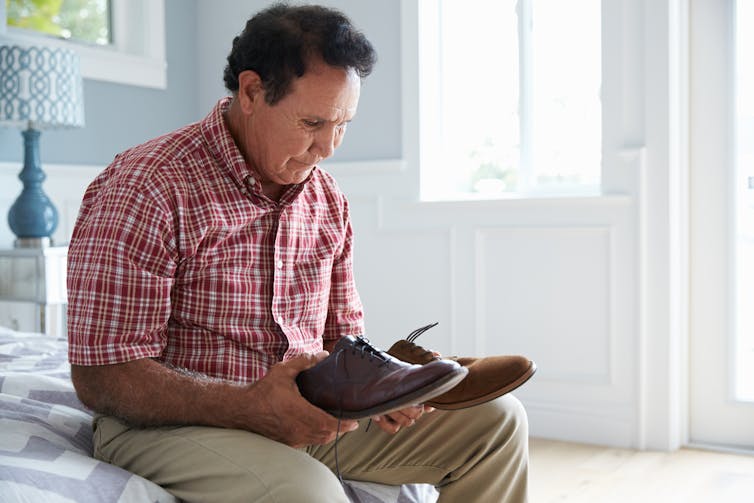
Deterioration in the ability to produce complex speech or understand what people are asking, can make it difficult for people with dementia to make choices in conventional ways. It can be simple things like deciding which clothes to wear, or what to have for dinner. But when a person is in the more advanced stages of dementia, and may not be able to speak at all, it can be difficult for those caring for them to work out what their preferences would be.
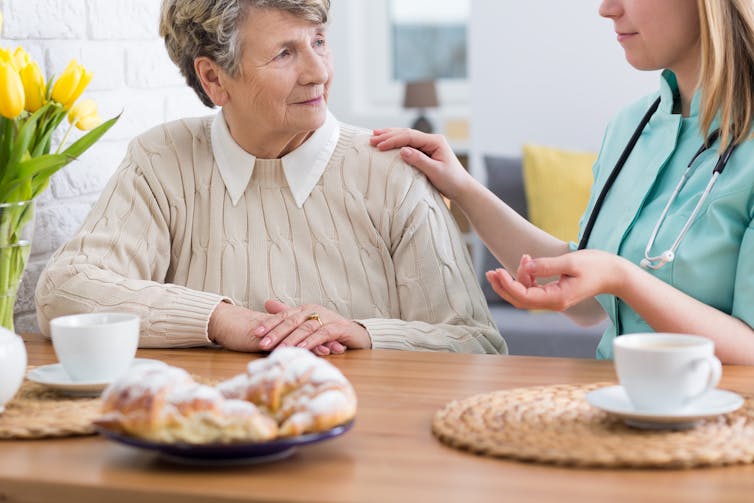
To help the estimated 280,000 people with dementia who are living in UK care homes, family members are often asked what their loved ones would prefer and notes are made by staff. But we know that people’s preferences can change, sometimes on a daily basis, and are hard to predict even by people who know them really well.
Take the example of Mrs Jones. Care workers know that she likes both tea and coffee, but that she prefers tea. If Mrs Jones finds it difficult to tell them what she wants, how will they know that today is the day that Mrs Jones fancies a coffee?
Behavioural researchers have found that one way to figure out what a person would like is to measure how they respond when provided with different options at the same time. For example, to find out whether a person prefers a biscuit or a scone, the two treats are presented together for the person to choose.
As the person making the choice is unable to speak, physical behaviours such as reaching, touching, and picking up the item are watched to find out which they would like. Studies which use this method are usually done with people with dementia in their care home, and tailored to the individual taking part. While the researchers can find out what works best, it also means that people with dementia benefit directly from taking part in the study. Staff are also shown how to find out preferences – leading to immediate improvements in care.
Though it seems like a simple thing to put into practice, this “choice” method is not currently part of the UK care system. However, we have been testing to see whether it could be used in all care homes, to give everyone with dementia more choice in a place where it has traditionally been limited. By observing what people do rather than what they say, care staff can get a more objective idea of what people like, measure their preferences daily, track how they change, and – most importantly – give people with dementia and communication issues more of a voice in their daily lives.
Our work forms part of the first UK project of its kind in the field of behavioural gerontology. The preferences research is part of a series of studies all focused on using behaviour analysis to help improve the quality of life of people with dementia. In addition, students on Bangor University’s applied behaviour analysis programme are trained to specialise in this approach with older adults.
Though the project itself is due to go on for another year, we have already confirmed previous findings from US-based care home studies which showed that people with dementia prefer activities over food items when given a choice between them. For example, we found that people chose activities such as jigsaws, crosswords, and crochet over treats such as custard tarts and pork pies.
This might be because one risk for people with dementia in long-term care is that they can spend a lot of time unengaged. It can be difficult to find lots of meaningful activities for care settings, and opportunities for conversation can be reduced. So activities become more valuable because they give people something to do and to talk about with other people, while food might become less valuable due to sensory changes associated with dementia such as changes in ability to taste and swallow.
Putting this into practice, we now know that if a person with dementia is to be given food and activity choices, they should be done separately – rather than at the same time, like the biscuit and scone example – as preference for taking part in an activity might overshadow a food choice. In the long run, this means that staff don’t learn what people’s food preferences are, too.
For the next stage of our research, we are going to work with people with developmental disabilities (for example, Down Syndrome) who develop dementia. People with developmental disabilities often develop dementia at a younger age, and are more likely to develop it than those who do not have a developmental disability. They are often diagnosed late, too, due to “diagnostic overshadowing”, where changes in behaviour are attributed to their disability rather than dementia.
Previous research has found that people with developmental disabilities will often choose food over activities when a choice between the two is offered (the opposite of people with dementia). However, no one has yet looked at whether this preference shifts when people with developmental disabilities develop dementia. If we know how preferences change, we can ensure that care settings tailor their support.
We all value having choices, and our work is focused on evaluating and developing ways to ensure that people with dementia and developmental disabilities continue to be offered choices, even in the smallest of ways.
Up to 80 per cent of community care for older adults is provided by unpaid informal caregivers. In the absence of government supports, many of them struggle with exhaustion, stress and depression. (Shutterstock)
Her stress increased as her parents started to deteriorate physically and mentally. She tried to stay ahead of the ever-changing situation, but became exhausted after her dad started waking in the middle of the night and getting dressed to go out.
She looked on the internet for support in her care-giving role.
Older adults with chronic conditions rely heavily on their family caregivers to coordinate their care, monitor medication and accompany them to appointments.
Increasingly, these older adults have multiple chronic conditions (MCC), such as dementia and stroke, not just one. And as this prevalence of multiple conditions increases worldwide, it’s associated with poor health and higher health-care use and costs.
Caregivers report that they do not receive adequate home care or respite services to support them in their roles. There are, for instance, long wait lists for long-term care beds.
Research shows that caregivers spent $12.6 million in one year on expenses related to their roles. (Shutterstock)
While caregiving is rewarding, many informal caregivers experience stress and anxiety leading to their own poor mental and physical health.
Informal caregivers feel overwhelmed with multiple requests for their time and frustrated when they can’t plan too far in advance.
“I felt like I was spending a lot of time waiting. Waiting for people to get ready. Waiting for people to get back to me. Waiting at appointments,” said Brenda.
Some reach a crisis point and leave their loved ones in the hospital emergency room because they are unable to continue in their caregiving role. This contributes to an already overburdened acute-care system.
Web-based supports can help
We conducted a systematic review and meta-analysis that examined the impact of different types of internet-based interventions on caregiver mental health outcomes.
One example of such a web-based support is My Tools 4 Care, developed by our colleague Dr. Wendy Duggleby at the University of Alberta and her team.
We found evidence that internet-based interventions had a positive effect on reducing depressive symptoms, stress, distress and anxiety in caregivers of adults with a chronic condition.
Internet-based interventions reduce caregiver depression and anxiety. (Shutterstock)
The most effective category of online support was information and/or education with or without professional psychological support. Information provided together with combined peer and professional psychological support was also effective, to a lesser extent.
Caregivers in our study made recommendations to improve the content and format of online resources. Suggestions included: Providing personalized information about local resources; sharing practical caregiving tips and strategies; creating opportunities to connect online with other caregivers; and having user-friendly features that are easy to navigate.
Nova Scotia leads the way
Caregiving comes with costs to the caregivers — to their health and to their finances.
Half of caregivers are between 45-65 years of age, in the peak of their earning years. They often take time off work to take their loved ones to appointments, and some must leave work early when the health of their loved one worsens. Out-of-pocket expenses for equipment, medications and parking can also be expensive.
Nova Scotia is the only province in Canada that has a monthly income or allowance for caregivers, known as the Caregiver Benefit Program. Financial assistance from the government for caregivers in other parts of Canada mainly take the form of federal tax credits and insurance benefits.
8 Residents in a care home and it costs no more than a regular care home in Switzerland. Watch the videos to find out more. Please note that in the first video the language does not adhere to dementia language guidelines.
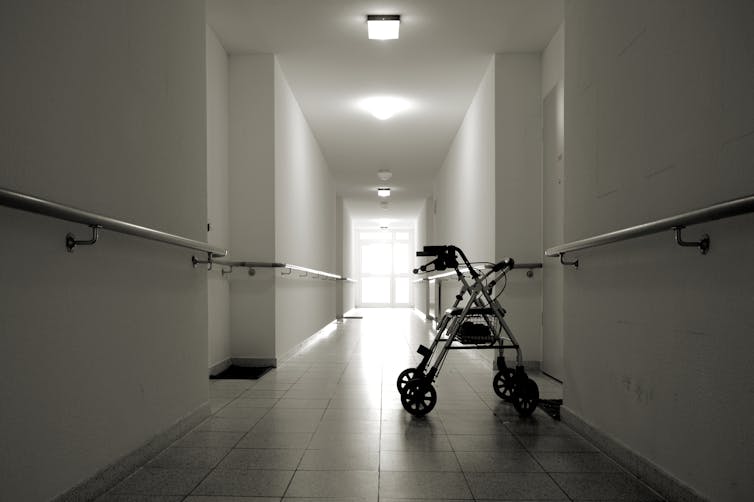
Most older people want to stay at home as long as they can. When this is no longer possible, they move into residential aged care facilities, which become their home. But Australia’s care facilities for the aged are growing in size and becoming less home-like.
Today, more than 200,000 Australians live or stay in residential aged care on any given day. There are around 2,672 such facilities in Australia. This equates to an average of around 75 beds per facility.
Large institutions for people with disability and mental illness, as well as orphaned children, were once commonplace. But now – influenced by the 1960s deinstitutionalisation movement – these have been closed down and replaced with smaller community-based services. In the case of aged care, Australia has gone the opposite way.
Evidence shows that aged care residents have better well-being when given opportunities for self-determination and independence. Internationally, there has been a move towards smaller living units where the design encourages this. These facilities feel more like a home than a hospital.
The World Health Organisation has indicated that such models of care, where residents are also involved in running the facility, have advantages for older people, families, volunteers and care workers, and improve the quality of care.
In the US, the Green House Project has built more than 185 homes with around 10-12 residents in each. Studies show Green House residents’ enhanced quality of life doesn’t compromise clinical care or running costs.
Older people have a better quality of life if they can be involved in outdoor activities. from shutterstock.com
Around 50% of residents living in aged care facilities have dementia. And research has shown that a higher quality of life for those with dementia is associated with buildings that help them engage with a variety of activities both inside and outside, are familiar, provide a variety of private and community spaces and the amenities and opportunities to take part in domestic activities.
In June 2018, an Australian study found residents with dementia in aged-care facilities that provided a home-like model of care had far better quality of life and fewer hospitalisations than those in more standard facilities. The home-like facilities had up to 15 residents.
The study also found the cost of caring for older people in the smaller facilities was no higher, and in some cases lower, than in institutionalised facilities.
There are some moves in Australia towards smaller aged care services. For example, aged care provider Wintringham has developed services with smaller facilities for older people who are homeless. Wintringham received the Building and Social Housing Foundation World Habitat Award 1997 for Wintringham Port Melbourne Hostel. Its innovative design actively worked against the institutional model.
Bigger and less home-like
Historically, nursing homes in Australia were small facilities, with around 30 beds each, often run as family businesses or provided by not-for-profit organisations. Between 2002 and 2013 the proportion of facilities with more than 60 beds doubled to 48.6%. Financial viability rather than quality of care drove the increase in size.
Today, around 45% of facilities are operated by the private for-profit sector, 40% by religious and charitable organisations, 13% by community-based organisations, 3% by state and territory governments, and less than 1% by local governments.
In 2016, the Australian Institute of Health and Welfare (AIHW) reported that residential care services run by government organisations were more likely to be in small facilities. One-fifth (22%) of places in these facilities are in services with 20 or fewer places. Almost half (49%) of privately-run residential places are found in services with more than 100 places.
All of this means that more older Australians are living out their last days in an institutional environment.
Once larger facilities become the norm, it will be difficult to undo. Capital infrastructure is built to have an average 40-year life, which will lock in the institutional model of aged care.
The built environment matters. The royal commission provides an opportunity to fundamentally critique the institutional model.

 In the last few weeks, there have been a few articles, blogs or tweets on the impact of others publicly doubting a persons diagnosis of dementia, which I am highlighting here for your weekend reading! One tweet by a professional last week claimed with certainty some people don’t have dementia. Whilst it didn’t name anyone, it was disturbing. I’m reasonably certain, in the same way people rally around someone diagnosed with cancer, they also never doubt the diagnosis, including when the person ‘does better than expected‘.








 Designing for Aged Care