Posted in Ageing & Culture, Caregiving, International Policies, Research & Best Practice, The Built Environment, Therapeutic Activities

Food Nostalgia Workshops, a deliciously fresh idea to support Dementia

One of my fondest memories working in aged care in Australia was the talking about Christmas recipes with all the residents during this holiday season. For many of us who have slaved over the stovetop during the festive seasons, you know what I am talking about. To get that perfect Christmas fruitcake was a project months in the making. I usually worked the Christmas shifts and we would always get together and you could see all the ladies eyes lit up like the fairy lights on the Christmas tree as we chatted away about our favourite Christmas dishes, the delectable treats and without a doubt, everyone, literally all the ladies had some cooking tips and advice to share. Sometimes, even their families would join in the conversation and I had to pry myself out of the room haha. From Pavlovas, Dundee cakes, Christmas cakes, brandy butter to Medisterkaker. Everyone had something lovely to share. You can tell I love the Christmas season.

dinner-meal-table-wine-medium

Anyway I found out that in the UK, Magna Vitae is working on a new health initiative to support people with dementia and their caregivers. Guess what? It’s all about food! In January 2016, they will be running a string of dementia friendly workshops known as ‘Feeding Memories’ for people with dementia and their caregivers in the UK.

This workshop certainly breathes innovation, food is such an important component in our daily lives. The workshop is a food reminiscence therapy programme, helping to ‘revive the senses’ through utilising food packaging from the past and it seems like there might be some cooking involved as well. It doesn’t stop there, the workshop has an inclusive and community aspect, sharing the importance of nutrition, diet and getting people socially engaged in their common love for food.

I’m really excited about the workshop and I hope that there will be more of these workshops to go around, especially in the Memory Cafes.

Anyway here’s wishing everyone Happy Holidays.

xoxo

Jo

Source: http://www.magnavitae.org/mvitae/about

Posted in Ageing & Culture, Caregiving, International Policies, The Built Environment

‘I do my crying in the shower’

Alison Bulmer shares the honest truth about the challenges she and her husband endure in the face of dementia. Around the world, many are trapped in isolation and loneliness. With 46.8 million people globally living with dementia, and no exact numbers of the sum of people impacted by the condition. We need to come together to help support both people with dementia and their caregivers to create an inclusive environment.

Source: ‘I do my crying in the shower’ – BBC News

Caring for a husband with dementia is a lonely and isolating experience, Alison Bulmer says.


Posted in Caregiving, International Campaigns, Research & Best Practice, The Built Environment

A useful, simple to understand video about depression. 

TED-Ed seriously has some pretty epic stuff, this video by Helen Farrell really sums up the difference between feeling depressed and depression. Her video touches on the symptoms, treatments and even tips to help your friend in this simple to understand video.

The video also talks about how open conversations about mental health can erode stigma, and increase the ability of people to ask for help. The video also states that there is research indicating that asking a  person about their suicidal thoughts, in fact, reduces their suicide risk.

A must see especially for us who are in the helping profession.

Source: What is depression? – Helen M. Farrell | TED-Ed

Posted in Ageing & Culture, Caregiving, International Campaigns, International Policies, Research & Best Practice, The Built Environment, Therapeutic Activities

Enabling Village: Promoting social connections at supermarkets 

Yesterday’s post about seniors taking their own lives really hit a nerve and today, like a ray of sunshine, this article appeared in the Today’s papers online. It’s heartwarming to know that more is being done to create inclusion in the community.

A really great article by Dr Thang Leng Leng about a cool program happening in Singapore, the enabling village. I hope it will take off and be highly successful among the Singaporean community. An inclusive society is definitely the way to go! It’s also really good to know that NTUC LearningHub has started training 100 supermarket frontline staff to help senior customers, and especially in the areas of dementia. Good on you NTUC!

At this month’s opening of the Enabling Village — Singapore’s first community space for people with disabilities — Prime Minister Lee Hsien Loong called on Singaporeans to continue building a more inclusive society by valuing everyone, and through active citizenship.

Source: Promoting social connections at supermarkets | TODAYonline

Posted in Ageing & Culture, Caregiving, International Campaigns, International Policies, Research & Best Practice, The Built Environment

More seniors in Singapore taking own lives – Are we going to take a back seat after reading the news?

The Straits times reported that there’s a 60% increase in seniors in Singapore taking their own lives. I hope Singaporeans are not going to take a back seat after reading the article, instead, I’m hopeful that fellow Singaporeans will be saying how can we all do our part to help?

We as a community need to work on social inclusion, work on de-stigmatising the negative stereotypes of ageing, mental health and chronic illness.

@DEMENTIACASIA4

We know what we need to do, we know it takes a community effort, a top down and bottom up approach. From policy to public education to infrastructure, it takes a community, it takes a kampong, it takes heart.

We saw Singaporeans come together for events like SG50, stand strong during the SARS, we have sailed through one economic crisis after another, standing strong together as a nation, and yet we have let our elders down.

@DEMENTIACASIA2

We’ve taken on NIMBY attitudes, mental illness is still feared and jeered, and we continue to expect others to manage these issues and not prevent them. We all can play a part as Singaporeans to provide support and care, in fact there’s research that indicates that caring can contribute to our own positive well-being (Jagger, Carol et al. 2015).

We need to stop managing issues and work to prevent them, to help fellow older Singaporeans to live well, to live comfortably, with dignity and respect. To feel accepted, included, and be part of the greater community. It’s painful to think that a fellow Singaporean in our day and age feel that they cannot reach out for help, to feel like a burden, to feel like they should not have existed to unburden themselves or others from suffering.

We know healthy ageing is possible (Raposa et al. 2015). We need to open our hearts to love more, to learn more, achieve happiness as one people, one nation, and to pass on positive values to our children.


Helplines in Singapore

Samaritans of Singapore (SOS): 1800- 221-4444 (24-hour)

IMH Mobile Crisis Service: 6389-2222 (24-hour)

Care Corner Counselling Centre (Mandarin): 1800-353-5800

Singapore Association for Mental Health: 1800-283-7019

Seniors Helpline: 1800-555-5555


Singapore News -The golden years are losing their lustre for a rising number of the elderly here, with more taking their lives in the later phase of life. There is a nearly 60 per cent jump from figure in 2000; social isolation and physical and mental ill health may be contributing factors. Read more at straitstimes.com.

Source: More seniors in Singapore taking own lives, Singapore News & Top Stories – The Straits Times

Reference:

Jagger, Carol et al. (2015). A comparison of health expectancies over two decades in England: results of the Cognitive Function and Ageing Study I and II. The Lancet, Published online.

Raposa E.B Laws H.B Ansell E.B (2015). Prosocial Behavior Mitigates the Negative Effects of Stress in Everyday Life. Clinical Psychological Science. Published before print. 


Posted in Ageing & Culture, Caregiving, International Policies, Research & Best Practice, The Built Environment

Memory Cafes: Working towards inclusion

No one person with dementia and their caregivers should be isolated, and a social program in the United Kingdom, America, some parts of Australia are doing just that. We all know that loneliness affects both the person with dementia and their caregivers. Studies have reported that isolation and loneliness can bring about lowered self-esteem, feeling of abandonment, and increase mortality rates, and these are but just some of the issues associated (Brotons & Marti 2003; Reijo et al. 2011; Goll et al. 2015). Even the UK Department of Health (2012) has recognised that loneliness is a major public issue and needs to be urgently addressed.


Just along the lines of government and major organisations, when one thinks Memory Cafe, we may have a schema of a 24-hour cafe with people running around to man the joint. Administrators and funders, I can imagine pinching themselves, great idea but what’s the cost? The gears will be moving in their heads thinking about all the capital involved and the manpower cost associated with it, not counting the overheads and getting the right people to be able to make coffee and run a cafe, followed by other operational issues of burnout, turnover manpower training and development.

This memory cafe is way ahead of the game. With a number of memory cafes popping up like peonies in full sun, this program only operates a few times a month depending on the cafe. It can be once a month or twice a month and time for an hour or more. It’s free for people living with cognitive impairment/dementia and their significant other, be it their spouse, partner, child or carer.

Just having a peek at the Facebook page of one of the memory cafes in America (Brown County: Click here to visit page), you can see images people sitting in small groups of eight working together and having fun with craft activities and in one post they even mentioned that they were putting together harvest recipes for a cookbook. Another photo has a heartwarming image of people sitting around, really relaxed and laid back enjoying Christmas carols performed by the NWTC choir.

photo-memory-grandma

It’s hard to find programs where both the person with dementia and their significant other can actually enjoy social activities. Most activity centres would boot the caregivers, expecting people to drop off the their loved one with dementia at the centre and leave. If you hang around, you might feel a bit out of place or in the way. Or a caregiver program where caregivers come together and the person with dementia gets allocated to an activities area.

It’s just great to see a program that is so warm and inclusive, where people can just come together and there’s no stigmatism, no funny looks, no barriers. You can share stories, ask questions and there’s no stigma, no judgemental looks, no nonsense. Everyone can just be themselves, enjoy a cuppa and have some fun. A program that provides an environment that supports movement and engagement, optimises helpful stimulation, creates a familiar social space for people to have the opportunity to be part of the community, allows people to be seen and to be part of something meaningful (Fleming et al. 2003).
going-shopping-1-1433513-639x961

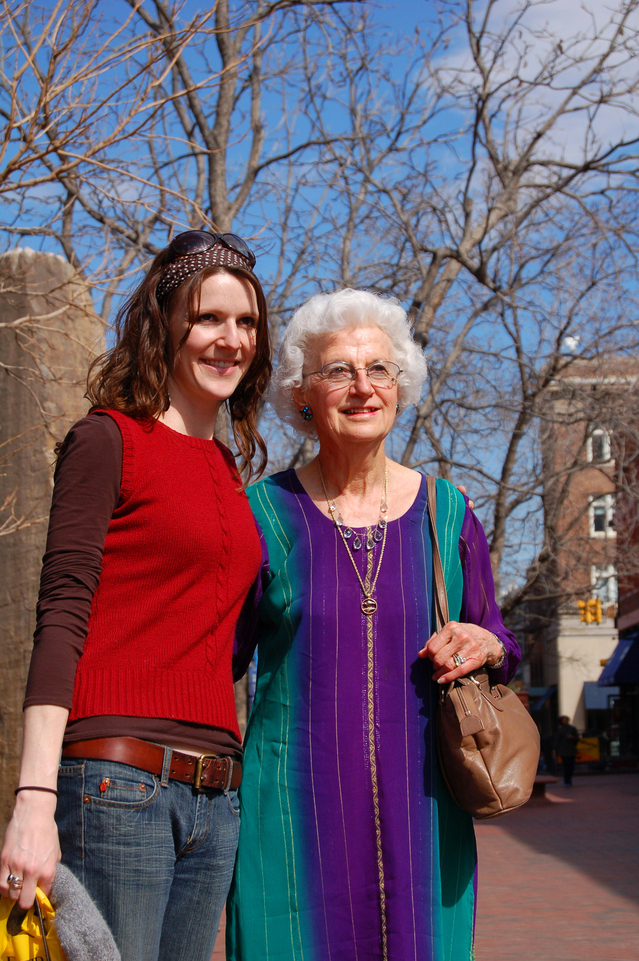
Isn’t this what life is about, just being able to kick back, have a cuppa and a laugh with friends.

Anyway hoping to see them catch on in Asia as well in the coffee shops and dim sum cafes.

chinese-restaurant-1-1567156-1279x1923


For more information about starting a memory cafe in your community, please refer to the links below.

UK: Memory Cafe

USA: Brown County Memory Cafe

Aus: Memory Lane Cafe


Reference:

Brotons M. and Marti P., 2003. Music therapy with Alzheimer’s patients and their family caregivers: a pilot project. Journal of Music Therapy, 40(2), pp.138-150.

Department of Health (2012) Caring for our future: reforming care and support. London: The Stationary Office. Retrieved fromhttps://www.gov.uk/government/publications/caring-for-our-future-reforming-care-and-support.

Fleming R, Bowles J. Units for the confused and disturbed elderly: Development, Design, Programmimg and Evaluation. Australian Journal on Ageing. 1987 November;6(4):25-8.

Fleming R, Forbes I, Bennett K. Adapting the ward for people with dementia. Sydney: NSW Department of Health; 2003.

Goll JC, Charlesworth G, Scior K, Stott J (2015) Barriers to Social Participation among Lonely Older Adults: The Influence of Social Fears and Identity. PLoS ONE 10(2): e0116664.

Reijo S. Tilvis, Venla Laitala, Pirkko E. Routasalo, and Kaisu H. Pitkälä, “Suffering from Loneliness Indicates Significant Mortality Risk of Older People,” Journal of Aging Research, vol. 2011, Article ID 534781, 5 pages,